

With a sharp dip in temperatures across Lucknow, residents have widely switched on room heaters and blowers to keep warm. However, city doctors are raising a serious alarm, cautioning that the improper use of these appliances in enclosed spaces can trigger severe health complications and, in extreme situations, prove fatal.
Residents Share Their Harrowing Experiences
The warnings come amid reports from locals experiencing adverse health effects linked to heater use. Sushmita Singh, a resident of Madiaon, had to urgently take her five-month-old daughter to a clinic after the infant developed rashes on her face. "I did not realise heaters reduce moisture in the air," she said. "The doctor told us to keep a bowl of water in the room to maintain humidity."
In another incident, Krishna Kumar from Krishnanagar, who is diabetic, suffered burns on his legs from sitting too close to a heater. "I did not feel the heat immediately but by the time I noticed, blisters had formed," he recounted.

Understanding the Medical Dangers
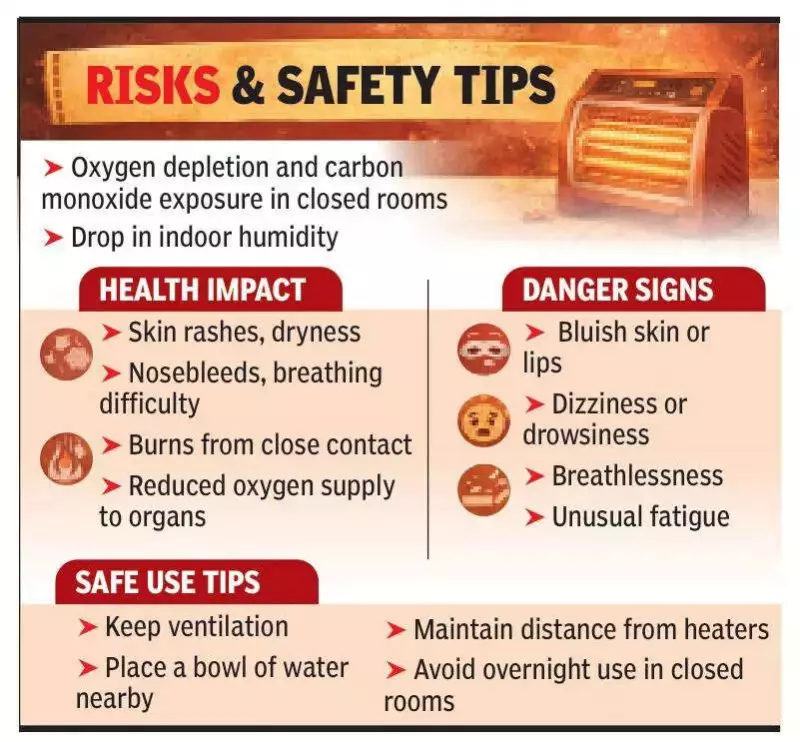
Medical professionals explain that prolonged exposure to dry heat from these devices can cause a range of problems including skin rashes, nosebleeds, respiratory discomfort, and dehydration. A common mistake is sitting or sleeping very close to heaters, not realizing they significantly reduce both humidity and oxygen levels indoors. This scenario turns particularly dangerous in rooms with poor ventilation.
Prof Shalini Tripathi, a paediatrician at KGMU, highlighted that burning coal or using certain heaters in closed rooms elevates health risks. "Carbon monoxide can cause methemoglobinemia, a condition where haemoglobin cannot release oxygen to body tissues. Oxygen levels drop even though blood may appear normal. Infants and children are especially at risk," she stated. She added that heaters also lower indoor humidity, damaging the respiratory tract, particularly in children. Her advice is clear: heaters should not be used in small, closed rooms or pointed directly at people, and a bowl of water or a wet cloth must be kept near the appliance.
Critical Safety Guidelines from Experts
Echoing the concerns, Dr. Mustahsin Malik, Head of Critical Care Medicine at Era Medical College, warned that non-oil heaters can emit carbon monoxide in enclosed spaces. "Even low exposure can impair brain function, and infants and the elderly are vulnerable. Burning coal indoors is even more dangerous as it releases high levels of carbon monoxide," he explained.
Dr. Malik issued crucial instructions: If anyone experiences suffocation or breathing difficulty, they should immediately leave the area where the heater is being used. He further stressed that heaters of any type should be switched off before sleeping, as malfunctioning appliances can be fatal. While noting they are costlier, he mentioned that oil-filled radiators are safer as they do not drastically reduce moisture or oxygen levels.
To summarise, doctors advise the following essential precautions for safe heater use this winter:

- Use heaters only in well-ventilated rooms.
- Maintain a safe distance from the appliance.
- Keep a bowl of water nearby to retain humidity.
- Ensure all electrical connections are safe and the appliance is in good working order.





