

Maharashtra Health Department's February Survey Uncovers Widespread Non-Communicable Diseases
In a groundbreaking public health initiative, the Maharashtra state health department conducted an extensive screening campaign throughout February, targeting non-communicable diseases (NCDs) across urban and rural areas. The results have revealed alarming prevalence rates of hypertension and diabetes, particularly among low-income groups, signaling a critical health crisis that demands immediate attention.
Mass Screening Campaign Yields Startling Statistics
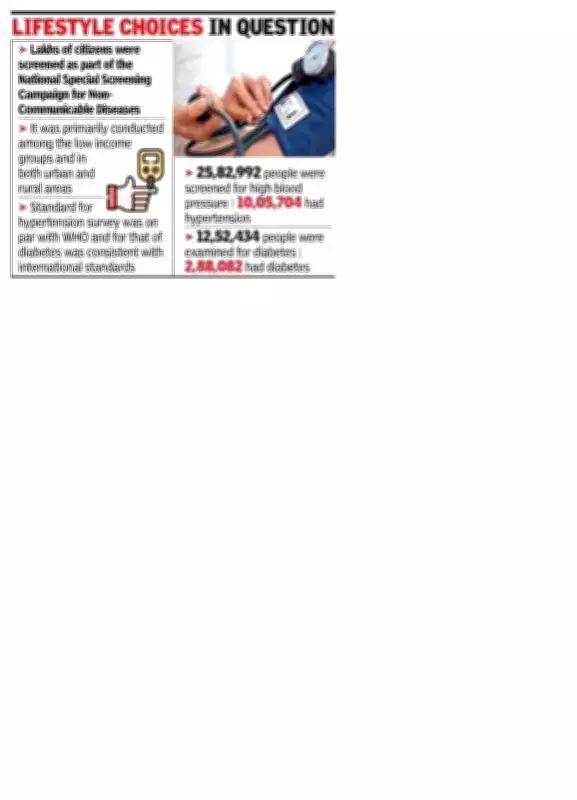
The National Special Screening Campaign for Non-Communicable Diseases, executed from February 1 to 28, represents the first statewide mass screening effort of its kind in Maharashtra. Health officials screened a staggering 25,82,992 individuals for hypertension, diagnosing 10,05,704 cases—equating to approximately two in every five people. Simultaneously, 12,52,434 people were examined for diabetes, with 2,88,082 testing positive, or roughly one in every four individuals screened.
State Health Minister Prakash Abitkar emphasized the campaign's significance, stating, "This special initiative has significantly boosted public awareness about non-communicable diseases. Early detection is crucial for preventing severe complications, and we plan to expand such screening efforts to reach even more citizens in the future." The campaign's rapid execution over a single month enabled the identification of thousands previously unaware of their conditions, facilitating timely medical intervention.

Diagnostic Standards and Medical Insights
The survey adhered to stringent diagnostic criteria aligned with World Health Organization and Indian guidelines. Hypertension was diagnosed at thresholds of ≥140 mmHg systolic or ≥90 mmHg diastolic, while diabetes detection followed international standards using fasting plasma glucose (>126 mg/dL), 2-hour post-glucose load (>200 mg/dL), or HbA1c levels (≥6.5%).
Medical experts attribute the surge in NCDs to multifaceted lifestyle and environmental factors. Dr. Dattatraya B. Patil, Consultant in Internal Medicine at Noble Hospitals and Research Centre, explained, "Rapid urbanization, sedentary behaviors, and poor dietary choices are primary drivers. Desk-bound occupations combined with high-calorie processed foods elevate obesity and stress, while air pollution and substance use exacerbate risks." He advocates a holistic approach incorporating regular exercise, balanced nutrition, and stress management.
Specialist Perspectives on Prevention and Management
Dr. Rashida Melinkeri, Consultant Physician and Lipidologist at KEM Hospital, highlighted additional risk factors: "Urban air pollution, high-salt ultra-processed foods, sugary beverages, sleep disruption, sedentary lifestyles, alcohol consumption, and chronic stress collectively fuel NCDs. Vulnerable groups include those with central obesity, South Asian ancestry, family history of heart disease, or conditions like gestational diabetes." She recommends rigorous monitoring of blood pressure, glucose, and lipid levels, alongside lifestyle modifications such as tobacco cessation and weight loss.
From an ophthalmological standpoint, Dr. Sharoon Shitole, Consultant Ophthalmologist at Vencer Hospital, warned of silent microvascular damage: "Hypertension and diabetes often remain asymptomatic while harming the retina. We're detecting retinopathy in patients as young as 30-40, especially those with sedentary jobs, high screen exposure, obesity, or metabolic stress."
Dietary and Lifestyle Recommendations
Dietician Pritee Lale from Inamdar Multispeciality Hospital linked the rising cases to modern urban lifestyles: "Long work hours, processed foods, irregular eating, poor sleep, and stress disrupt metabolic balance. Individuals over 35, those with family histories, abdominal obesity, or sedentary professions are at higher risk." She advocates a diet rich in whole grains, vegetables, fruits, and healthy fats, with reduced salt and sugar intake, complemented by regular physical activity and stress management.

The survey's findings underscore an urgent need for comprehensive public health strategies to combat the escalating burden of non-communicable diseases in Maharashtra. With early diagnosis and proactive management, the state aims to mitigate serious health complications and improve overall community well-being.





