

Maharashtra's Stray Dog Population Reaches Critical Levels
Nagpur: Maharashtra is confronting a severe public health emergency with its stray dog population soaring to nearly 17 lakh animals across the state. This alarming statistic includes approximately two lakh stray dogs in Nagpur alone, creating a dangerous environment for residents.
Annual Dog Bite Incidents and Rabies Threat
Data compiled at the ward level reveals that Maharashtra records around 9.7 lakh dog bite incidents every year, posing a significant threat of rabies transmission and other zoonotic diseases. Ramaswami N, Secretary of the Animal Husbandry, Dairy Development and Fisheries Department, emphasized the gravity of the situation during a national symposium in Nagpur.
"Rabies represents a critical One Health issue for our state," Ramaswami stated. "India witnesses over 20,000 rabies deaths annually, with Maharashtra being one of the major contributing states to this tragic statistic."

Children Bear the Brunt of Rabies Fatalities
The human cost of this crisis has been particularly devastating for young residents. In the last year alone, Maharashtra reported 20 confirmed rabies deaths, with the secretary revealing that over 60% of these victims were children below 15 years of age. This disproportionate impact on youth highlights the urgent need for effective intervention strategies.
Widespread Distribution Across Urban Centers
The stray dog problem extends beyond Nagpur to other major urban areas. Pune city and its surrounding periphery account for nearly four lakh stray dogs, indicating that the crisis affects multiple population centers throughout Maharashtra. The concentration of strays in urban environments increases human-animal conflicts and disease transmission risks.
Failure of Current Sterilization Programs
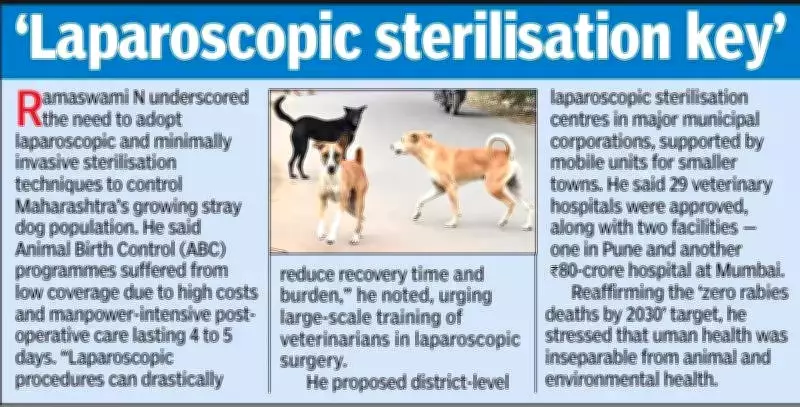
Ramaswami criticized the limitations of existing Animal Birth Control programs, noting that sterilization rates in many municipal corporations remain abysmally low at just 2-3%, with the best-performing areas reaching only 7-8%. These insufficient rates fail to curb population growth, allowing the stray dog numbers to continue expanding unchecked.
Judicial Intervention and Civic Accountability
The Nagpur bench of the Bombay High Court has taken strong notice of the growing stray dog menace across several Maharashtra cities. The court has warned civic authorities of personal accountability for failure to implement effective control measures. Despite repeated judicial directions, the stray animal problem continues to plague urban and semi-urban areas throughout the state.
Scientific Solutions and One Health Approach
Addressing participants at the 'Role of Canine in One Health' symposium organized by multiple animal welfare organizations, Ramaswami highlighted the urgent need for scientific and scalable solutions to control stray populations and prevent rabies-related fatalities.
Drawing parallels with the COVID-19 pandemic, he emphasized the importance of the One Health approach, noting that over 60% of human diseases originate in animals, while nearly 75% of emerging infectious diseases are zoonotic in nature.
Urbanization Exacerbates the Crisis
Rapid urbanization has significantly compounded the stray animal problem. "Maharashtra ranks among India's most urbanized states," Ramaswami explained. "While urban growth brings development opportunities, it also correlates with a sharp rise in stray animal populations, creating complex challenges for public health and urban management."
The symposium, held at Nagpur Veterinary College, brought together experts from the Indian Society for Advancement of Canine Practice, Maharashtra Animal and Fishery Sciences University, and the National Association for Welfare of Animals and Research. Nagpur's selection as the venue was particularly appropriate given the city houses the National Institute of One Health, positioning it as a strategic location for addressing these interconnected health challenges.






