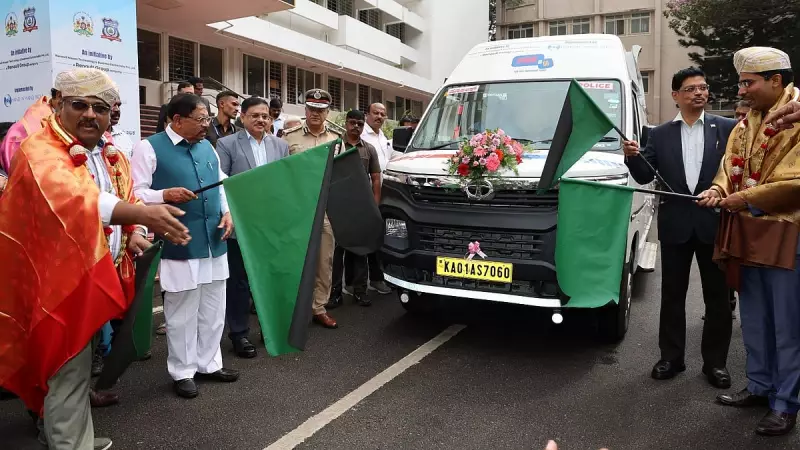
In a significant move to address a long-standing issue, Bengaluru has launched a dedicated mobile toilet initiative for its traffic police personnel. The initiative, flagged off on Wednesday, aims to provide much-needed sanitation facilities for officers who spend long hours managing the city's notorious traffic, often without access to clean restrooms.
A Much-Needed Relief for On-Duty Officers
The project was inaugurated by Bengaluru City Police Commissioner B. Dayananda at the Traffic Management Centre on Infantry Road. This practical solution directly tackles the daily struggle faced by hundreds of traffic police constables, particularly women, who have historically had limited or no access to hygienic toilet facilities during their extended shifts on congested roads.
The launch event saw the presence of key officials including Joint Commissioner of Police (Traffic) M.N. Anucheth and DCP (Traffic-East) Kuldeep Kumar R. Jain. The initiative is a collaborative effort, developed with technical support from the Indian Institute of Science (IISc) and funded under the Corporate Social Responsibility (CSR) program of Happiest Minds Technologies.

Features and Implementation of the Mobile Units
The newly introduced mobile toilet units are designed for functionality and convenience. Each van is equipped with separate facilities for men and women, ensuring privacy and dignity for all personnel. A key feature is the inclusion of an attendant who will manage the unit's operations and maintain cleanliness, addressing concerns about upkeep.
Initially, the service will be deployed in the high-traffic areas of the East Division. The vans will operate on a scheduled basis, moving between major traffic junctions to serve officers across different points. This pilot phase will be closely monitored, with plans for potential expansion to other traffic divisions across the city based on its success and feedback from the police force.
Addressing Core Issues of Health and Dignity
For years, the lack of accessible toilets has been a major point of contention and discomfort for Bengaluru's traffic police. Officers, especially those assigned to junctions far from police stations or public facilities, were forced to hold their bladder for hours or rely on unhygienic alternatives. This posed serious risks to urinary health and overall well-being.
The new initiative is more than just a infrastructure project; it is a vital public health and welfare measure. By providing these basic amenities, the police department aims to boost the morale of its frontline personnel, who work in challenging environmental conditions. Improved hygiene access is expected to directly contribute to better health and increased job satisfaction among the force.
The move has been welcomed as a positive step towards recognizing and fulfilling the fundamental needs of the city's traffic regulators. It sets a precedent for other metropolitan cities in India to follow, highlighting the importance of caring for those who manage urban chaos daily. The success of this mobile toilet initiative could pave the way for more such empathetic and practical solutions for public servants across the country.