A special committee appointed by the Bombay High Court has delivered a damning verdict on Mumbai's fight against air pollution, uncovering widespread and systemic failure to implement basic control measures across the city. The panel's inspection of 36 locations with poor air quality indices in Mumbai and Navi Mumbai revealed a state of "absolute non-compliance" with existing guidelines, painting a grim picture of reactive and cosmetic efforts.
Reactive Measures and Cosmetic Compliance
The committee, which conducted site visits from December 6 to 13, found that adherence to the Brihanmumbai Municipal Corporation's (BMC) 29-point standard operating procedure was largely non-existent. Compliance at the 17 under-construction sites, three ready-mix cement (RMC) plants, seven road sites, and five infrastructure sites was described as more "reactive, rather than proactive." Efforts intensified only after the High Court initiated a suo motu Public Interest Litigation (PIL) following recent spikes in Mumbai's AQI.
The panel, comprising SGNP conservator of forests Anita Patil and advocates Karan Bhosale, Namrata Vinod, and Anant Mallya, observed that critical anti-pollution tools were being used ineffectively. "Water sprinklers, fogging, and smog guns are deployed in a limited, ad hoc, or cosmetic manner," their report stated, noting their use seemed confined only to areas where authorities claimed clear jurisdiction. Alarmingly, road cleaning activities were often found to be spreading pollution instead of suppressing it, due to the absence of wetting measures. Demolition waste vehicles operated without any tracking system.

Faulty Monitoring and Institutional Failure
The investigation uncovered severe flaws in the monitoring infrastructure meant to safeguard air quality. Out of all sites visited, only four construction sites—located in Prabhadevi, Cuffe Parade, Navi Mumbai, and Andheri East—were found compliant for having sensor-based air quality monitors. However, even these systems were problematic. At many sites, monitors were not visible to the public, and data was neither collected in real-time nor centralized.
In a shocking find, the panel reported that the Maharashtra Pollution Control Board's (MPCB) air quality monitoring station in Navi Mumbai was poorly maintained and unmanned. Furthermore, the Navi Mumbai Municipal Corporation (NNMC) lacked mandatory CCTV surveillance at construction sites. The committee identified systemic institutional fragmentation, reactive enforcement, and incomplete data as the core reasons for the sustained environmental risk across the Mumbai Metropolitan Region.
A Plea for the Youngest Citizens
The human cost of this administrative failure was starkly highlighted in court on Monday. The mother of a one-year-old child, suffering from persistent cough and cold due to incessant road digging, cement mixer movement, and construction activities, filed an intervention plea in the air pollution PIL. The plea invoked the infant's fundamental right to life, arguing that public authorities show scant regard for the plight of the city's children.
Advocate Simil Purohit, mentioning the plea, warned that if urgent steps are not taken, the city's development would come at the cost of its "youngest citizens." The plea highlighted the particular vulnerability of infants, noting the child cannot even take proper medicines as its organs are still developing.
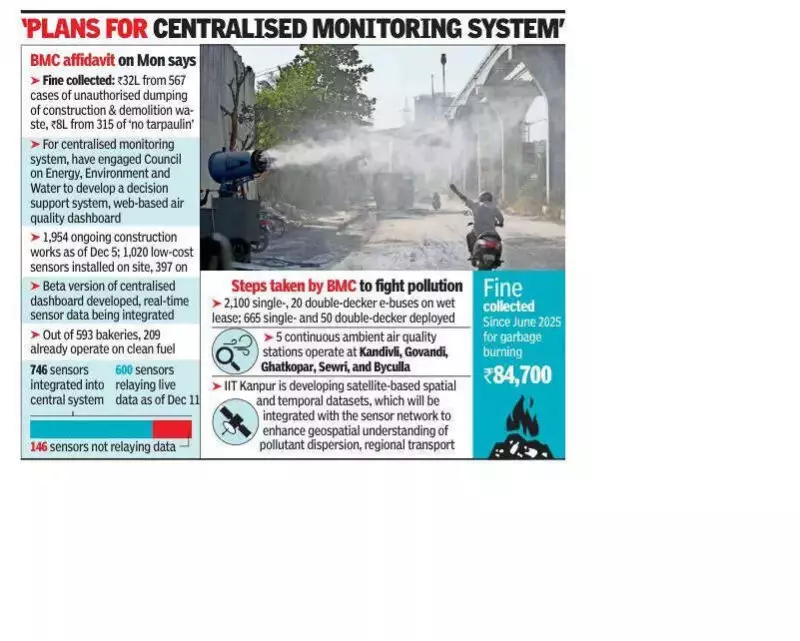
Concluding its report, the committee emphasized that centralized, real-time data integration is crucial to prevent further deterioration of Mumbai's AQI. The High Court, with Chief Justice Shree Chandrashekhar and Justice Gautam Ankhad on the bench, has now posted the suo motu PIL for hearing on December 22. The court has also orally asked developers' bodies to inform how many sites are currently in breach of air pollution mitigation guidelines, signaling a push for greater accountability.