

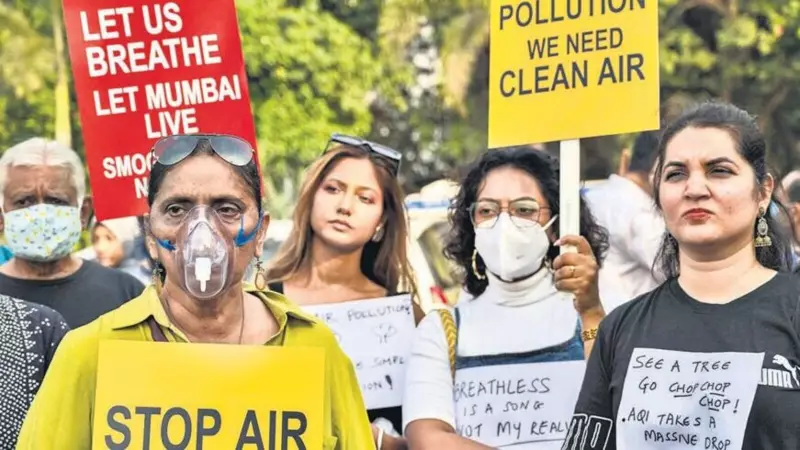
In a decisive move to address the deteriorating air quality, the Brihanmumbai Municipal Corporation (BMC) has activated the Graded Response Action Plan-4 (GRAP-4) across the Mumbai Metropolitan Region (MMR). The civic body announced this stringent measure through a detailed post on social media platform X, outlining a comprehensive 28-point guideline aimed primarily at curbing pollution from construction and industrial activities.
Key Areas Under the Scanner
The BMC has identified several suburbs that have been heavily impacted by poor Air Quality Index (AQI). These include Borivali East, Chakala-Andheri East, Deonar, Malad, Mazgaon, Mulund, Navy Nagar, and Powai. Unlike the broader restrictions seen in Delhi, Mumbai's GRAP-4 framework is specifically tailored to tackle local pollution sources, with a sharp focus on construction sites, small industrial units, and related operations.
Strict Mandates for Construction Activities
The new guidelines impose rigorous conditions on all construction and demolition work. For large projects, buildings over 70 meters tall or sites larger than one acre must have a minimum 35-foot-tall protective covering. Smaller sites require a 25-foot covering. It is now mandatory to completely enclose ongoing construction with green cloth, jute, or tarpaulin.

Furthermore, demolition must be carried out under continuous water sprinkling. The BMC has mandated that all construction sites deploy sensor-based air pollution monitoring systems, with data to be made available to officials upon demand. Immediate corrective action is required if pollution levels breach set limits.
Rules for Material Handling and Vehicles
The action plan details strict protocols for managing dust and debris:
- Continuous water spraying on construction materials during loading, unloading, and on-site storage.
- All grinding, cutting, drilling, and sawing work must be done in enclosed areas with water spraying.
- Construction and demolition waste must be disposed of only at designated BMC sites.
- Transport vehicles must be fully covered, washed after unloading debris, and not overloaded.
- CCTV cameras must be installed on all sides of construction sites to monitor vehicle cleanliness and load compliance.
- All vehicles must possess a valid Pollution Under Control (PUC) certificate.
The Transport Commissioner has been directed to take action against overloaded, uncovered, or polluting vehicles. Heavy diesel vehicles older than eight years are strictly banned from plying within Mumbai's jurisdiction.
Wider Application and Monitoring
These preventive measures are mandatory for all authorities and projects, including SRA, MHADA, MIDC, MSRDC, MMRDA, the Airports Authority of India, Railways, and private developers. For public projects like bridges, flyovers, and above-ground metro work, a 25-foot high barricading and use of smog guns or water sprinklers is compulsory.
The Maharashtra Pollution Control Board (MPCB) has been tasked with daily monitoring of emissions from major plants like BPCL, HPCL, RCF, and Tata Power, as well as nearby industrial estates. A daily report of their actions must be submitted to the Additional Municipal Commissioners for the Western Suburbs and the City.
This sweeping implementation of GRAP-4 underscores the administration's urgent response to safeguard public health against the rising threat of air pollution in India's financial capital.






