

Nagpur's Heat Action Plan Proves Effective in Reducing Summer Mortality
Nagpur's Heat Action Plan (HAP), launched in 2015, has demonstrated significant success in saving lives during extreme heat events. According to a recent assessment report, the plan coincided with a decline of 1,716 all-cause deaths in the peak summer months of April to June, even as heatwave incidents rose by 432 cases. This highlights the critical role of preparedness and coordinated response in mitigating the health impacts of rising temperatures.
Key Findings and Impact on Public Health
Data reveals that total all-cause deaths during April-June dropped sharply from 5,763 in 2015 to 4,047 in 2016, marking a substantial reduction of 1,716 deaths. Former state surveillance officer Dr. Pradeep Awate emphasized on Tuesday that extreme heat and HAP warnings after implementation were associated with decreased summertime all-cause mortality rates, with the largest declines observed at the highest temperatures. He noted, "An estimated 1,190 average annualised deaths were avoided in the post-HAP period." This success story has positioned Ahmedabad's plan as a guiding model for other cities aiming to enhance resilience to extreme heat.
Structured Response System and Implementation Details
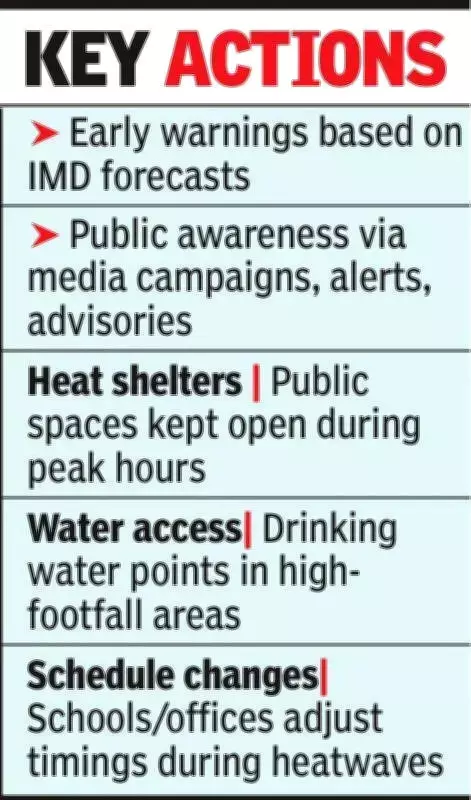
The Heat Action Plan was formalized through a Government Resolution (GR) issued on October 19, 2015, establishing a comprehensive structured response system. Key components include:

- District-level committees led by the municipal commissioner or district collector.
- Appointment of nodal officers to oversee operations.
- Interdepartmental coordination to ensure seamless execution.
- Public awareness campaigns to educate residents on heat risks.
- Emergency helplines for immediate assistance during heatwaves.
- Strengthening of medical response, including training for healthcare workers and ASHA staff.
This multi-faceted approach has enabled Nagpur to effectively manage heat-related emergencies, contributing to the observed decline in mortality despite the increase in heatwave incidents.
Broader Implications and Future Directions
The success of Nagpur's Heat Action Plan underscores the importance of proactive public health strategies in the face of climate change. As heatwaves become more frequent and intense globally, such plans offer a blueprint for other urban areas to adopt similar measures. The coordinated efforts in Nagpur not only saved lives but also set a precedent for integrating health, governance, and community engagement to combat extreme weather events. Continued evaluation and adaptation of these plans will be crucial for sustaining resilience and protecting vulnerable populations in the years to come.






