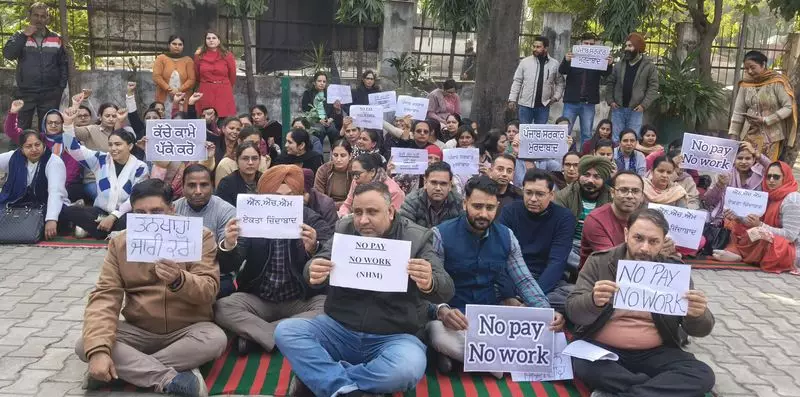
Hundreds of employees working under the National Health Mission (NHM) in Punjab's industrial hub, Ludhiana, staged a major demonstration on Tuesday. The protestors gathered outside the office of the Civil Surgeon to voice their frustration over unpaid salaries for the past two months. The agitated staff, including ASHA workers, data entry operators, and other paramedical personnel, brought work to a standstill as they demanded immediate resolution of their long-pending wage issue.
Core Demands of the Protesting Health Workers
The protest was not just about the delayed salaries for March and April. The employees presented a list of key demands to the district health administration. A primary concern is the regularization of their jobs. Currently working on contractual terms, they seek permanent employment status with the associated benefits and job security. Furthermore, they demanded the timely disbursement of their honorariums in the future to prevent such crises. The protestors warned that if their concerns are not addressed promptly, they will be forced to escalate their agitation, potentially leading to a complete work stoppage across all health programs managed by the NHM in the district.
Administration's Response and Ongoing Deadlock
Facing the large gathering, officials from the Civil Surgeon's office engaged with the protestors. The administration acknowledged the grievance and assured the employees that the matter has been communicated to higher authorities. They stated that the salary release is pending from the state government and that the district administration is following up on the issue. However, this assurance did little to placate the staff, who have heard similar promises before. They highlighted the immense financial hardship caused by the delay, especially for those in lower-income brackets who rely on their monthly wages to manage household expenses and medical needs.

Broader Implications for Public Health Services
This protest underscores a persistent problem within the NHM framework across several states. The mission, crucial for implementing key public health programs in rural and urban areas, often relies on contractual staff who face irregular payments and lack of job stability. The Ludhiana agitation signals a growing discontent that could impact the delivery of essential health services, including immunization drives, maternal care, and disease surveillance. The continued neglect of these frontline health workers' demands risks demoralizing the workforce and weakening the very health infrastructure the NHM aims to strengthen.
The situation in Ludhiana remains tense, with employees vowing to continue their protest until they receive concrete information about their salary disbursement. The ball is now in the court of the state health department to release the necessary funds and address the systemic issues plaguing the National Health Mission's workforce.