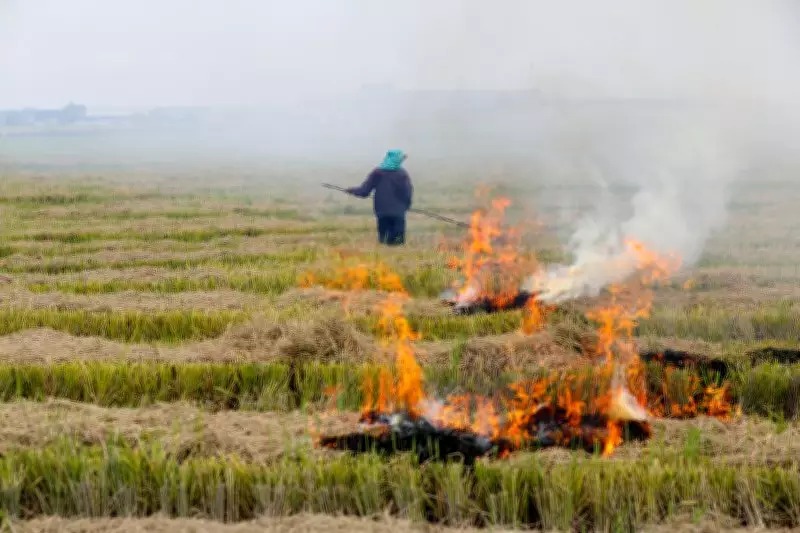
In a stern action against the practice of stubble burning, the Haryana administration has registered nine First Information Reports (FIRs) against 12 farmers in Karnal district. The farmers were found violating the ban on burning wheat stubble, a major contributor to air pollution in the region.
Details of the FIRs
The FIRs were lodged at various police stations across Karnal, including Gharaunda, Indri, and Nilokheri. According to officials, the farmers were caught red-handed setting fire to their fields after harvesting wheat. The authorities have been conducting regular patrols and using satellite imagery to detect such incidents.
Legal Provisions Invoked
The farmers have been booked under the Haryana Agricultural and Farmers' Welfare Act, 2020, and the Air (Prevention and Control of Pollution) Act, 1981. The accused face penalties and possible imprisonment if convicted. The administration has warned that strict action will continue against those who defy the ban.

Government's Stance
Deputy Commissioner of Karnal, Nishant Kumar Yadav, stated that the government is committed to reducing air pollution. He said, "Stubble burning is a serious offence, and we will not tolerate any violation. We urge farmers to use alternative methods like in-situ management or use of machinery provided under government schemes." The district administration has also set up a control room to receive complaints regarding stubble burning.
Impact on Air Quality
Stubble burning in Punjab and Haryana is a major cause of the severe smog that engulfs Delhi-NCR every winter. The smoke from burning fields contains harmful pollutants like particulate matter (PM2.5 and PM10), which pose serious health risks. The crackdown aims to mitigate this environmental hazard.
Alternatives for Farmers
The government has been promoting alternatives such as the use of happy seeders, zero-tillage machines, and bio-decomposers. Subsidies are provided to farmers for purchasing these implements. However, many farmers still resort to burning due to the short window between harvesting and sowing the next crop. Officials are working to raise awareness about the long-term benefits of sustainable practices.
The registration of FIRs sends a strong message that the authorities are serious about enforcing the law. It is expected to deter other farmers from engaging in stubble burning. Environmental activists have welcomed the move but emphasize the need for more support to farmers to adopt eco-friendly methods.