

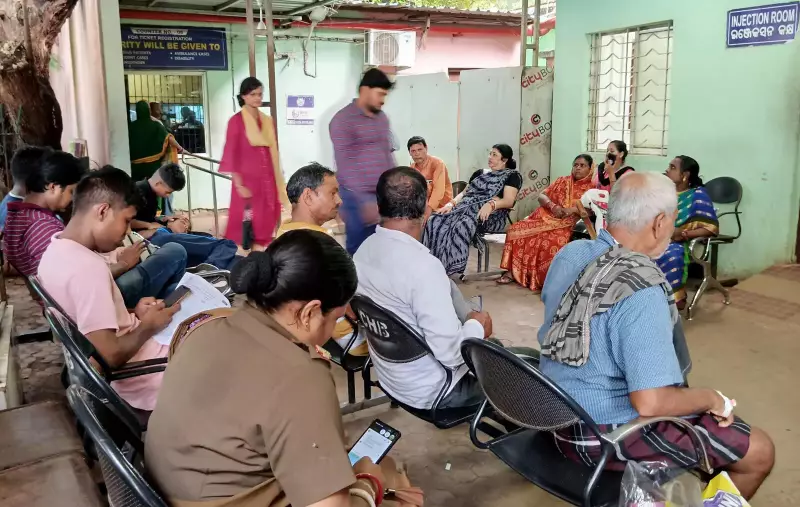
The year 2025 in Odisha was dominated by a critical and persistent issue: a severe shortage of doctors, nurses, and paramedical staff across government hospitals. This crisis led to significant patient inconvenience, protests by medical professionals, and judicial intervention, highlighting a systemic failure in the state's public health infrastructure.
Staggering Shortfall and Patient Suffering
The core of the problem lies in the alarming doctor-to-population ratio. While the World Health Organization (WHO) recommends one doctor for every 1,000 people, Odisha's reality is far grimmer, with only one doctor available for every 1,735 people. This massive gap placed an unsustainable burden on existing healthcare workers and left patients struggling to receive timely and proper medical attention.
The human cost of this shortage was voiced by Ramachandra Nahak, an attendant from Ganjam, who stated, "Doctors and nursing officers are important stakeholders of a hospital. The shortage of these healthcare providers creates chaos. Poor people who depend on these govt hospitals are getting deprived of treatment facilities." The crisis was starkly exposed during a diarrhoea outbreak in June, which saw over 2,200 cases and 19 alleged deaths reported from six districts, stretching the already thin resources to their limit.

Protests, Court Orders, and Institutional Delays
Frustrated by the overwhelming patient load and systemic issues, doctors under the Odisha Medical Service Association (OMSA) consistently demanded mass recruitment. Their grievances culminated in a statewide strike starting December 26, where they suspended OPD services for an hour daily. Their demands included pay parity, a transparent transfer policy, and the urgent recruitment of doctors.
Parallelly, the Orissa High Court issued back-to-back orders addressing various problems at the premier SCB Medical College and Hospital in Cuttack. Health activist Gouranga Mohapatra pointed out the contradiction, saying, "While the govt has announced plans to convert this medical college to an AIIMS++ institution, delays in construction and recruitment procedures create problems for patients."
Government Response and Glimmers of Hope
Amid the turmoil, the state government announced some developments and a potential solution. Health Minister Mukesh Mahaling revealed that the process to recruit for 5,248 posts of medical officers had been initiated. "It will solve the shortage of doctors in govt hospitals. We are taking steps to solve issues in the health sector," he asserted.
The year also saw some positive expansions: government medical colleges in Talcher and Phulbani began their first MBBS admissions, and AIIMS Bhubaneswar achieved a milestone by starting liver transplant services. However, these advances were overshadowed by the pervasive manpower crisis that affected daily healthcare delivery for millions across the state.
The situation underscores a critical need for swift and effective implementation of recruitment drives and policy reforms to bridge the gap between healthcare demand and supply in Odisha's public hospitals.






