

The recent tragic deaths of ten people in Indore, Madhya Pradesh, due to contaminated water have cast a harsh spotlight on the quality of groundwater in major urban centers of Odisha. A new report from the state's pollution watchdog has revealed alarming levels of pollution in Bhubaneswar, Cuttack, and Puri, raising urgent public health concerns.
OSPCB Report Uncovers Widespread Pollution
According to the latest findings released by the Odisha State Pollution Control Board (OSPCB), groundwater in the state's key cities is severely compromised. The investigation pinpointed different but equally dangerous contaminants in each location, painting a grim picture of the resource's safety.
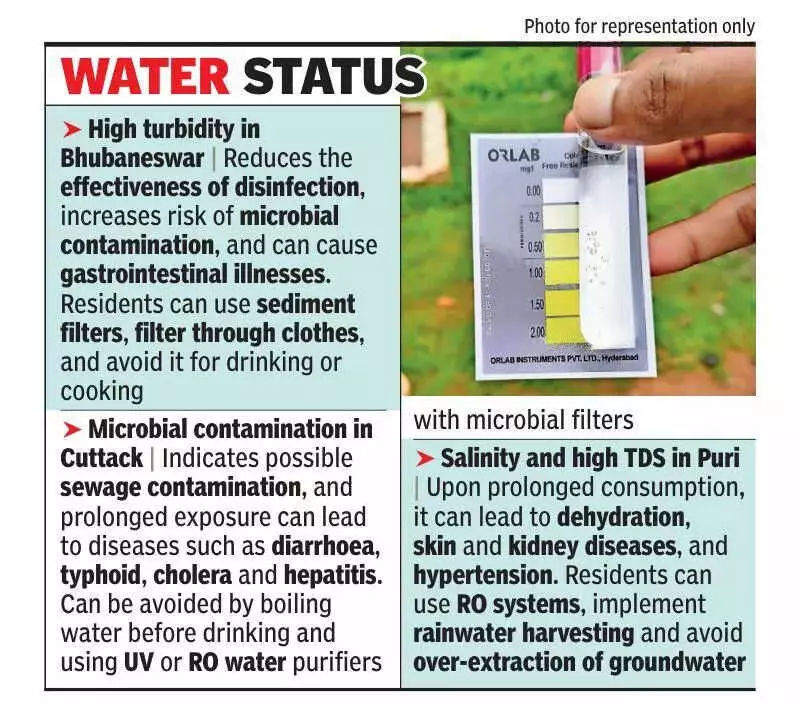
In the capital city of Bhubaneswar, samples collected from six sites—including Laxmi Sagar, Capital Hospital, and Old Town—showed dangerously high turbidity. The levels ranged from 24 to 50 NTU (Nephelometric Turbidity Unit), which is far above the acceptable limit of just 1 NTU.

The situation in Cuttack is marked by microbiological hazards. Areas such as Baliyatra Ground and Shishu Bhawan showed contamination with total coliform (TC) and faecal coliform (FC) bacteria, indicating the presence of sewage or faecal matter.
Puri faces a different threat. Groundwater samples near the sea beach recorded extreme salinity, with a staggering Total Dissolved Solids (TDS) level of 7,384 mg/l. Chloride and sulphate levels were also excessively high at 3,798 mg/l and 872.5 mg/l, respectively, pointing to severe saline intrusion.
Health Risks and Expert Warnings
Environmental and public health experts have issued strong warnings about the consequences of consuming this contaminated water. High turbidity, as found in Bhubaneswar, significantly increases the risk of waterborne diseases like diarrhoea and cholera.
The faecal contamination in Cuttack's supply can lead to serious illnesses, including typhoid, hepatitis, and various gastrointestinal infections. Prolonged exposure to high TDS levels, like those in Puri, can cause kidney stress, mineral imbalances, skin irritation, and gastric diseases.
"Authorities should take steps for disinfection to ensure the quality and safety of the water consumed by residents. Lessons should be learned from Indore," cautioned city-based environmentalist Sailabala Padhi. She added that frequent outbreaks of waterborne diseases in Odisha could be avoided through better planning and proactive measures.
Official Response and Mitigation Steps
In response to the findings, the Water Corporation of Odisha (Watco), which manages supply in the three cities, has outlined its actions. A senior Watco official stated that they are working in close coordination with the OSPCB and other agencies to ensure safe drinking water.
The official highlighted that all water infrastructure is now digitally mapped for continuous monitoring. Watco has also emphasized regular disinfection of water tanks and pipelines, along with prompt repairs to plug leakages and prevent further contamination.
The report attributes Puri's saline intrusion to the over-extraction of groundwater combined with intense pressure from tourism. This makes the water entirely unfit for drinking and underscores the need for sustainable water management practices in ecologically sensitive zones.
The contamination crisis in Odisha's cities serves as a critical wake-up call, highlighting the urgent need for robust water quality surveillance, infrastructure maintenance, and sustainable resource management to safeguard public health.






