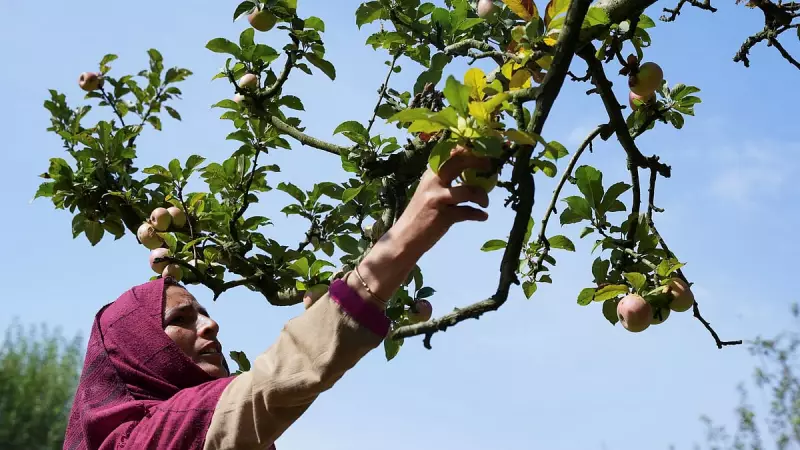
A recent scientific investigation has uncovered a grave and growing health crisis among the workers who tend to Kashmir's famed apple orchards. The study points to prolonged and often unprotected exposure to toxic pesticides as the primary cause, leading to a spectrum of serious medical conditions.
Alarming Findings from the Field Study
Researchers from Sher-e-Kashmir University of Agricultural Sciences and Technology (SKUAST) conducted a detailed health assessment of individuals working in apple orchards across the Kashmir valley. The team, led by scientist Dr. Rakesh Khulbe, compared 50 orchard workers with a control group of 50 individuals not involved in agricultural spraying.
The results were stark and deeply concerning. The study, published in the journal Environmental Science and Pollution Research, found that the exposed workers showed significantly higher levels of key biomarkers indicating cellular damage and oxidative stress. Specifically, workers had elevated levels of Malondialdehyde (MDA) and reduced activity of crucial antioxidant enzymes like Superoxide Dismutase (SOD) and Catalase (CAT).
Dr. Khulbe explained the significance: "The imbalance between the production of free radicals and the body's ability to counteract them is a clear indicator of pesticide-induced toxicity. This oxidative stress is a known precursor to numerous chronic diseases."
The Human Cost: Symptoms and Suffering
Beyond the biochemical data, the research documented a distressing catalogue of physical symptoms commonly reported by the orchard workers. These are not occasional ailments but persistent health issues linked directly to their occupation.
The workers reported a much higher incidence of:
- Persistent headaches and episodes of dizziness
- Skin irritations, rashes, and allergies
- Respiratory problems and difficulty breathing
- Visual disturbances and eye-related issues
- Generalized fatigue and muscle weakness
"These symptoms are classic manifestations of organophosphate and carbamate pesticide poisoning," Dr. Khulbe noted. "The chronic nature of exposure means the damage accumulates silently over years."
A Call for Urgent Intervention and Safety Reform
The study concludes with a powerful and urgent call to action. It highlights a critical gap in safety practices within one of Jammu and Kashmir's most vital economic sectors. Apple cultivation is the backbone of the region's horticulture economy, yet the very people sustaining it are working in hazardous conditions.
The research strongly advocates for the immediate and mandatory use of Personal Protective Equipment (PPE). This includes gloves, masks, goggles, and protective clothing to create a barrier between the worker and the toxic chemicals. Currently, most laborers spray pesticides with little to no protection, often due to a lack of awareness, availability, or cost.
Furthermore, the scientists recommend comprehensive training programs for farmers and workers on the safe handling, mixing, and application of pesticides. They also stress the need for regular health monitoring camps in apple-growing districts to enable early detection and treatment of pesticide-related illnesses.
The findings underscore a painful paradox: while pesticides protect the apple crop from pests and diseases, they are simultaneously undermining the health of the human capital essential for the industry's survival. Addressing this occupational health emergency is not just a medical necessity but also an economic imperative for the sustainable future of Kashmir's iconic apple belt.