

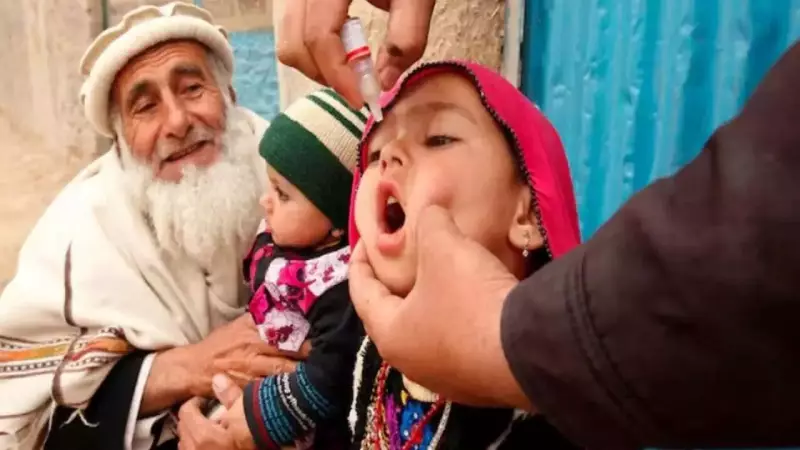
Pakistan's latest nationwide effort to eradicate polio has encountered significant setbacks in its high-risk regions, with officials reporting that over 935,000 children under five years old in the merged districts of Khyber Pakhtunkhwa (KP) were left unvaccinated. Authorities have pointed to severe security challenges and the displacement of large populations as the primary obstacles preventing healthcare workers from reaching their targets.
Security and Displacement Disrupt Vaccination Efforts
According to official reports, the ambitious campaign faced its toughest challenge in the merged tribal districts of KP. Security concerns and the migration of thousands of families from areas like North Waziristan, South Waziristan, and Bajaur to other parts of the country severely complicated monitoring and immunization activities. This mass movement made it extremely difficult for health teams to track and vaccinate eligible children, creating dangerous immunity gaps.
The operational challenges were compounded by reductions in resources. Officials confirmed that staffing and operational support for key programmes run by the World Health Organization (WHO) and UNICEF in these merged districts were scaled back last year. Furthermore, cuts in WHO funding directly impacted the coverage and reach of the vaccination drives, leaving children in these remote and conflicted-affected zones at a heightened risk of contracting the debilitating virus.

Polio Cases and Regional Shortfalls
The consequences of these gaps are already visible in the case numbers. Data from the World Health Organization indicates that Khyber Pakhtunkhwa has reported 19 polio cases in 2025 alone. The cases were distributed across several districts: four each in North Waziristan, Lakki Marwat, and Tank; three in Bannu; two in Torghar; and one each in Dera Ismail Khan and Lower Kohistan.
The problems were not confined to KP. In Sindh province, more than 12,000 children under five were missed during the final polio campaign of 2025 in Hyderabad and its surrounding areas. Health workers recorded refusals primarily in Cantonment zones and municipal towns like Hussainabad, Preetabad, Qasimabad, and Tando Jam. The main reasons cited for these misses were children being absent from their households during visits and outright parental refusals to allow vaccination.
National Success Amidst Localized Failures
Despite the critical shortfalls in specific high-risk regions, the national anti-polio campaign achieved considerable success on an aggregate level. Nationwide, the drive managed to vaccinate more than 44.6 million children across Pakistan.
The provincial breakdown of successfully vaccinated children is as follows:
- Punjab led the effort by immunizing 22.9 million children.
- Sindh vaccinated 10.6 million children.
- Khyber Pakhtunkhwa reached 7.15 million children.
- Balochistan vaccinated 2.58 million children.
Officials noted that contributions from other regions added to this national tally, showcasing a widespread commitment to the eradication goal.
However, health authorities have issued a stern warning. They emphasize that without sustained and focused vaccination efforts, particularly among displaced communities and in high-risk populations, children in the merged districts remain acutely vulnerable to polio infection. The persistence of the virus in these pockets poses a continuous threat to the country's overall polio-free status and underscores the need for tailored strategies to overcome local barriers.






