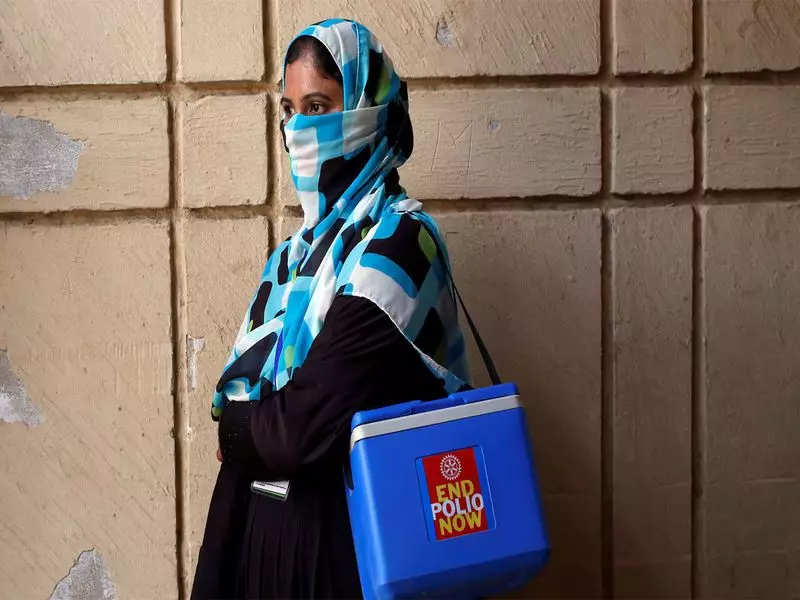
Frontline health workers crucial to Pakistan's fight against polio are up in arms over a new government recruitment policy. Staff associated with the polio eradication initiative in the Khyber Pakhtunkhwa (KP) province have voiced strong opposition, calling the policy discriminatory and threatening widespread protests if their demands are not met.
What is the New Policy Sparking Outrage?
The core of the dispute lies in a recent directive from the Khyber Pakhtunkhwa Health Department. The policy mandates that all future hiring for the Expanded Programme on Immunisation (EPI) and polio eradication campaigns must be conducted through the Khyber Pakhtunkhwa Health Department's own online portal. This system, known as the Health Department's Human Resource Management System (HRMS), would become the exclusive channel for recruitment.
This move has effectively sidelined the existing Lady Health Workers (LHWs) programme, which has traditionally been a primary pipeline for hiring field staff for immunization drives. Workers argue that this new centralized system creates unnecessary barriers and fails to recognize the experience and ground-level expertise of those already embedded in community health networks.
Workers' Demands and Threats of Protest
The protesting workers, who include vaccinators, social mobilizers, and other field staff, have presented a clear set of demands to the provincial authorities. Their primary request is for fair and priority access to permanent positions within the EPI and polio programmes. They believe their years of service on the front lines, often in challenging and high-risk environments, should grant them first consideration for any regularized jobs.
They have explicitly demanded that the government rescind the notification enforcing recruitment through the Health Department's portal. The workers warn that if the government does not address their grievances promptly, they will be forced to escalate their opposition. The threatened actions include:
- Organizing large-scale protest demonstrations across the province.
- Potentially boycotting future polio vaccination campaigns, a move that could severely dent Pakistan's eradication efforts.
This standoff highlights the fragile relationship between the state and the essential workforce battling a disease that continues to paralyze children in the region.
Implications for Pakistan's Polio Eradication Fight
The protest comes at a critical juncture for Pakistan's public health. Pakistan and Afghanistan remain the only two countries in the world where wild poliovirus is still endemic. Khyber Pakhtunkhwa, particularly its merged tribal districts, is considered a high-risk zone for virus transmission. Any disruption in vaccination campaigns, especially one caused by a demotivated or protesting workforce, could lead to dangerous setbacks.
The frontline workers are not just employees; they are community liaisons who navigate complex social landscapes, vaccine hesitancy, and even security threats. Their dissatisfaction with recruitment policies points to deeper issues of job insecurity, lack of career progression, and the perceived devaluation of their experience. Resolving this conflict is not merely an administrative task but is vital for maintaining the momentum of one of the world's most important public health initiatives.
The ball is now in the court of the Khyber Pakhtunkhwa Health Department. How it responds to these demands will significantly impact the morale of the polio workforce and, by extension, the future of eradication efforts in a key region of Pakistan.