

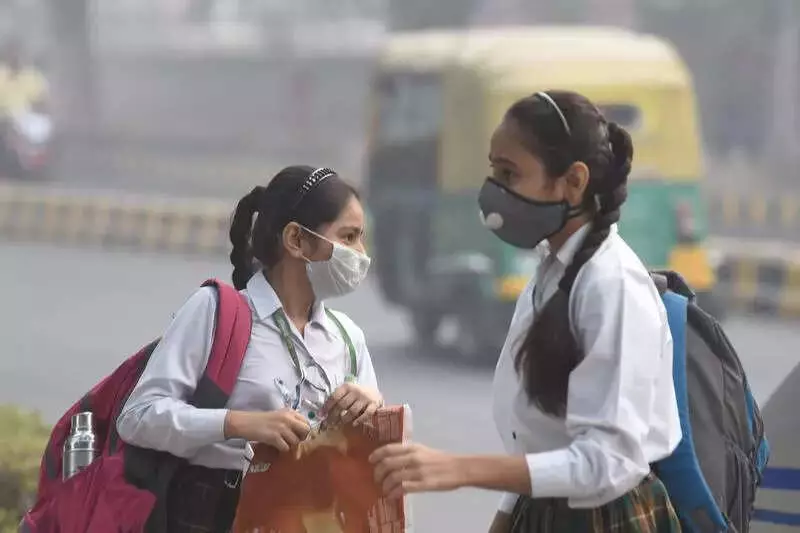
In the sprawling urban landscape of Delhi-NCR, a silent health emergency is unfolding, with the region's youngest residents paying the steepest price. Paediatricians and ENT specialists across cities like Noida, Ghaziabad, and Gurgaon are sounding the alarm over a dramatic surge in severe, pollution-linked health complications among children, turning the city's toxic air into a pervasive threat to childhood itself.
A Surge in Severe Paediatric Cases
The evidence is no longer anecdotal but a chilling clinical reality. Doctors report that cases which had nearly vanished during the Covid-19 lockdowns are now returning with alarming frequency and severity. Dr. Vivek Jain, head of paediatrics at Fortis Noida, describes the city's air quality as having turned it into a "gas chamber," where children's developing immune systems are under relentless assault.
One stark example involved a three-year-old boy in Noida who was recently hospitalized with an acute bronchiolitis exacerbation during a severe smog episode. "What began as a cough escalated into breathlessness. He was placed on high-flow oxygen. But no infection was detected. This was clearly pollution-triggered airway inflammation," Dr. Jain explained. In another case from northwest Delhi's Shalimar Bagh, a five-year-old with a previously managed condition of adenotonsillar hypertrophy suffered a major relapse, exhibiting mouth breathing, nasal blockage, and loud snoring due to chronic mucosal irritation from polluted air, now likely requiring surgery.

From Infants to Teenagers: No Age is Spared
The crisis spans all age groups. At Manipal Hospital in Ghaziabad, a mere six-month-old baby was brought in struggling to breathe, diagnosed with wheezy bronchitis caused by severe pollution. "His tiny airways were irritated and narrowed," said Dr. Sumit Gupta, a consultant paediatrician. The infant needed prolonged nebulisation before stabilising.
For older children, the pollution is fundamentally altering daily life. Nikhil Kansal, father of an 11-year-old in Raj Nagar Extension, shared how his energetic, football-playing son became breathless and weak within minutes of being outside as the November smog settled in. The diagnosis was not an infection but pollution-induced airway irritation.
Doctors are also managing more complex, recurrent conditions. A seven-year-old girl in Ghaziabad, symptom-free for nine months, developed a persistent cough and night-time wheezing as air quality dipped, eventually requiring frequent nebulisation, oral corticosteroids, and even intravenous steroids.
New Illnesses and Frightening New Risks
Alarmingly, pollution is also triggering new illnesses in children with no prior history. Dr. Shashidhar, head of ENT at Artemis Hospital in Gurgaon, cited the case of a 13-year-old boy who moved from Singapore. Having had no breathing issues there, he soon developed adenoid hypertrophy after arriving in Delhi-NCR. Conversely, families moving abroad report children's chronic coughs disappearing within weeks of leaving India.
The consequences extend far beyond typical winter coughs and colds. During the peak pollution weeks from late October through November, doctors have begun seeing cases of pulmonary embolism—a dangerous "lung attack" caused by a blood clot—in teenagers. Dr. Sharad Joshi, head of pulmonology at Max, Vaishali, recently treated a 17-year-old student who developed sudden breathlessness. Prolonged study sessions on his terrace in polluted air triggered clot formation in his legs, which travelled to his lungs. "If such clots are not treated promptly, they can be deadly," Dr. Joshi warned.
The collective testimony from medical professionals and harried parents paints a dire picture: prolonged exposure to Delhi-NCR's toxic air is not just an inconvenience but a serious paediatric health crisis, burdening the smallest lungs with the heaviest consequences.






