

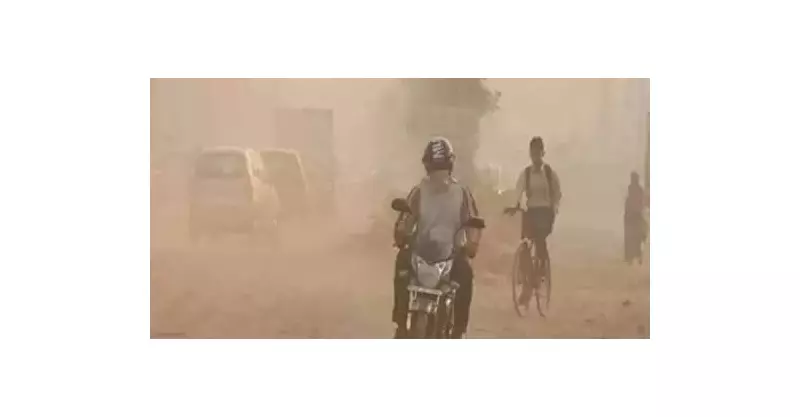
Union Education Minister Dharmendra Pradhan has raised a serious alarm and personally intervened to address the dangerously deteriorating air quality in Odisha's critical industrial region. Expressing deep concern, the minister has called for a permanent solution to the escalating air pollution crisis in the Angul-Talcher industrial belt.
Minister's Direct Intervention and Letters to Authorities
On Thursday, Dharmendra Pradhan took decisive action by writing separate letters to key authorities. He addressed Union Environment, Forest and Climate Change Minister Bhupender Yadav, Union Coal and Mines Minister G Kishan Reddy, and Odisha Chief Minister Mohan Charan Majhi. In his correspondence, Pradhan highlighted the growing public health hazard posed by the toxic air in the region.
The minister pointed out a particularly alarming fact: the Air Quality Index (AQI) in Angul had recently entered the 'severe' category. He also noted that Talcher has earned a notorious place among the country's most polluted cities. Pradhan specifically flagged the heightened health risks for vulnerable groups, including children, the elderly, and individuals suffering from respiratory ailments.

Proposed Action Plan for a Long-Term Solution
Moving beyond mere concern, Pradhan laid out a concrete set of measures to tackle the pollution menace. He emphasized that actions under the Graded Response Action Plan (GRAP) are often temporary and stressed the need for a sustained, coordinated strategy.
His key recommendations include:
- Stricter enforcement of pollution control regulations across all industries in the belt.
- Strengthening real-time air quality monitoring systems for better data and accountability.
- Urging the Coal Ministry to adopt fully mechanized coal transportation and advanced dust-suppression technologies.
- Creating a robust green buffer through large-scale plantation drives around the industrial zone and mining corridors.
- Expanding the scope and targets under the National Clean Air Programme (NCAP) for the region.
Pradhan asserted that a lasting solution would require coordinated efforts between the State Pollution Control Board, the district administration, and the industrial units operating in the area. He underscored the necessity of joint cooperation between the Central and State governments to ultimately improve the air quality and, consequently, the quality of life for the residents of Angul and Talcher.
Immediate Triggers and Administrative Response
The minister's intervention follows a recent environmental scare. Last Saturday, pollution levels in Talcher reportedly surpassed those of New Delhi, one of the world's most polluted capitals. This spike was attributed to relentless, round-the-clock industrial activities in the belt.
Following this revelation, the local district administration swiftly enforced a series of prohibitory measures. These included a ban on various construction activities to curb dust emissions. Taking a cue, the Balasore district administration also issued similar directives to combat air pollution within its jurisdiction, indicating the spread of concern across the state.
The situation highlights a critical clash between industrial growth and environmental health in one of Odisha's key economic zones. While the immediate administrative steps are in place, Minister Pradhan's push for a permanent, systemic overhaul marks a significant step towards addressing the root causes of the pollution crisis.






