

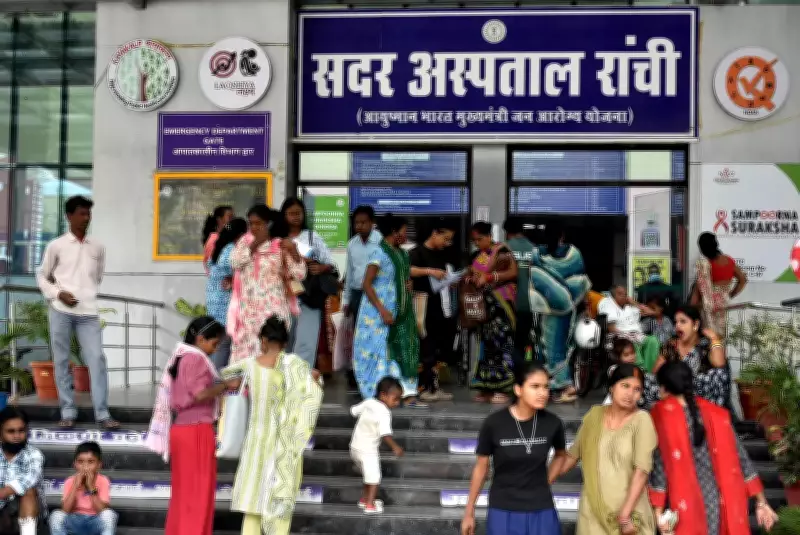
Ranchi: With monsoon entering the state, authorities of Ranchi Sadar Hospital have intensified monitoring of diarrhoea, typhoid, jaundice, hepatitis and other water- and vector borne diseases across the city. Health officials said mild cases of diarrhoea are being reported, but no major outbreak has been detected so far.
The hospital administration has directed medical teams to remain alert and ensure adequate availability of medicines, ORS and intravenous fluids to manage any seasonal increase in patient load. ORS sachets are being distributed to patients visiting outpatient departments, while suspected typhoid cases are being screened and referred for confirmatory tests when required.
Civil surgeon Dr Prabhat Kumar said the situation remains under control, though the health department is preparing for a possible rise in cases later in the season.

“At present, we are seeing only mild cases of diarrhoea. Traditionally, the peak period for water-borne diseases begins from the end of July and continues through August. We are maintaining close surveillance and have ensured sufficient stocks of medicines and fluids at all health facilities,” he said. Kumar advised residents to drink boiled or filtered water, avoid consuming cut fruits and street food during the rainy season, maintain hand hygiene and seek medical attention immediately in case of persistent fever, vomiting or diarrhoea.
Doctors at Rajendra Institute of Medical Sciences (Rims) said confirmatory testing plays a crucial role in accurately diagnosing typhoid cases. Rims PRO Shishir Kumar said around 20-30% of fever cases reported at the hospital every week are classified as enteric fever.
“Patients with suspected typhoid are screened using the Widal test, while blood culture is conducted for confirmatory diagnosis. Culture testing helps identify the causative bacteria and remains the most reliable method for confirming typhoid. Such confirmatory tests are not routinely carried out by many private laboratories,” he said.
“People should watch for symptoms such as loose motion, vomiting, abdominal pain, fever, weakness and signs of dehydration. If diarrhoea persists for more than a day, there is high fever, blood in stool, repeated vomiting or reduced urine output, patients should consult a doctor immediately rather than self-medication,” said Ramesh Ranjan, a physician in Lalpur.






