

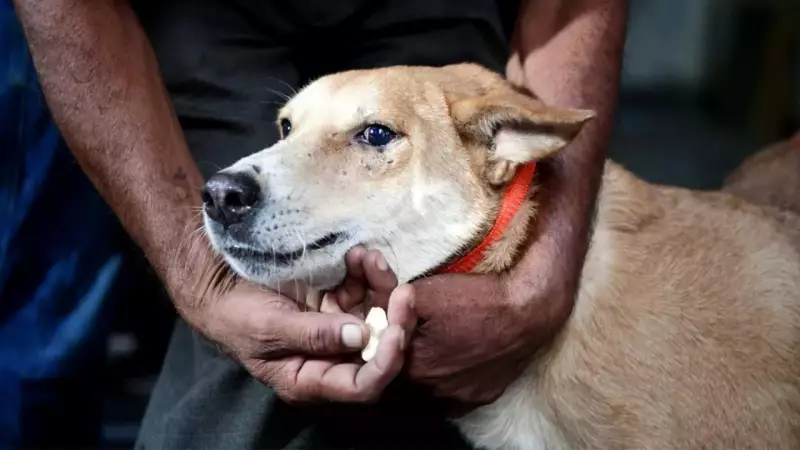
In a significant move to address public safety concerns, the Supreme Court of India has issued a landmark directive for the immediate removal of stray dogs from key public spaces across the nation. The order, passed on Friday, comes in response to the country's alarmingly high rabies-related death toll and a surge in dog-bite incidents that have made public areas unsafe.
Court's Directive on Stray Dog Menace
A bench comprising Justices Vikram Nath, Sandeep Mehta, and N V Anjaria emphasized that the dog-bite menace in spaces dedicated to learning, healing, and recreation is not just a public health issue but a critical matter of human safety. The court stated that governments have a fundamental obligation to protect the life and health of citizens.
The bench explicitly directed that stray dogs must be removed from the premises of educational institutions, hospitals, sports complexes, bus stands, and railway stations. The responsibility for this action falls squarely on the jurisdictional municipal body or authority.

High-Profile Incidents Prompt Action
The court's order referenced several recent, high-profile dog-bite incidents that have captured national attention. These included a case where a Welsh entrepreneur was bitten by a stray dog during a morning run in Bengaluru. Furthermore, two foreign coaches from Kenya and Japan were bitten inside the Jawaharlal Nehru Stadium.
Perhaps the most startling example cited was an event at the Kannur railway station in Kerala, where a single rabid stray dog bit 18 people on a platform. These incidents underscore the pervasive nature of the problem in institutional settings.
Implementation and Compliance Measures
The Supreme Court laid out a clear procedure for the removal and handling of stray dogs. The animals are to be shifted to designated shelters where they must undergo sterilisation and vaccination as per the Animal Birth Control Rules of 2023. Crucially, the court mandated that dogs picked up from a location cannot be released back to the same spot, a measure intended to permanently liberate these sensitive areas from the stray dog presence.
The management of the specified institutions must appoint a nodal officer to ensure cleanliness and prevent stray dogs from entering the campus. The court also ordered the Chief Secretaries of all states and Union Territories to implement the directions and submit a status report within eight weeks.
Non-compliance will be viewed seriously and may lead to penalties, including the initiation of contempt proceedings against erring officials. The Animal Welfare Board has been tasked with filing a report on the nationwide status of sterilisation and vaccination drives.
This judicial intervention aims to curb what the bench described as a systemic failure and administrative apathy, reaffirming the state's duty to safeguard the fundamental right to life and safety, especially for children, patients, and sportspersons.






