

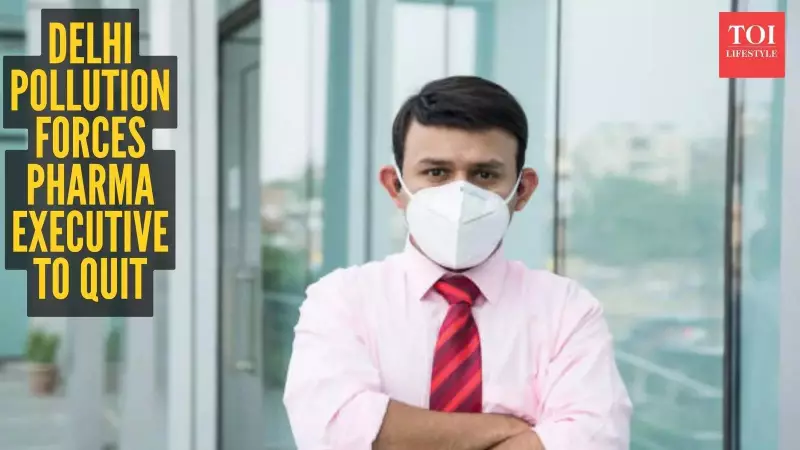
In a stark reflection of Delhi's deteriorating environmental conditions, a senior corporate leader has chosen to resign from his high-ranking position, explicitly blaming the capital's toxic air for his decision. This move underscores a growing public health emergency that is now impacting professional lives and corporate structures.
A Resignation Rooted in Health Concerns
Rajkumar Bafna, the President of Finance at Akums Drugs and Pharmaceuticals Ltd., tendered his resignation earlier this month, directly attributing his departure to Delhi's dangerously high pollution levels. The news was formally disclosed through a mandatory filing to the stock exchanges, capturing widespread attention. In his resignation note, Bafna bypassed typical corporate euphemisms, stating bluntly that the city's pollution compelled him to step down and requesting an early release from his duties. He did, however, offer support during the transition period.
The pharmaceutical company, in its official response, expressed sadness but acknowledged the circumstances. The management stated it understood his health-related concerns and that these made it impossible to persuade him to stay. The company's board accepted his resignation a few days after it was submitted. Bafna will be officially relieved from his role at the end of December 2023.

The Unrelenting Grip of Delhi's 'Pollution Season'
This incident serves as a powerful reminder of the severity of Delhi's annual air quality catastrophe. Every winter, a deadly cocktail of vehicle emissions, industrial pollution, dust from construction sites, and smoke from agricultural stubble burning in neighbouring states envelops the National Capital Region. Meteorological conditions trap this haze, creating a persistent public health hazard.
Data from monitoring agencies this season has been alarming. The Air Quality Index (AQI) has frequently plunged into the 'Very Poor' (301-400) and 'Severe' (401-500) categories. Readings surpassing 300 and even 400 have become commonplace, a level health professionals warn is hazardous for all residents, not just those with pre-existing conditions. For millions of Delhiites, symptoms like persistent coughs, burning eyes, and breathlessness have become an unwelcome part of daily life.
Beyond One Job: The Broader Implications
The decision of a senior executive to quit a prominent career rather than continue enduring polluted air speaks volumes. It transcends a single corporate resignation, pointing to a larger, systemic crisis. It highlights the tangible human and economic costs of living in a metropolis where clean air is increasingly perceived as a luxury.
This event raises critical questions about urban liveability, corporate responsibility towards employee well-being in polluted cities, and the potential for 'pollution migration' among skilled professionals. As Delhi grapples with another winter of hazardous smog, Bafna's exit is a potent symbol of the personal compromises its residents are forced to make.






