

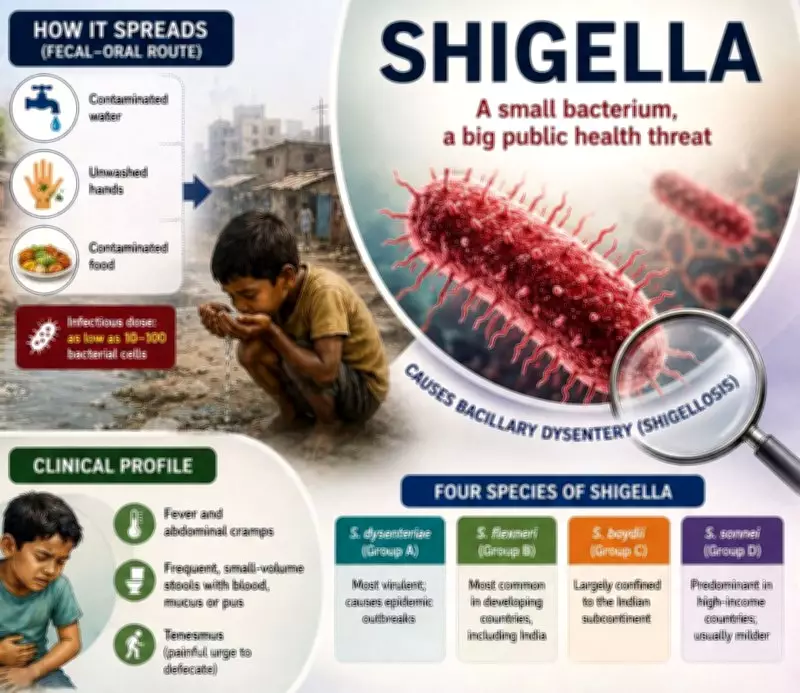
Among the bacterial culprits responsible for water-borne diseases, Shigella occupies a particularly dangerous position. This microscopic menace is highly contagious, increasingly drug-resistant, and disproportionately lethal for children under five years of age. Every year, contaminated water and poor sanitation silently claim thousands of lives across the developing world, and Shigella is a leading cause of bacterial dysentery, a severe form of diarrhea that can be fatal if untreated.
Why Shigella Matters for UPSC Aspirants
For UPSC aspirants, Shigella sits at the intersection of general science, public health policy, and India’s ongoing battle with water-borne diseases. Understanding this pathogen is crucial for answering questions on health security, sanitation, and antimicrobial resistance. The bacterium spreads through the fecal-oral route, often via contaminated food or water, and causes symptoms such as bloody diarrhea, fever, and stomach cramps. In severe cases, it can lead to dehydration and death, especially in malnourished children.
Drug Resistance: A Growing Threat
One of the most alarming aspects of Shigella is its increasing resistance to multiple antibiotics. The World Health Organization has listed Shigella as a priority pathogen for which new antibiotics are urgently needed. In India, where water quality and sanitation infrastructure remain inadequate, the emergence of multidrug-resistant strains poses a significant challenge to public health systems. This resistance is driven by overuse and misuse of antibiotics in both humans and animals, as well as poor infection control practices.

Policy Implications for a Water-Stressed Nation
India’s water stress exacerbates the risk of Shigella outbreaks. With many regions facing water scarcity, communities often rely on unsafe water sources, increasing exposure to pathogens. The government’s Jal Jeevan Mission aims to provide piped water to all rural households by 2024, but progress varies. Public health experts argue that preventing Shigella infections requires a multi-pronged approach: improving water quality, promoting handwashing, ensuring food safety, and strengthening surveillance for drug-resistant strains. Vaccination against Shigella is not yet widely available, but research is ongoing.
Conclusion
Shigella is not just a medical issue; it is a policy challenge that demands attention from lawmakers, health officials, and communities. For UPSC aspirants, understanding this pathogen and its broader implications can help in crafting informed answers on public health, sanitation, and India’s development goals. As the nation strives for universal health coverage and clean water for all, tackling invisible invaders like Shigella must be a priority.






