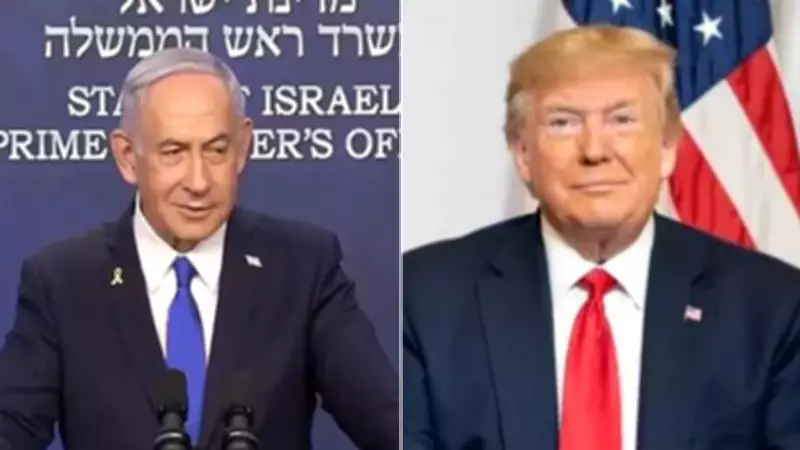
Israeli Prime Minister Benjamin Netanyahu has publicly acknowledged differences with US President Donald Trump, stating that there are times when the two leaders do not see "eye to eye." This rare admission of discord highlights the strains in the US-Israel relationship, particularly over Iran policy.
Speaking to the Times of Israel, Netanyahu said: "Many times we see eye to eye, and there are also cases in which we see less eye to eye. I am responsible for Israel's security interests. I stand up for them." The comments come amid reports that Trump was pursuing a peace deal with Tehran, while Israel continued its military operations against Lebanon, complicating the US efforts.
Netanyahu also defended the joint US-Israeli military campaign against Iran, claiming it saved Israel from what he termed the threat of "nuclear annihilation." He said: "The most important thing is that we saved the State of Israel from the threat of nuclear annihilation. And what would that mean? It would mean that millions of Israeli citizens -- you who are hearing me now -- all of you would have been in terrible danger of mass death... And we have pushed away from us, for years, this danger of the annihilation of Israel's population."

Netanyahu vowed that Iran would never be permitted to obtain nuclear weapons, regardless of any agreement. "With an agreement or without one, Iran will not have nuclear weapons," he declared. "I made no mistake at all... We said we wanted to remove an existential threat hanging over us: first, the nuclear threat -- and we did that, second the missile threat -- and we did that."
These remarks are Netanyahu's first public comments since the United States and Iran announced a deal earlier this week to end the Middle East war. The agreement, which Trump brokered, has been met with mixed reactions in Israel, with some praising the diplomatic breakthrough while others express concern over security implications.
Netanyahu's acknowledgment of differences with Trump underscores the complex dynamics between the two allies. While they share a common goal of preventing a nuclear-armed Iran, their approaches have at times diverged, with Netanyahu prioritizing military action and Trump favoring diplomatic engagement.
The Israeli leader's strong stance on Iran resonates with his domestic audience, particularly amid ongoing regional tensions. However, it also risks further straining ties with Washington, which has been a key ally and military supporter of Israel.
As the situation evolves, Netanyahu's comments reflect the delicate balance Israel must maintain between asserting its security interests and preserving its alliance with the United States. The coming weeks will likely test this balance as the details of the US-Iran deal unfold.