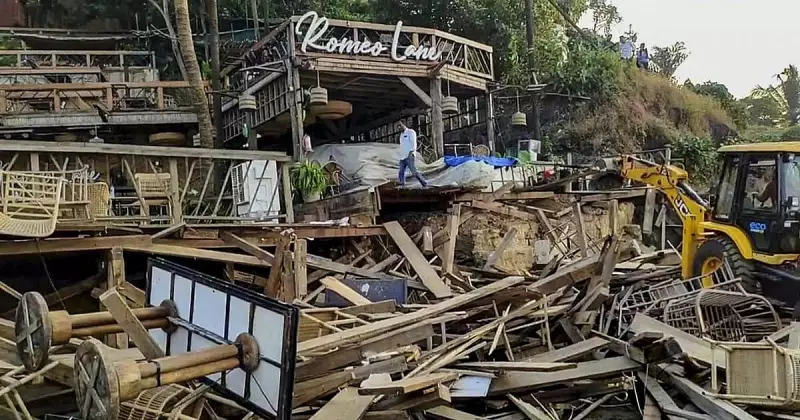
The recent, devastating fires in a Hong Kong housing complex and a popular North Goa nightclub, though separated by geography, share a tragic common thread. Experts point to a series of preventable failures, best explained by the Swiss Cheese Model of accident causation. This model illustrates how disasters occur when holes in multiple layers of defense align.
The Tragic Incidents: A Timeline of Disaster
In the early hours of a Sunday, a fierce blaze erupted at a nightclub in North Goa, sending plumes of smoke and flames into the air. This incident followed another deadly fire at the Wang Fuk Court housing complex in Tai Po, Hong Kong. Both events resulted in significant loss of life and property, raising urgent questions about safety protocols and enforcement. While accidents are an acknowledged universal risk, these tragedies underscore how multiple safeguards failed simultaneously.
Understanding the Swiss Cheese Model of Safety
The Swiss Cheese Model, used in risk analysis, visualizes safety as a series of defensive layers, each with potential holes. These layers can include regulations, infrastructure maintenance, staff training, and emergency response plans. An accident becomes inevitable only when the holes in all these layers momentarily line up, allowing a hazard to pass through unchecked.

In the context of these fires, the holes might represent:
- Lax enforcement of building and fire safety codes.
- Inadequate maintenance of electrical systems or firefighting equipment.
- Overcrowding beyond permitted capacity.
- Insufficient staff training for emergency evacuation.
- Blocked or inaccessible emergency exits.
When these individual failures align, the result is a catastrophe that could otherwise have been stopped at any preceding stage.
Lessons and the Path to Prevention
The aftermath of these fires calls for a rigorous re-examination of safety cultures. The model suggests that prevention does not require perfect, hole-free layers, but rather multiple, diverse, and well-maintained barriers. If one layer fails, another should stop the progression. This means independent checks, regular audits, and a proactive approach to identifying and patching vulnerabilities before they align.
For public spaces like nightclubs and residential complexes, this translates to strict adherence to safety norms, regular fire drills, clear exit signage, and empowered safety officers. The tragic events in Goa and Hong Kong serve as a stark reminder that safety is a dynamic process, not a static certificate. Preventing the next tragedy depends on learning from these aligned failures and strengthening every slice of the defensive system.