

Telangana's Alarming Typhoid Burden: 202 Deaths in 2023
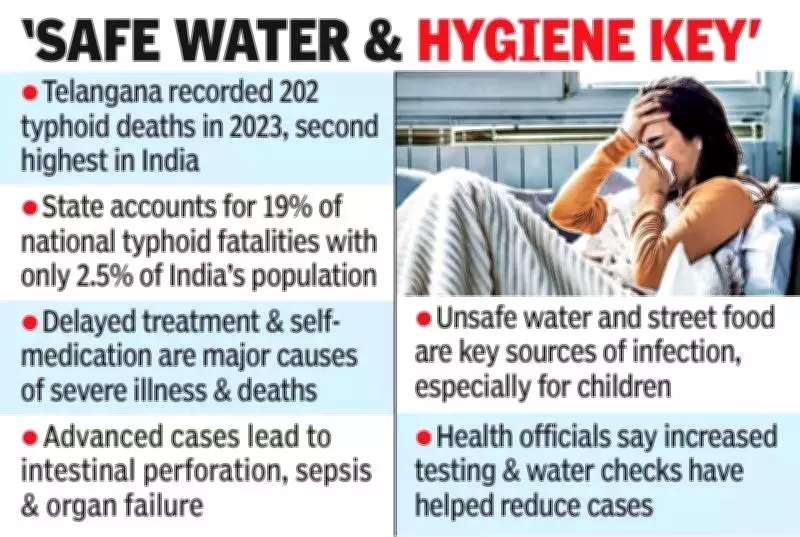
Hyderabad: Telangana recorded a staggering 202 deaths due to typhoid and paratyphoid in 2023, accounting for nearly one in every five such fatalities across India. This grim statistic emerges from data released by the office of the Registrar General of India, highlighting a severe public health challenge in the state.
National Ranking and Disproportionate Impact
The figures position Telangana as the second-worst affected state nationwide, trailing only Uttar Pradesh, which reported 377 deaths but boasts a significantly larger population. Punjab followed in third place with 118 deaths, while Delhi recorded 36 fatalities.
According to the Medical Certification of Cause of Death (MCCD) 2023 report, India witnessed a total of 1,075 typhoid and paratyphoid deaths last year. Telangana alone contributed approximately 19% of these fatalities, despite representing merely around 2.5% of the country's total population. This disproportionate impact underscores deep-seated systemic issues.

Root Causes: Environmental and Civic Gaps
Health experts point to a confluence of environmental, civic, and healthcare-related deficiencies driving Telangana's high mortality rate, particularly in urban and peri-urban areas. Key contributors include:
- Poor access to safe drinking water
- Widespread food contamination
- Inadequate sanitation infrastructure
- Monsoon-related flooding exacerbating unhygienic conditions
Street food prepared using unsafe water, coupled with improper waste disposal in slums and construction zones, further fuels the spread of infection. Typhoid bacteria thrive in unhygienic environments, spreading through the faeces and urine of infected individuals.
Medical Perspectives and Patient Experiences
Dr Venkat Nani Kumar, senior consultant physician at Apollo Hospitals, shared his observations: "Over the past year, I have seen numerous typhoid cases, with some patients reaching critical stages. Many present with prolonged fever and loose stools lasting several days. Some develop serious complications such as intestinal perforation, requiring intensive care, including medications to maintain blood pressure."
The Peril of Delayed Treatment
Doctors emphasize that delayed and inappropriate treatment remains a primary reason behind severe illness and fatalities. Many patients ignore persistent fever or resort to self-medication and unqualified practitioners before seeking proper medical care.
Dr Chaitanya Challa, senior consultant in internal medicine at CARE Hospitals, explained: "At times, patients come to hospitals only after 10 days or more of fever. By then, oral antibiotics often fail, forcing us to initiate high-dose intravenous treatment. In several cases, complications like intestinal perforation, sepsis, or even multi-organ failure have already set in."
He warned that advanced typhoid can rapidly turn fatal, sharing a personal experience: "Despite being a doctor, my high fever went undiagnosed initially, and I eventually developed intestinal perforation, even while on strong antibiotics in a hospital."
Vulnerable Populations and Systemic Failures
Senior paediatrician Dr Madap Karuna flagged unsafe drinking water and food practices as major risks, especially for children. She noted that safe water supply interruptions during pipeline repairs create critical windows of vulnerability. "It's during those times that people should be advised to boil water before consumption," she stressed.
Children are particularly susceptible due to frequent consumption of street foods like panipuri, often prepared using non-sterile water, especially in urban settings. "Moreover, many public hostels where students reside maintain poor hygiene standards. Rural areas predominantly lack access to safe drinking water. Despite existing food safety norms, weak enforcement allows unsafe practices to persist," Dr Karuna added.
Sewage overflows, open drains, and inadequate sanitation in cities like Hyderabad worsen environmental contamination, creating ideal breeding grounds for typhoid bacteria.

Rising Antimicrobial Resistance
Medical professionals also raised alarms about increasing antimicrobial resistance (AMR). "We are encountering more cases where first-line antibiotics fail, compelling us to use stronger and costlier drugs that are not always accessible promptly. This problem is compounded by the circulation of substandard and counterfeit medicines," Dr Karuna cautioned.
Pathways to Mitigation
Experts stress that a multi-pronged approach is crucial to reducing Telangana's alarming typhoid burden. Key recommendations include:
- Ensuring universal access to safe drinking water
- Implementing stricter food safety enforcement mechanisms
- Promoting early diagnosis and rational antibiotic use
- Utilizing GPS mapping to identify typhoid hotspots
- Scientific documentation of drug-resistant cases, including resistance patterns, treatments administered, and clinical outcomes
One expert elaborated: "Local prognosis and treatment response data will guide effective therapy for patients from the same area and support targeted public health interventions."
Government Response and Ongoing Efforts
A senior official from the health department stated: "Over the past few years, we have intensified testing and screening through widal tests, leading to a decline in cases. Moreover, routine inspections are being conducted in collaboration with water and other necessary departments in rural areas."
The typhoid crisis in Telangana serves as a stark reminder of the interconnectedness of public health, environmental management, and civic infrastructure. Addressing these gaps holistically is imperative to prevent future fatalities and safeguard community well-being.





