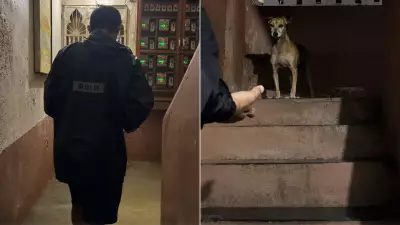
A toxic gas leak from abandoned underground mines in Dhanbad's Kenduadih area has claimed two lives and led to over a dozen hospitalisations, triggering widespread panic and a major administrative response. The incident, unfolding over Wednesday and Thursday, has exposed thousands of residents to dangerous fumes, prompting urgent inspections and mitigation efforts by the district administration and Bharat Coking Coal Ltd (BCCL).
Administration Springs into Action After Fatal Leak
On Friday, a high-level team led by District Commissioner Aditya Ranjan and BCCL Chairman-cum-Managing Director (CMD) Manoj Agrawal conducted an extensive inspection of the affected localities. They were accompanied by Senior Superintendent of Police Prabhat Kumar and other senior officials. The team interacted with distressed residents, labour union leaders, and local representatives to assess the severity of the situation and accelerate relief measures.
The tragedy began on Wednesday with the death of Priyanka Devi. Panic escalated on Thursday when another woman collapsed and died, confirming fears about the lethal nature of the gas permeating the densely populated area. Nearly 10,000 residents in the vicinity continue to endure the persistent stench and hazardous fumes seeping from the old mine zones.

Scientific Investigation and Immediate Measures
BCCL CMD Manoj Agrawal provided a preliminary explanation for the leak. He stated that a chemical reaction, triggered by leftover coal in the abandoned underground mines and intensified by bacterial activity, likely released the toxic gas. “A technical investigation involving experts from IIT (ISM), CIMFR, and DGMS is underway to identify the exact source and nature of the gas,” Agrawal said. He assured that all scientific resources were being mobilised and that areas identified as dangerous were being sealed and bracketed immediately.
District Commissioner Aditya Ranjan confirmed alarming readings from the site. Latest inspections revealed gas readings of 2.5, a level well above safe limits and firmly in the danger category. Dr. Santosh Kumar Rai, a scientist from the Central Institute of Mining and Fuel Research (CIMFR), indicated that initial findings pointed towards high concentrations of carbon monoxide as the probable cause of the health emergency.
Relocation Plans and Mounting Public Frustration
DC Ranjan acknowledged a critical failure in planning, revealing that several houses were located in a danger zone that should have been vacated a year ago. “We are now setting a fixed timeline for shifting the affected families to safer locations,” he said. The administration is arranging temporary shelters, food supplies, and essential services to ensure support for all displaced families.
To bolster the medical response, the health department has deployed multiple teams and stationed four to five ambulances on standby. Doctors are conducting door-to-door health checks in vulnerable pockets like Rajput Basti, Masjid Mohalla, and Officers’ Colony. Furthermore, two hospitals have been upgraded with emergency extensions, oxygen-supported beds, and round-the-clock care facilities.
Despite these announced measures, a palpable sense of frustration grips the local population. Many residents complain that the gas leak continues unchecked, making it nearly impossible to stay indoors. There are also deep-seated concerns about the proposed relocation, with people worrying about their livelihoods and long-term safety in new areas.
With the crisis far from resolved and public anxiety growing, both the district administration and BCCL have reiterated that public safety is their top priority and all necessary actions are being taken on a war footing.