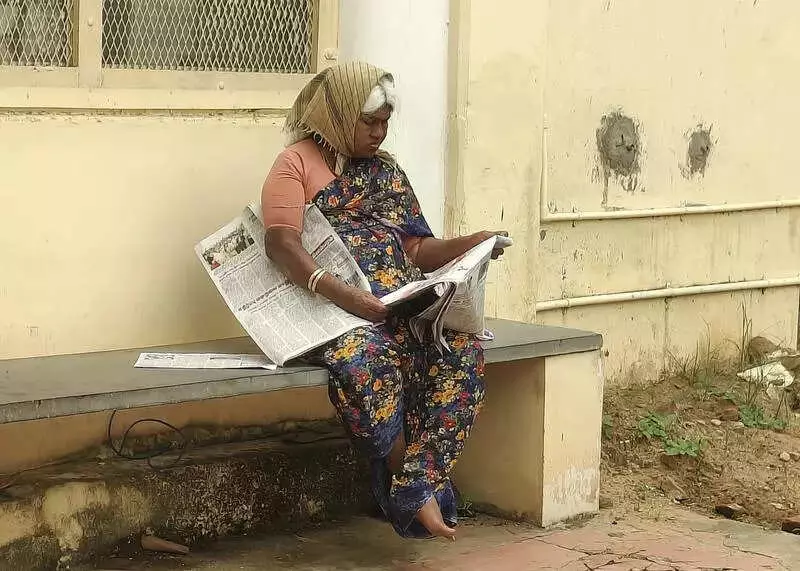
In the temple city of Trichy, securing a spot in an old-age home has turned into a daunting challenge for senior citizens and their families. A recent investigation reveals that the majority of facilities, whether free or paid, are running at or near complete occupancy. This crisis persists even as the number of registered homes has increased in recent years.
A System Stretched to Its Limits
Official data from the social welfare department paints a clear picture of the supply-demand mismatch. The district currently has 43 old-age homes, comprising 20 paid facilities and 23 free ones. Among these, nine homes receive financial grants from either the state or central government. While the count of registered homes rose from 33 in 2024 to 45 this year, two had to shut down due to financial difficulties, leaving the current tally at 43.
A spot check conducted on Tuesday at multiple homes, along with telephonic enquiries, confirmed the severe shortage. Most facilities reported having no vacancies or just one or two beds available. The reasons for the bottleneck differ between free and paid institutions.

Challenges for Free and Paid Homes
Managers of free homes explained their inability to admit new residents, pointing to limited manpower and heightened medical risks. "With inadequate staff and a reliance on donations, it becomes unsafe to take in more elderly people, especially during medically sensitive months," stated the person in charge of a free home that currently houses 27 residents.
On the other hand, paid facilities, which charge monthly fees ranging from ₹12,000 to ₹25,000, said they do not face staff shortages but are simply full. "There is certainly a demand, but we cannot accommodate any more. Even if the top floor were an option, many elders may not be able to climb the stairs," explained the in-charge of a paid home in Srirangam, which also accommodates 27 people.
Demographic Shifts and Unmet Needs
The geographical distribution of these homes adds another layer to the issue. While many free homes are located in rural areas and within the city, a significant concentration of paid homes is found in the Srirangam area, which has no free facilities. For some residents, like 83-year-old K Kanagalakshmi, moving to a home in Srirangam was a bittersweet necessity. "My son lives abroad for work, and I had to come here after selling our home. However, it's a boon that I get to spend my old age near the temple," she shared.
Experts link this crisis to broader demographic trends. Nagaraj G, founder of the startup 'Elderlyn', highlighted a NITI Aayog report projecting India's elderly population to rise to 25% by 2047, up from the current 10%. "In places like Trichy, a tier-II city, it is only natural that more of the younger generation will move to metro cities or abroad for work, leaving elders alone," he said. He advocates for a shift from traditional institutional models towards providing doorstep support, as many seniors are attached to their homes but still need assistance, sometimes in simple ways like having someone to talk to.
Struggles with Modern Solutions
However, attempts to introduce modern, alternative care models in Trichy have met with limited success compared to metropolitan cities. S Venkatesan, who launched an organisation called Saha in 2022, shared his experience. "We tried a subscription-based service offering A-to-Z support—from medical check-ups to arranging goods and services at the doorstep—but there were not many takers. This is a concept that has already taken off in metros like Chennai and Bengaluru," he said. His venture was eventually called off midway. He emphasized that while doorstep elderly care models need strengthening, creating awareness and acceptance for them in non-metro cities remains a significant hurdle.
The situation in Trichy underscores a looming national challenge: as India's population ages, cities across the spectrum must urgently innovate and scale up sustainable elderly care infrastructure, both institutional and community-based, to ensure dignity and support for their senior citizens.