

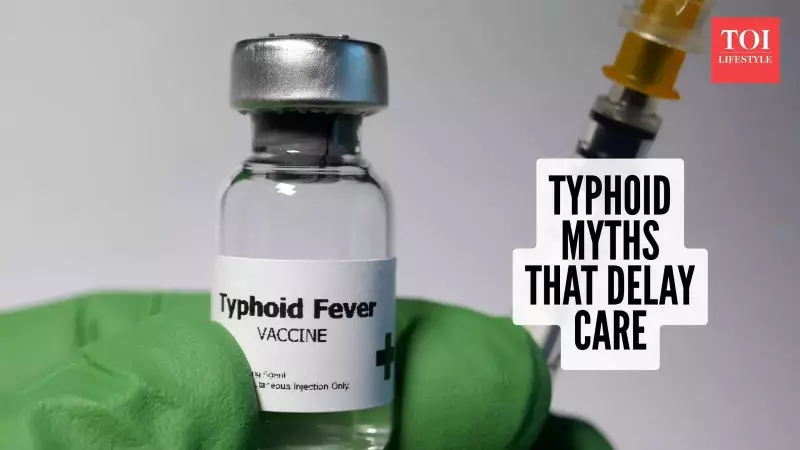
Typhoid fever remains a significant public health burden in India, affecting thousands of individuals annually. The disease, caused by the Salmonella Typhi bacteria, spreads primarily through contaminated food and water, posing a persistent threat in areas with unsafe water and poor sanitation. Despite clear protocols from global and national health bodies, delayed hospital visits continue to complicate the fight against this illness. The challenge often lies not in a shortage of medicines but in pervasive misconceptions that hinder timely action.
Debunking Common Typhoid Misconceptions
Public health authorities like the World Health Organisation (WHO), India’s Ministry of Health and Family Welfare (MoHFW), and the US Centers for Disease Control and Prevention (CDC) emphasize that early diagnosis and correct treatment are life-saving. However, several persistent myths stand in the way of effective management and recovery.
Myth 1: Typhoid Always Begins with a Very High Fever
A widespread and dangerous belief is that typhoid announces itself with an immediate, dramatic fever. Many wait for this severe symptom before seeking medical care, a delay that can prove risky. Health advisories clarify that typhoid often starts with mild, non-specific symptoms. These can include a low-grade fever, headache, general weakness, or stomach discomfort. In the initial week, the temperature may rise gradually rather than spiking suddenly.

Because these signs seem ordinary, people frequently mistake them for a common viral fever or food poisoning. By the time the fever becomes severe, the internal infection may already be advanced. This delay is critical because early blood tests are most effective in the first week. Waiting reduces test accuracy and postpones the start of essential antibiotic therapy.
Myth 2: Normal Appetite Rules Out Typhoid
Another common assumption is that typhoid patients completely lose their appetite. Government health guidelines explain that appetite loss varies from person to person. Some patients continue to eat small meals during the early stages of the illness. Children and young adults, in particular, may appear relatively active and maintain some appetite for the first few days, creating a false sense of normalcy.
This misconception leads families to postpone testing, unaware that the internal infection can progress silently even when the stomach feels mostly fine. Relying on appetite as a diagnostic tool is therefore unreliable and hazardous.
Myth 3: Clean Homes Are Immune to Typhoid
Typhoid is incorrectly linked solely to visibly poor hygiene. The MoHFW explicitly notes that even clean, well-kept homes are at risk if the sources of contamination are external. The invisible bacteria can be present in drinking water, raw vegetables, ice cubes, or outside food. Salmonella Typhi cannot be seen, smelled, or tasted in these mediums.
The illness does not discriminate based on cleanliness, income, or education level. A hidden risk involves repeatedly consuming food from trusted local vendors or homes where water safety checks are not rigorously practiced, allowing the bacteria to enter any household.
Critical Errors in Treatment and Prevention
Myth 4: Antibiotics Can Be Stopped Once Fever Drops
A critical error in typhoid management is discontinuing antibiotics prematurely once the fever subsides, which often happens within a few days of starting treatment. Government treatment guidelines strongly warn against this practice. Incomplete treatment allows surviving bacteria to cause a relapse and, more alarmingly, contributes to the development of drug resistance.
Antimicrobial resistance is a growing public health crisis in India and worldwide. The long-term impact of incomplete treatment is severe: it can turn recovered patients into asymptomatic carriers who unknowingly spread the infection to others.

Myth 5: The Typhoid Vaccine Provides Lifelong Protection
While vaccination is a vital preventive tool, it is not a lifetime shield. The WHO states that the protection offered by typhoid vaccines reduces over time and may not cover all bacterial strains. Consequently, vaccinated individuals can still contract the infection, though their illness may be milder.
Assuming one is fully protected often leads to delayed testing when symptoms appear. The reality is that safe water practices, good hygiene, and prompt testing remain essential pillars of prevention, even for those who have been vaccinated.
Disclaimer: This article is intended for general awareness based on guidance from government and public health authorities. It is not a substitute for professional medical advice. Anyone experiencing a persistent fever or symptoms suggestive of typhoid should consult a qualified healthcare professional immediately for proper diagnosis and treatment.





