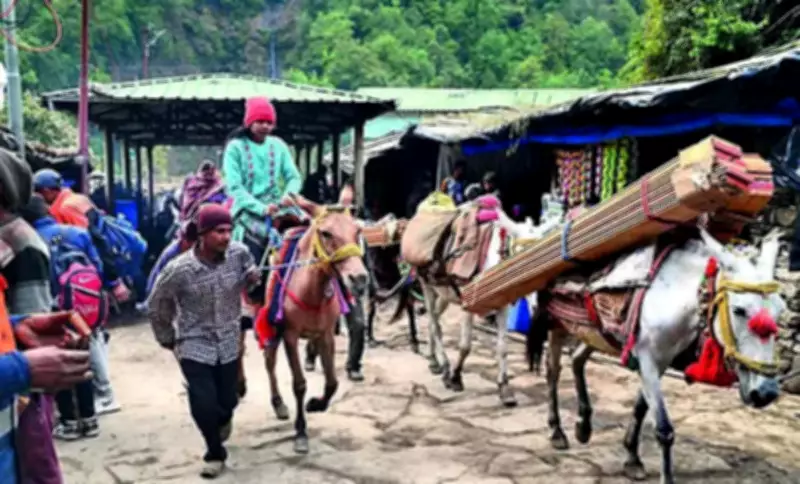
The Uttarakhand animal husbandry department has issued a new standard operating procedure (SOP) regulating the movement of equine animals—including horses and mules—along the Kedarnath, Yamunotri, Hemkund Sahib, and Adi Kailash pilgrimage routes. Issued by additional secretary Santosh Badoni following directives from the high court and the National Green Tribunal (NGT), the SOP enforces strict carrying capacity limits and animal welfare guidelines to prevent overcrowding and cruelty.
Key Provisions of the SOP
Under the new SOP, daily animal deployments are capped at 5,000 on the Kedarnath route, 1,050 on the Hemkund Sahib route, and 595 on the Yamunotri route. Equine operations are strictly prohibited between sunset and sunrise. Travel tokens will only be issued from 6 am to 12 pm. All animal movements will be suspended during adverse weather, including rain, hailstorms, or snowfall.
Registration and Health Requirements
Unregistered animals are banned. Annual registration by district panchayats requires a mandatory health exam, glanders disease testing, ear-tagging, and microchipping. Health certificates are valid for 45 days, after which a re-examination is required. Each owner is permitted to operate a maximum of two equines, with only one token issued per animal per day. Every animal must be accompanied by a handler throughout the journey.

Prohibited Practices and Penalties
The SOP explicitly outlaws overloading, forcing animals to run, beating, deploying sick or injured animals, and tampering with microchips. Violators face severe penalties under the Prevention of Cruelty to Animals Act and the Bharatiya Nyaya Sanhita. Offending owners will have their licenses revoked, face immediate blacklisting, and be subject to criminal FIRs.
This initiative aims to ensure the welfare of equine animals used in pilgrimage transport while maintaining sustainable tourism practices. The department has urged all stakeholders to comply with the new regulations to avoid legal action.