

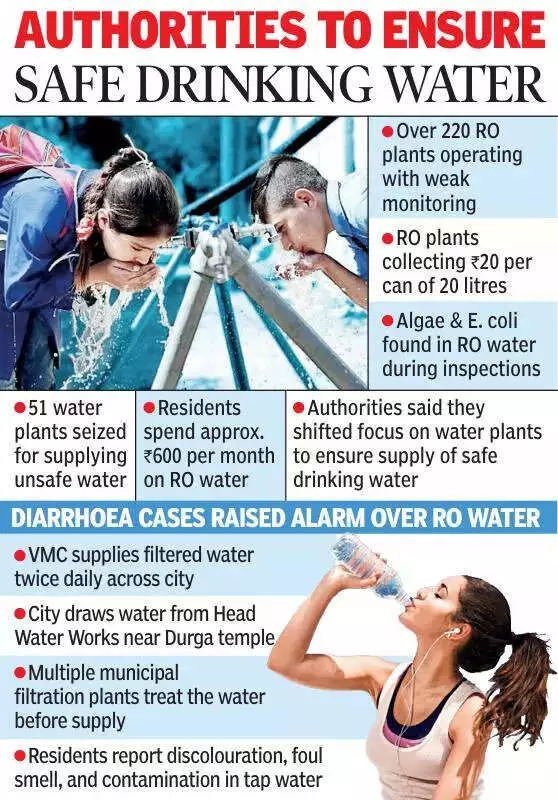
In a stark contradiction, the city of Vijayawada, blessed by the perennial flow of the Krishna river, is grappling with a severe drinking water crisis. Despite having abundant fresh water resources, a majority of its citizens are forced to depend on privately packaged Reverse Osmosis (RO) water, a market now under scrutiny following serious health outbreaks.
The Irony of Abundance and Distrust
Vijayawada's lifeline is the mighty Krishna river, with the Prakasam barrage maintaining a steady reserve of 1.5 TMC (Thousand Million Cubic feet) of water at any given time. The Vijayawada Municipal Corporation (VMC) draws water from the Head Water Works near the Kanakadurga temple, processes it at multiple filtration plants across the city, and supplies it twice daily. Officially, this water is deemed safe for consumption.
However, widespread resident complaints about discolouration, foul smell, and occasional contamination in the tap water have shattered public trust. This distrust has fueled a booming, largely unregulated private RO water industry, with approximately 220 such plants operating in the city, often under the guise of voluntary service.

Health Scares Expose Regulatory Gaps
The theoretical convenience of canned RO water turned into a public health nightmare recently. The problem came to a head when a spike in diarrhoea cases was reported from areas like New Rajarajeshwari Peta. Subsequent laboratory tests on water samples from some RO plants revealed the presence of harmful algae and E. coli bacteria.
Ravikumar, a resident of Old Rajarajeshwari Peta, shared his alarming experience: "In 2022, the tap water smelled like sewage. Since then, I only consumed RO water. But now people in my area are suffering from diarrhoea. We are doubtful whether the RO plants are even purifying water properly." His fears highlight a city-wide anxiety.
Officials acknowledge that the lack of stringent laws to monitor these private plants has created dangerous loopholes. CPI Vijayawada city secretary G Koteswara Rao criticised the authorities sharply: "VMC collects huge charges for fresh water, yet people are forced to spend nearly ₹600 a month on RO water. Many plants don't meet even basic standards. Authorities inspect street food regularly, but where is the same seriousness when it comes to drinking water?"
Crackdown and the Road Ahead
In response to the health emergency, the VMC launched an intensive inspection drive across Vijayawada. Officials collected numerous water samples for testing and took decisive action against non-compliant units. Authorities have seized 51 water plants for supplying unsafe drinking water.
The municipal corporation has now shifted its focus to ensuring all private water plants in the city strictly adhere to safety norms. This crackdown underscores the urgent need for a sustainable solution that restores citizen faith in the public water supply system, ironically sourced from the plentiful Krishna river flowing through their city.
The current crisis presents a critical question: will Vijayawada overcome its water paradox and ensure safe, accessible drinking water for all, or will it remain hostage to unregulated private vendors?






