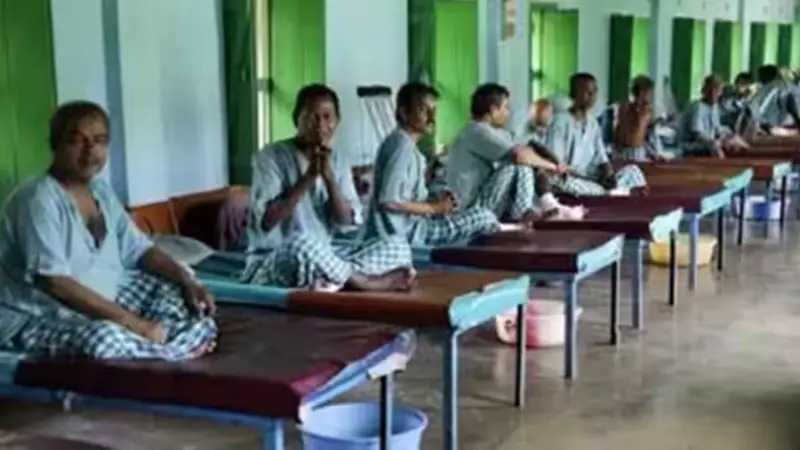
Two full decades after India officially declared the elimination of leprosy as a public health problem, a stark reality persists. The nation continues to bear a disproportionate burden of the ancient disease, reporting close to 1,00,000 fresh cases every year. This staggering figure represents approximately 60% of all new leprosy cases identified globally.
The Disturbing Signal of Child Cases
A particularly alarming metric underscores the ongoing transmission within communities: new diagnoses in children. In the 2024–25 period, 4,722 children under the age of 14 were diagnosed with leprosy in India. This translates to every second child case reported worldwide occurring within India's borders. Put simply, an Indian child is diagnosed with this preventable disease every two hours.
The presence of leprosy in children is a critical public health indicator. It acts as a clear signal of active, recent transmission, hidden reservoirs of undiagnosed infection in adults, and significant failures in early detection systems. Shockingly, 1.2% of these young patients already presented with Grade 2 disability (G2D) at diagnosis, a direct consequence of late detection.
Why Transmission Continues Unabated
Leprosy, caused by the bacterium Mycobacterium leprae, spreads primarily through respiratory droplets during prolonged close contact. The disease has an exceptionally long and variable incubation period, ranging from five to twenty years, making tracking its source incredibly difficult. Compounding the challenge are two major scientific and medical gaps.
First, there is no simple, widely available test to detect M. leprae infection in people who show no symptoms. This means health authorities cannot identify and treat asymptomatic carriers who may be unknowingly spreading the bacteria, breaking a crucial link in the transmission chain.
Second, the life-saving Multidrug Therapy (MDT), which cures 99% of patients, lacks appropriate formulations for young children. Existing child MDT packs are designed for children over 10 years and weighing more than 40 kg. However, nearly 30% of diagnosed child cases fall below this threshold. The current drug capsules and tablets cannot be accurately divided for weight-based dosing, leading to imprecise treatment and a troubling 10–20% treatment dropout rate among the youngest patients.
The Road to Leprosy Mukt Bharat by 2027
India's National Strategic Plan and Roadmap for Leprosy 2023–2027 aligns with the World Health Organization's elimination framework. The primary and most critical goal is to stop transmission, defined as having zero new locally transmitted child cases for five consecutive years. The nation aims to achieve this milestone and more on the path to a Leprosy Mukt Bharat (Leprosy-Free India) by 2027.
To turn this ambition into reality, experts urge immediate action on two fronts. India must prioritize the development and introduction of child-friendly MDT formulations to ensure safe, accurate dosing and improve treatment adherence. Simultaneously, the country needs to deploy reliable infection-detection tests, like those used in trials in Brazil, to identify hidden carriers. Timely investment in these areas of early detection and age-appropriate treatment is not just a medical necessity but the fundamental key to meeting the 2027 targets and ending leprosy's stubborn hold for good.