

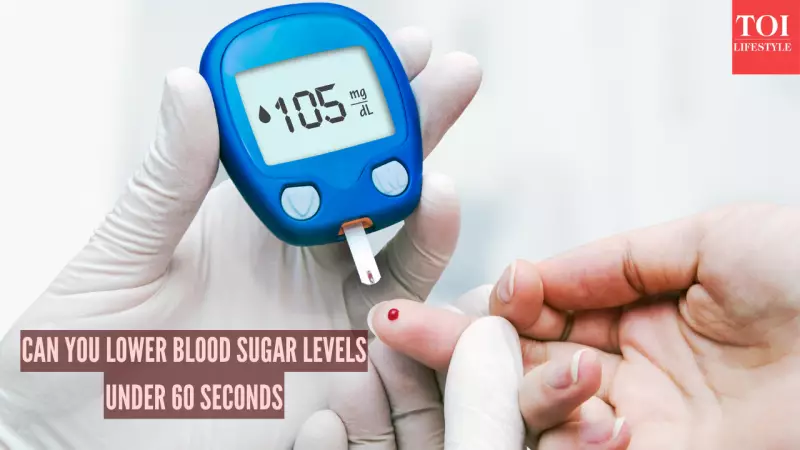
Forget long workout sessions. A leading physiologist suggests a remarkably simple activity lasting just one minute after your meals could be a game-changer for managing blood sugar levels. Jose Tejero, a metabolic health expert, highlights that a brief session of stair climbing can effectively blunt the dangerous spike in glucose that follows eating.
The Science Behind the One-Minute Miracle
This advice is firmly backed by recent scientific investigation. A 2024 study, published in the National Institute of Health, put short bursts of stair climbing and descending to the test. Participants consumed a meal and then engaged in stair activity for durations of 1, 3, or 10 minutes. The results provided clear evidence of immediate impact on glucose metabolism.
The findings were striking. Just 60 seconds of stair climbing at a comfortable, self-paced effort reduced post-meal blood sugar by 14 mg/dL. Extending the activity to three minutes yielded an even greater benefit, lowering glucose by 18 mg/dL. Furthermore, insulin levels dropped and markers for insulin sensitivity improved by a significant 27 percent, indicating the body processed sugar more rapidly and efficiently.

While the 10-minute session also helped, researchers noted that the 3-minute duration offered the optimal balance of substantial benefit without a major time commitment. The study demonstrated a clear dose-response relationship, where more activity time led to better results up to a point. This research was conducted on healthy young adults, but similar positive outcomes have been observed in other population groups.
Why Stair Climbing Works So Effectively
The secret lies in the massive muscle groups of the legs. When you climb stairs, these large muscles contract vigorously, acting like powerful vacuums that pull glucose directly from the bloodstream. Scientists term this process contraction-mediated glucose uptake.
This pathway is particularly valuable because it does not rely solely on insulin. Even for individuals with insulin resistance, such as those with prediabetes or type 2 diabetes, the muscle contractions can still efficiently clear sugar from the blood for use as energy. The mechanism is triggered through the activation of AMPK, which increases the number of glucose transporters on muscle cells.
Other research corroborates that post-meal stair work outperforms simply sitting and can be more effective for quick sugar control than some other exercises, like cycling at a similar heart rate. The benefits appear to be most pronounced for people managing type 2 diabetes.
Expert Recommendation for Daily Habit Change
Physiologist Jose Tejero frequently advocates for this micro-activity in his work. He explains that sharp post-meal sugar peaks damage blood vessels, promote inflammation over time, lead to energy crashes, and increase long-term health risks. A brief stair climb targets this critical window perfectly, activating major muscles without requiring gym equipment or lengthy sessions.
Tejero's advice focuses on seamlessly integrating movement into daily routines. His top tips for implementing this strategy include:
- Initiate the activity within the first 10 minutes after finishing your meal.
- Aim for 1 to 3 minutes of climbing up and down stairs at home, work, or any location with steps.
- Maintain a slow pace if you're new to it, or increase intensity if you feel capable.
- Ensure you include both ascending and descending, as this recruits a wider range of leg muscles.
- If stairs are unavailable, simulate the motion with step-ups on a sturdy box or platform.
The core principle is to engage the legs in movement soon after food intake.
The advantages extend beyond blood sugar management. This habit burns additional calories (approximately 10-15 per minute), can contribute to better blood pressure control, and aligns with other science-backed techniques like specific breathing exercises. Consistently practiced, this small daily habit can support sustained energy levels and healthier weight management. Experts caution that results can vary between individuals, and it should be viewed as a sustainable practice rather than an instant miracle cure.






