

Beyond One Heart: 5 Animals That Defy Nature's Rules
We all learn the basics in school. Animals have one heart. It beats steadily. It pumps blood throughout the body. This seems like a simple, universal rule. But nature loves exceptions. Some creatures break this rule completely. They thrive with more than one heart.
Why would an animal need extra hearts? The reasons are as diverse as the animals themselves. Some require immense speed and oxygen. Others inhabit environments where oxygen is scarce. Evolution has crafted unique solutions for survival. These animals prove that one heart is not always enough.
Here are five remarkable animals that challenge our understanding of anatomy.

1. The Three-Hearted Octopus
Octopuses are masters of mystery. They possess remarkable intelligence and problem-solving skills. Adding to their intrigue, they have three hearts. Two hearts pump blood specifically to their gills for breathing. The third heart circulates blood to the rest of their body.
An interesting quirk occurs when octopuses swim. Their main heart actually slows down. This explains why they often prefer crawling along the ocean floor. It conserves their energy and maintains efficient blood flow.
2. The Speedy Squid
Squids are known for their incredible speed in the water. This rapid movement demands a high oxygen supply. To meet this need, squids also sport three hearts. Two hearts manage blood flow to the gills. The third heart pumps oxygen-rich blood to the body.
This triple-heart system keeps squids alert and agile. It allows them to hunt effectively and escape predators with lightning speed.
3. The Earthworm's Clever Design
Earthworms may appear simple at first glance. Their bodies, however, are ingeniously designed. They do not possess a single, centralized heart. Instead, they have five pairs of aortic arches.
These arches function like multiple tiny pumps. They move blood efficiently through the worm's long, segmented body. This system is perfect for life underground. It compensates for the low oxygen levels in soil.
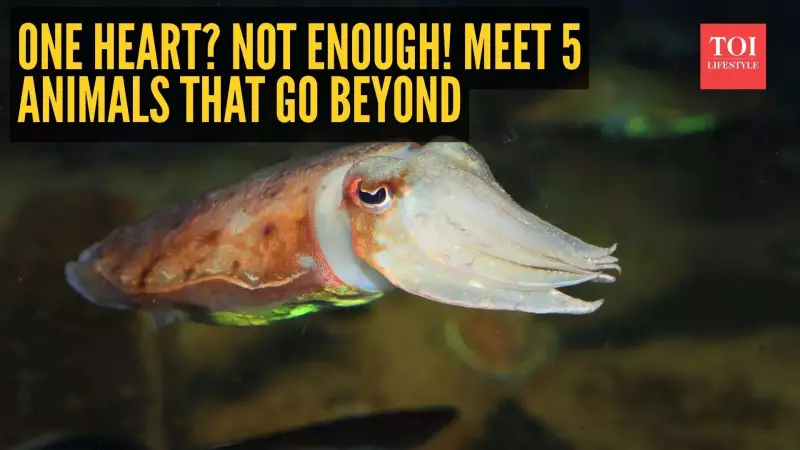
4. The Color-Changing Cuttlefish
Cuttlefish are famous for their ability to change colors and textures. This magical display requires significant energy. To power it, cuttlefish rely on three hearts. Two hearts are dedicated to respiration via the gills. The third heart supplies the rest of the body.
The extra hearts provide the necessary fuel. They enable cuttlefish to move swiftly, hunt skillfully, and evade danger in their aquatic homes.
5. The Unusual Leech
Leeches present a unique case. They do not have true, chambered hearts like other animals. Their circulatory system relies on muscular pumps and a network of tiny vessels. These structures work together to move blood throughout their bodies.
While not a conventional heart system, it functions perfectly. It suits their life in wet, muddy environments where they glide and feed.
Note: The information in this article draws from ecological studies and online sources. Specific details may vary by species and geographic region.






