

6 Japanese Ideas That Quietly Help Calm an Overthinking Mind
Overthinking rarely announces itself with fanfare. It tends to slip in through subtle cracks: an unread message, a cringe-worthy memory, or an uncertain future that refuses to settle. The mind begins to race, replaying scenarios, predicting outcomes, and endlessly editing thoughts. In such turbulent mental weather, Japanese culture offers a collection of ideas that feel less like aggressive self-help mantras and more like serene disciplines—gentle pathways back to the present without demanding forced silence. These concepts do not guarantee instant fixes; instead, they function as soft handrails, guiding you toward tranquility. Let's explore six of these transformative Japanese ideas.
1. Ikigai: Finding Your Reason for Being
Ikigai is often translated as "reason for being," but this interpretation can miss its nuanced essence. It isn't necessarily about a grand, life-altering purpose or a mission statement in bold letters. Ikigai can be more intimate and lived-in: the work that matters to you, the people you cherish, or the daily routines that give structure to your existence.
For an overthinking mind, Ikigai is invaluable because it redirects focus away from relentless mental noise and toward meaningful action. Instead of pondering, "What if everything falls apart?" it prompts the question, "What is worth nurturing today?" This subtle shift can be remarkably powerful, pulling the mind out of abstract worries and back into the tangible reality of a life being actively lived.

2. Wabi-sabi: Embracing Imperfection
Wabi-sabi celebrates the beauty found in imperfection, impermanence, and incompleteness. It's the philosophy that cracks and flaws are not always blemishes to conceal but integral parts of an object's story. In a world that often pressures us to polish everything—our bodies, homes, emotions, and life timelines—Wabi-sabi offers a profound sense of relief.
Overthinking frequently thrives on the pursuit of perfection: the ideal choice, the flawless response, the impeccable version of oneself. Wabi-sabi interrupts this exhausting chase. It reminds us that a slightly untidy room, a bruised piece of fruit, a challenging phase, or even a recent mistake does not diminish life's validity. Instead, these imperfections make life authentic. This grounding realism can be especially soothing for minds that harshly criticize themselves for not being seamless.
3. Shinrin-yoku: Forest Bathing for Mental Clarity
Shinrin-yoku, or forest bathing, is the practice of immersing oneself in nature with deliberate attention and presence. It is not about exercise or reaching a destination; it's a way of being in the natural world slowly enough for your senses to fully engage.
For an anxious or hyperactive mind, this practice holds significant importance. Nature does not demand performance. Trees do not rush, and the wind does not argue. The body naturally slows down when the senses are given simpler stimuli to process: the rustle of leaves, dappled sunlight, the scent of soil, birdsong, or fresh air. Even a brief stroll beneath trees can lower the internal volume of mental chatter. The goal isn't to escape thought entirely but to reduce thought's dominance over your entire experience.
4. Kintsugi: The Art of Golden Repair
Kintsugi is the traditional Japanese art of mending broken pottery with visible seams of gold lacquer. The breakage is not hidden; it is highlighted and transformed. This may be one of the most psychologically generous concepts to emerge from any culture: damage does not always need to be concealed to be beautiful.
For someone entangled in self-criticism, Kintsugi offers an alternative narrative. Instead of fixating on why something shattered, it encourages consideration of what becomes possible after repair. It redefines rupture from a source of shame to a testament of continuity. This perspective can be deeply calming for a mind that repeatedly revisits its failures as if they were final judgments.
5. Hara Hachi Bu: The Principle of Moderation
Hara hachi bu is the practice of eating until you are approximately 80 percent full. Rooted in a broader philosophy of moderation, its relevance extends far beyond the dining table. It serves as a reminder that restraint can often be kinder than excess.

Overthinking often mirrors overeating: it continues beyond the point of nourishment. One more check, one more comparison, one more imagined scenario. Hara hachi bu suggests that "enough" is a valid stopping point. This principle can be applied to various aspects of life, including food, work, scrolling through social media, texting, and even emotional spirals. Sometimes, peace begins precisely where excess ends.
6. Oubaitori: Blooming in Your Own Time
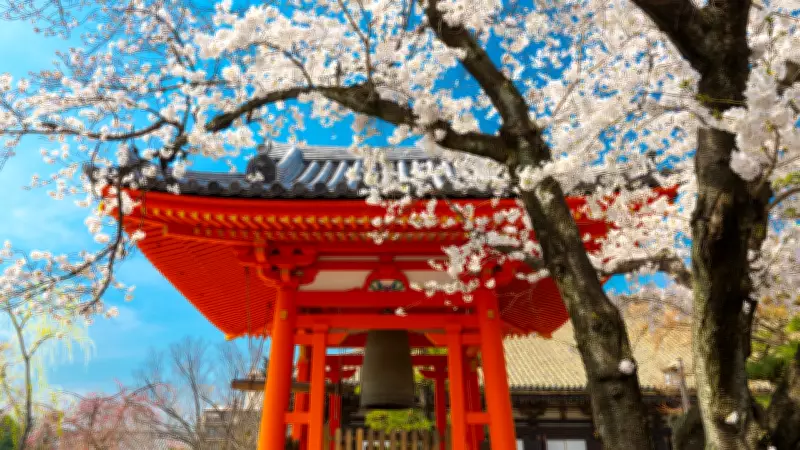
Oubaitori derives from the four spring trees—cherry, plum, peach, and apricot—each blossoming according to its own unique schedule. The lesson is elegantly simple: not everything is meant to unfold on the same timeline.
This concept is particularly beneficial for minds prone to comparison, competition, and catastrophizing. Overthinking often fixates on timelines that feel too slow, too fast, or unfairly different from others'. Oubaitori loosens this grip. It asserts that growth is not a race with a single, fixed pace. Your personal season does not need to resemble anyone else's to be genuine and meaningful.
Incorporating these six Japanese ideas into daily life can provide a gentle, yet powerful, framework for managing overthinking. By embracing Ikigai's purposeful action, Wabi-sabi's acceptance of flaws, Shinrin-yoku's natural immersion, Kintsugi's transformative repair, Hara hachi bu's mindful moderation, and Oubaitori's patient timing, you can cultivate a calmer, more present mind. These philosophies offer not just temporary relief, but enduring pathways to mental serenity.





