

Have you ever wondered where your body might heal the fastest? According to a fascinating concept shared by experts, certain environments trigger our nervous system to shift from survival mode into a state of deep repair. This idea, highlighted by neuroecologist Dr Datinh Jhmahidah in a viral social media thread, suggests that in places where sensory overload collapses, the body quietly gets to work mending itself.
The Science Behind The Silence
The core principle is captured in a compelling line: “The body heals fastest where stimulus density collapses.” This means locations with dramatically reduced sound, visual clutter, and sensory input allow the brain to enter a low-activity 'maintenance mode.' Brain imaging supports this, showing that in such calm, the glymphatic system (the brain's waste-clearance pathway) works faster, inflammation markers drop, and energy is redirected toward internal repair processes.
Globally, researchers and clinicians have identified specific, often ancient, environments that are not just scenic but are biologically strategic for recovery. Here are seven such locations where the human body is reported to heal more efficiently.

1. Ancient Monasteries and Stone Courtyards
The thick stone walls and enclosed geometry of old monasteries and courtyards create a profound sensory shield. External sound can drop by nearly 80 percent, and visual movement is minimal. MRI scans conducted in these spaces show the brain entering a low-arousal state, which is associated with repair. With fewer demands, the nervous system downshifts, inflammation decreases, and maintenance processes take over.
2. Natural Salt Caves
Beyond spa simulations, naturally formed salt caves offer a therapeutic atmosphere. The micro-ionized salt particles in the air are known to improve respiratory efficiency. Studies indicate they can lower the stress hormone cortisol by nearly 25 percent. In Poland, some hospitals use real salt caves as a medical intervention for post-viral recovery, noting that patients consistently heal faster in these mineral-rich, low-pathogen environments.
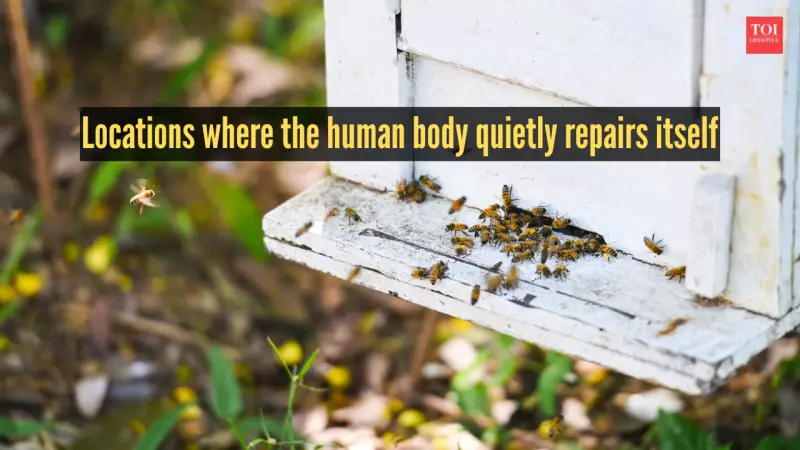
3. Bee-house Apiaries
In this unique therapy, individuals sit inside enclosed wooden structures while thousands of bees hum safely outside protective screens. The wings of the bees generate vibrations between 110 and 140 hertz, a frequency range also used in physiotherapy to relax muscle tissue. Romanian clinics have observed that cardiovascular patients undergoing bee-house sessions recovered almost twice as quickly, likely due to the combined effect of vibration, warmth, and rhythmic sound.
4. Cold Spring Basins (Below 12°C)
Immersing the body in cold natural springs triggers an immediate physiological shift. It boosts nitric oxide production, increases mitochondrial activity, and causes immune cells to redistribute. Japanese autoimmune clinics use cold-water protocols because repeated exposure leads to measurable changes in inflammation patterns. The body appears to switch its focus from chronic defense to active repair.
5. Ancient Stone Caves with Narrow Entrances
These caves naturally maintain steady oxygen levels, optimal humidity, and slightly elevated carbon dioxide. Under these specific conditions, the lung's workload drops by roughly 30 percent. The energy saved from the effort of breathing is then redirected by the body toward tissue repair and immune system regulation. Essentially, the environment itself performs some of the body's work.
6. Nighttime Silence Deserts
In deserts like Wadi Rum in Jordan and Chile's Atacama, sound virtually disappears after dark. This profound silence has a direct calming effect on the amygdala, the brain's threat-detection center. Military studies have found that soldiers with stress injuries recovered three to four times faster after dedicated nighttime exposure sessions in these silent desert landscapes. Here, silence acts as a powerful neurological reset.

7. Old-Growth, Moss-Dense Forests
Ancient forests are more than just peaceful. They release compounds like beta-pinene, carry high concentrations of negative ions, and maintain stable humidity levels. Research indicates that immune responses activate differently here compared to younger forests. In South Korea, such environments are used for post-surgery recovery, with evidence showing they can reduce healing time by nearly one-third. The forest's chemistry seems to signal the body's repair pathways.
A Note of Caution
It is important to note that the observations about these seven locations are drawn from expert commentary shared in public forums and social media threads. The content is informational and highlights intriguing intersections between environment and health. It is not a substitute for professional medical guidance, and no specific clinical studies are cited for these particular claims. However, the concept offers a fascinating lens through which to view our connection with nature and its potential role in wellness.





