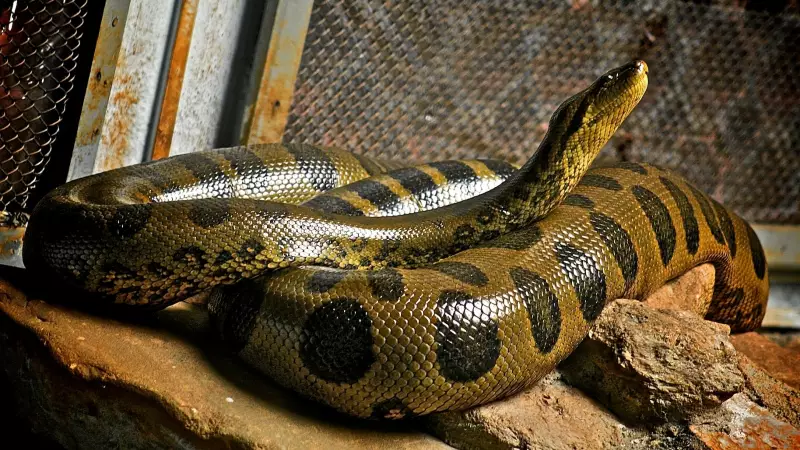
For over 12 million years, the mighty anaconda has ruled its domain as one of Earth's most formidable predators. A groundbreaking new study has now confirmed a remarkable fact: these colossal snakes have barely changed in size since they first appeared in the fossil record, showcasing a level of evolutionary stability that is exceptionally rare in the animal kingdom.
The Fossil Evidence: A Snapshot from the Miocene
The research, published in the Journal of Vertebrate Palaeontology, provides a fascinating look into the ancient past of these serpentine giants. A team led by vertebrate palaeontologist Andrés Alfonso-Rojas from the University of Cambridge meticulously analysed 183 fossilised anaconda vertebrae discovered in Venezuela.
Using a technique called ancestral state reconstruction, the scientists estimated the body length of these prehistoric snakes. The results were astonishing. The ancient anacondas from the Middle Miocene period, around 12.4 million years ago, averaged about 17 feet (5.2 meters) long. This measurement is nearly identical to the size of the largest anacondas found in South America's rivers and wetlands today, which typically range from 13 to 16 feet (4 to 5 meters).
A World of Giants That Disappeared
This consistency is a major evolutionary surprise. During the Miocene epoch, the planet was significantly warmer and wetter than it is now. This climate, combined with an abundance of food, allowed many species to grow to enormous sizes. The era was home to oversized crocodiles, turtles, and other megafauna.
"This is a surprising result because we expected to find the ancient anacondas were seven or eight meters [23 to 26 feet] long," admitted Alfonso-Rojas. However, as the global climate cooled and habitats changed, most of these other giants vanished. The anaconda, however, persisted virtually unchanged, demonstrating what researchers call "super-resilience."
The Unsolved Mystery of Perfect Design
Perhaps the most intriguing part of the study is the unanswered question: why? What is the reason behind this incredible stability spanning millions of years? The research indicates that typical explanations like temperature fluctuations or prey availability do not fully account for the anaconda's static body size.
The study suggests that the anaconda's physical form may represent an optimal design perfected by evolution. Key traits have made it a consistent survivor:
- Heat-sensing pits: Lining its body, allowing for perfect hunting in dark, murky waters.
- Powerful constricting muscles: Enabling it to subdue large prey like deer and caimans.
- Adaptable habitat range: Thriving in both ancient wetlands and modern river systems.
This combination of features created a predator so effective that it required no significant alteration for over 12 million years. While other species adapted or went extinct, the anaconda's blueprint for success remained constant.
In conclusion, the anaconda is more than just the world's heaviest snake. It is a living relic, a direct link to a prehistoric world that has otherwise disappeared. Its unchanging, massive size for millions of years makes it a unique testament to an evolutionary strategy of such perfection that it simply never needed an update. The study opens the door to broader questions about evolution, resilience, and what it truly means for a species to be perfectly adapted to its time—across countless millennia.