

Australia's Oldest Dinosaur Fossil: 230-Million-Year-Old Footprint Found by Teen in 1958
In a remarkable discovery that rewrites Australia's prehistoric history, a footprint found by a curious teenager in 1958 has been confirmed as the continent's oldest known dinosaur fossil. The fossil, which dates back approximately 230 million years, provides the earliest evidence of dinosaurs on Australian soil and offers valuable insights into the region's ancient ecosystems.
A Teenager's Curious Discovery
In 1958, 14-year-old Bruce Runnegar was exploring a quarry near Brisbane with school friends when something unusual caught his attention. Pressed into the rock was a distinct footprint that clearly didn't belong to any modern animal. Sensing its potential importance, the teenager carefully collected the stone and kept it safe for decades, unaware at the time of just how significant his discovery would become.
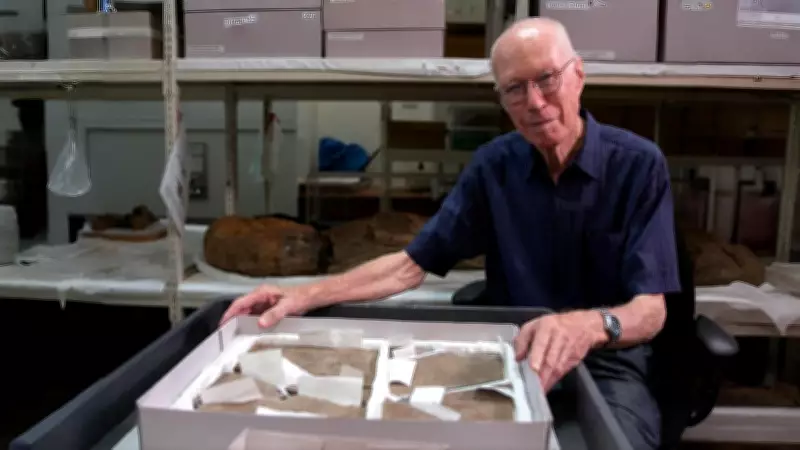
Today, that same footprint is being recognized as Australia's oldest known dinosaur fossil, a testament to both youthful curiosity and scientific preservation. Runnegar, who went on to become a respected palaeontologist, recently handed the specimen to researchers at the University of Queensland's Dinosaur Lab for formal study.

Scientific Analysis and Dating
After conducting detailed examinations, scientists confirmed that the roughly 7-inch-long footprint was made by a small, two-legged dinosaur that lived during the Late Triassic period, approximately 230 million years ago. The animal is believed to have been an early sauropodomorph, a primitive relative of the giant, long-necked dinosaurs that would later dominate the planet.
The fossil dates back to a time when Australia was part of the ancient supercontinent Gondwana, placing dinosaurs on the Australian landmass far earlier than scientists had previously proven. The findings were recently published in the scientific journal Alcheringa, marking a significant milestone in Australian palaeontology.
Unique Location and Historical Context
What makes this discovery particularly remarkable is its location. According to the research team, this is the only dinosaur fossil ever found within an Australian capital city. The quarry where the footprint was discovered has since been developed, meaning the original location is now lost forever. This footprint therefore stands as the only tangible evidence of dinosaurs in Brisbane.
The dinosaur is thought to have been walking along the side of a waterway when it made the impression. It took millions of years for the footprint to fossilize and turn into sandstone. This sandstone was later quarried and used for building purposes before the footprint was discovered by Runnegar's keen eye.
Physical Characteristics and Scientific Value
Based on the footprint analysis, researchers estimate the dinosaur stood approximately 2.4 to 2.6 feet tall at the hip and weighed over 300 pounds. While modest in size compared to later dinosaur species, this creature's footprint now carries enormous scientific value.
For years, Runnegar used the footprint as a teaching aid, showing students the fossil he had found as a teenager during his academic career at universities in Australia and the United States. Only recently did he realize its full importance and contact experts to have it formally studied.
Preservation and Future Research
The fossil has since been moved to the Queensland Museum, where it will be preserved for future research and public education. For scientists, this fossil represents a rare glimpse into Australia's ancient history, providing crucial information about the continent's prehistoric inhabitants and their environment.
This discovery not only highlights the importance of preserving historical finds but also demonstrates how amateur discoveries can contribute significantly to scientific knowledge. The 230-million-year-old footprint serves as a bridge between Australia's distant past and present scientific understanding, offering new perspectives on the continent's prehistoric timeline.






