

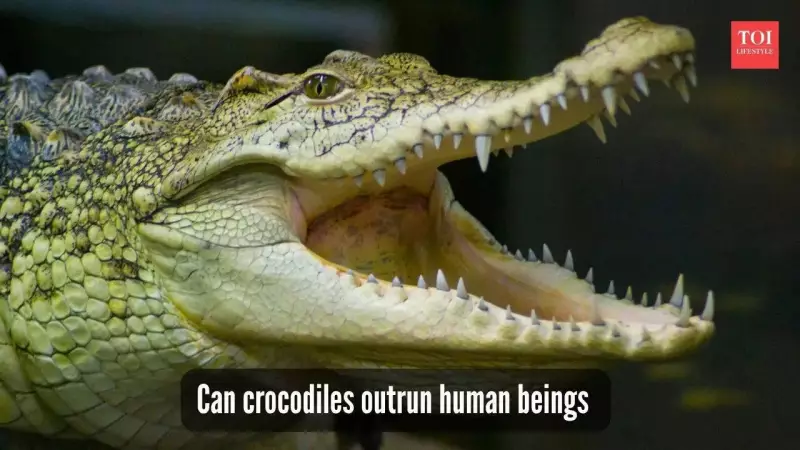
Encountering a crocodile triggers immediate panic in most people, with the instinct to flee taking over. But is running away actually the safest response? The answer might surprise you, according to crocodile experts.
How Crocodiles Move on Land
Crocodiles possess three distinct methods of terrestrial movement that adapt to their environment. The belly-crawl allows them to slide slowly across muddy or wet surfaces. More efficient is the high walk, where they lift their bodies off the ground by pushing their legs underneath them, resembling how mammals and birds walk.
The most surprising capability is the crocodile gallop – a quick bounding movement similar to a rabbit's hop. Crocodile specialist Adam Britton explained to Discover Wildlife that "Ancient croc-like creatures likely galloped after prey on land, but most modern crocodiles only gallop to escape danger."

This reveals that while crocodiles can move rapidly in short bursts, they primarily rely on precision attacks from water rather than chasing prey on land.
Human Speed vs Crocodile Speed: The Reality
Here's the reassuring truth: most people can indeed outrun a crocodile. According to Britton's analysis, "Most crocodiles can achieve 12–14kph for short periods," which falls below what a reasonably fit human can run.
This means if you maintain good physical condition, you definitely possess the capability to outrun a crocodile in most situations. The reptile's speed limitations on land provide humans with a significant advantage during encounters.
Essential Safety Measures During Crocodile Encounters
When in crocodile territory, always remain vigilant and maintain at least 50 meters distance from water edges where these predators often hide. Avoid swimming, wading, or standing in potentially inhabited waters, particularly during dawn, dusk, or night when crocodiles show peak activity.
Never dangle limbs over boat sides and refrain from cleaning fish or discarding food scraps near water, as these actions can attract crocodiles.
What to Do When You Spot a Crocodile
Contrary to instinct, running immediately might not be your best option. Remain calm and avoid sudden movements or running in straight lines, as rapid motion could trigger their chase response. If the crocodile remains at distance, back away slowly while maintaining visual contact.
Should the animal approach closely, make yourself appear larger by waving arms and creating loud noises to intimidate it. In the rare event of an attack, fight back aggressively targeting the crocodile's eyes and snout – their most sensitive areas. Always seek immediate medical attention if bitten, since crocodile bites often cause severe infections.
Understanding crocodile behavior and capabilities transforms fear into prepared response. While humans generally outperform crocodiles in running speed, the smartest approach combines awareness, prevention, and knowing exactly how to react when facing these ancient predators.






