

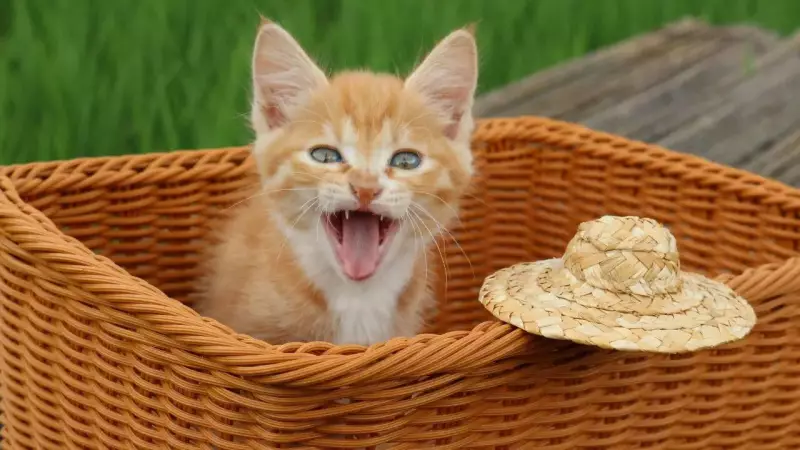
For many cat owners, the persistent meow is often dismissed as a random demand for food or a simple cry for attention. However, groundbreaking new research suggests there's a sophisticated strategy behind those vocalisations, revealing that our feline friends are far more perceptive social communicators than previously believed.
Cats Tailor Their Meows Based on Who Walks In
A peer-reviewed study, published in the scientific journal Ethology, has uncovered a fascinating pattern in domestic cat behaviour. The research focused on observing 31 domestic cats and their reactions when their human caregivers returned home. The most striking finding was that cats significantly increase their vocal efforts specifically for men.
The data showed a clear disparity: in the first 100 seconds after entry, cats produced an average of 4.3 meows for male caregivers. In contrast, they only meowed about 1.8 times for female caregivers. This pattern held true regardless of the cat's own breed, age, sex, or the size of the household, indicating it is a learned behavioural adaptation rather than a random or instinctive act.

Why Do Cats Develop This Vocal Strategy?
The study's authors propose a compelling explanation. They suggest that male caregivers, on average, might speak less to their cats and could be slower to offer verbal acknowledgment or physical contact. Over time, intelligent cats learn that deploying a louder or more frequent vocal greeting is an effective strategy to gain attention, affection, or even food from these particular humans.
This insight adds a new layer to our understanding of feline communication. In the wild, adult cats rarely meow to communicate with each other. This vocal behaviour has evolved almost exclusively for human-cat interaction. Through thousands of years of domestication, cats have learned that humans respond more readily to sound than to subtle body language. The new research shows they don't just adapt to human habits in general, but finely tune their approach for individual people.
What This Means for Cat Owners in India
If you live with a male partner, flatmate, or family member, you might have noticed your cat becomes notably more vocal when he arrives. This study suggests that the meowing is not necessarily a sign of hunger or distress. Instead, it could be a calculated greeting ritual or a clever attempt to ensure their presence is acknowledged.
Owners can foster a better relationship by understanding this behaviour. Recommended responses include:
- Speaking back to the cat immediately upon entering the home.
- Offering a brief moment of attention or a gentle petting session.
- Recognising that the cat may be seeking social connection, not just food.
- Maintaining consistent responses to help reduce any potential anxiety in the pet.
Understanding the 'why' behind the meow can reduce frustration and significantly deepen the bond between humans and their feline companions.
The study does acknowledge its limitations, primarily the relatively small sample size of 31 cats from one cultural context. More extensive research across different regions and household types is needed to confirm if this vocal pattern is universal. Future studies could also explore how factors like human personality, emotional tone, and daily routines influence feline communication strategies.
Ultimately, this research powerfully challenges the notion that cat meows are meaningless noise. It presents compelling evidence that domestic cats are skilled communicators who actively and flexibly adjust their behaviour based on experience and their specific human audience. Paying closer attention to this dialogue can make the shared home a happier place for both species.






