In a significant discovery for Indian herpetology, researchers have confirmed the presence of two rarely documented snake species for the first time in the state of Rajasthan. The findings, published in the Journal of Threatened Taxa, are based on live observations in the Pratapgarh district, marking a notable expansion in the known range of these reptiles.
Groundbreaking Study Details New Faunal Additions
The research paper, titled 'Addition of Wallophis brachyura (Günther, 1866) and Calliophis melanurus (Shaw, 1802) to the reptile fauna of Rajasthan, India', was authored by Vivek Sharma, B L Meghwal, Love Kumar Jain, and Dharmendra Khandal. The team reported multiple live sightings of both species in the Pratapgarh region, which lies east of the Aravalli range and receives comparatively higher rainfall than Rajasthan's arid western zones.
Discovery of the Elusive Wallophis Brachyura
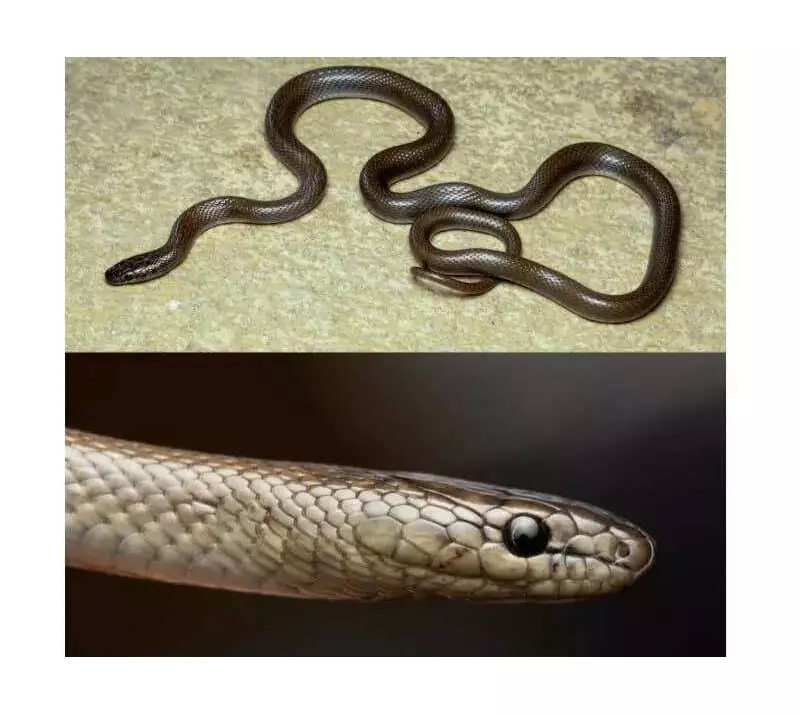
On March 30, 2024, an adult Wallophis brachyura was found alive inside a residential building on the outskirts of Pratapgarh city. The small, slender colubrid snake had taken shelter in a door frame before being safely rescued and relocated. This sighting represents the first confirmed presence of the species in Rajasthan.

Until the early 2000s, this snake was known only from a few locations in Maharashtra and Madhya Pradesh. Its range has since expanded to include Gujarat, Chhattisgarh, Telangana, and Karnataka. Researchers described the Pratapgarh specimen as having a slightly elongated head broader than its neck, moderately sized eyes with rounded pupils, and a largely patternless appearance with darker shading along its flanks. Its underside was off-white with faint grey margins.
Slender Coral Snake Recorded in Multiple Instances
The study also documented the Slender Coral Snake, scientifically known as Calliophis melanurus, from three separate instances within Pratapgarh district. The first observation occurred near Pratapgarh city in February 2021. Subsequently, two juvenile specimens were recorded in July 2025 from Dalot village—one inside a school classroom and another inside a shop.
Although this elapid species has a wide but patchy distribution across peninsular India, including West Bengal, the Western Ghats, and parts of Gujarat, it had never been formally reported from Rajasthan before. The juveniles measured around 14–15 cm in length. They featured glossy black heads and necks with distinct white spots and a pale oval marking on the nape. Their bodies were smooth, glossy brown, and largely patternless, with undersides transitioning from white to yellow-orange. Their short, rounded tails bore two prominent black spots.
Implications for Biodiversity in Eastern Rajasthan
Rajasthan, India's largest state by area, has nearly three-fifths of its central and western regions forming the Thar Desert. In contrast, the eastern side of the Aravalli hills supports dry deciduous and scrub forests, sharing faunal similarities with central India. The researchers emphasize that these discoveries underscore the urgent need for systematic biodiversity surveys in eastern Rajasthan.
The findings suggest that several other reptile and amphibian species known from neighbouring states are likely present in this region but remain critically under-documented. This new data highlights the ecological significance of Pratapgarh and calls for enhanced conservation focus on this biodiverse corridor.