

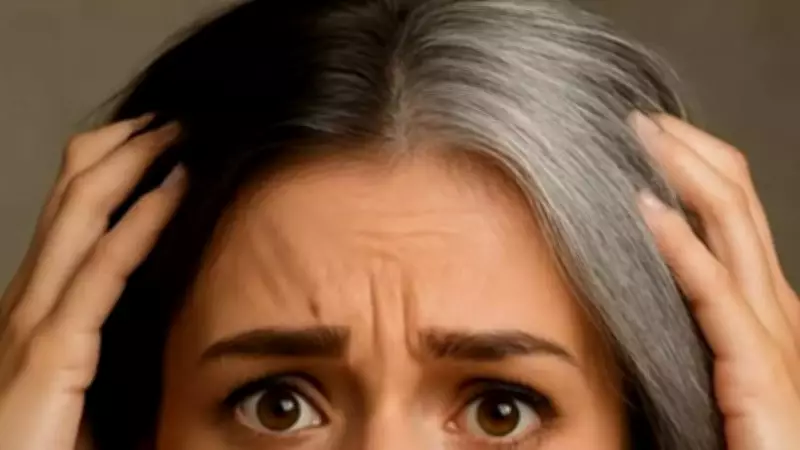
Scientific Breakthrough: Gray Hair May Be Reversible, Not Permanent
For generations, gray hair has been universally accepted as an irreversible sign of aging that people either conceal with dyes or reluctantly embrace as fate. However, revolutionary scientific discoveries are now challenging this long-held belief, suggesting that graying might not be a one-way biological process after all.
The Biology Behind Gray Hair and Potential Reversal
Historically, scientists believed gray hair resulted simply from aging and the eventual depletion of pigment-producing cells. A landmark 2023 study from New York University's Grossman School of Medicine revealed a much more complex mechanism. Researchers discovered that melanocyte stem cells (McSCs), which produce the pigment melanin, don't disappear when hair begins to gray. Instead, these cells become trapped in an inactive compartment within the hair follicle, unable to move to the pigment-producing zone.
"It is the loss of chameleon-like function in melanocyte stem cells that may be responsible for graying and loss of hair color," explained Mayumi Ito, the study's senior investigator. The research team concluded that if scientists can restore the mobility of these McSCs, allowing them to move from the "bulge" into the pigment-producing area, hair might naturally regain its original color.

Supporting Evidence from Multiple Studies
While the NYU research focuses on cellular mechanics, other studies provide additional evidence that gray hair might be at least partially reversible:
- Stress-Related Reversal - A 2021 study published in eLife demonstrated that individual hair follicles can switch back to pigment production under specific conditions, particularly related to stress levels. Periods of high stress correlated with hair graying, while stress reduction was associated with pigment restoration in some hair strands.
- Natural Repigmentation Cases - Research published in Scientific American documented instances where gray hairs spontaneously regained dark color in individuals ranging from age nine to 65. These changes occurred not only on the scalp but across various body regions, suggesting windows of reversibility exist early in the graying process.
These findings collectively indicate that not all graying is necessarily permanent, especially during initial stages, and that biological and environmental factors like stress may play more significant roles than previously recognized.
Potential Treatments and Future Directions
Does this mean gray hair treatments are imminent? Potentially, but not immediately. The current research doesn't suggest a pill or cream will restore everyone's hair color tomorrow. Most studies have been conducted in laboratory settings or animal models, and translating these findings into safe, effective human treatments will require substantial time and research.
However, scientists are actively exploring several promising avenues:
- Stimulating McSC Mobility - Developing molecular or drug-based approaches to "unstick" pigment stem cells from their trapped state.
- Stress-Related Mechanisms - Since stress appears linked to both graying and repigmentation, understanding this connection may lead to lifestyle or biochemical strategies supporting pigment production.
- New Therapeutic Approaches - Reviews in journals like the International Journal of Biological Sciences highlight how understanding melanogenesis (pigment creation) could inspire next-generation therapies targeting hair pigment at cellular levels.
Changing the Narrative on Aging
The possibility that gray hair might be reversible challenges fundamental beliefs about aging as a strictly unidirectional decline. Instead, hair color appears to be part of a dynamic biological process responsive to both internal and external influences. While genetics remain a major factor, environmental and cellular mechanisms also significantly contribute.
This evolving understanding means:

- Not all gray hair may be permanent, especially if pigment-producing cells can be reactivated.
- Stress and lifestyle factors can influence both graying and potential reversal.
- Future treatments may emerge from cellular-level research, offering alternatives beyond traditional dyes and cosmetic solutions.
Scientists emphasize that more research is necessary before these findings translate into widely available therapies. Nevertheless, emerging science is transforming gray hair from a symbol of inevitable aging into a potentially reversible biological condition under certain circumstances. With research now uncovering pigment stem cell mechanics and stress influences, the traditional "dye or accept aging" narrative may soon give way to a new era of biological solutions for gray hair.





