

Gujarat's Health Shift: Nutraceuticals Rise as Prevention Over Cure
In Gujarat, a quiet transformation is unfolding in the realm of health, moving the focus from hospital treatments to home-based preventive care. As diabetes, hypertension, and cardiovascular risks continue to escalate, a growing number of adults are taking proactive control of their well-being. From protein powders to omega-3 capsules, nutraceuticals are evolving into essential monthly purchases for many households.
Market Growth and Consumer Behavior
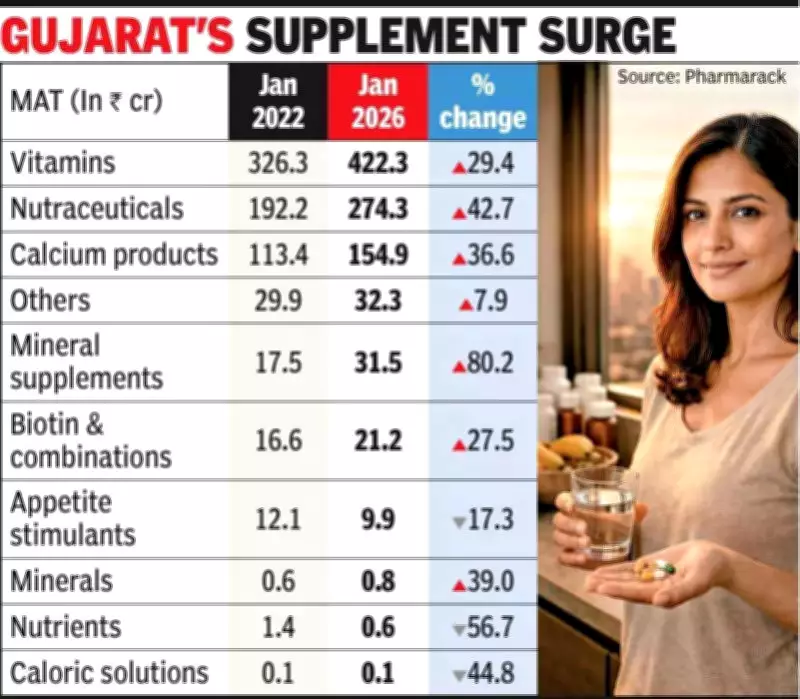
Market data highlights a significant uptick in this trend, with sales of nutraceuticals soaring by 42.7% between January 2022 and January 2026. Mineral supplements alone experienced a remarkable 80.2% growth, underscoring the deepening consumer reliance on these products. A study by Pronto Consult, involving 192 stakeholders across Gujarat, reveals that 44% identify as preventive users who actively depend on nutraceuticals. More than half, or 53%, spend over Rs 2,000 monthly on supplements, while 22% allocate above Rs 3,000. Only 26% keep their monthly expenditure below Rs 1,000.
Karishma Shah, founder and managing partner of Pronto Consult, notes, "What we are witnessing in Gujarat is not merely increased consumption but a structural shift in health perception. When over two-thirds of consumers see nutraceuticals as essential or as an extension of healthcare, the category stops being discretionary and becomes embedded in future planning."

Personal Stories and Preventive Mindset
Charvi Salil, a 39-year-old product designer from Ahmedabad, exemplifies this preventive approach. She has been taking protein, omega-3, and multivitamin supplements for over five years, guided by consultations with nutritionists and annual health reports. "I get a full body check-up every year. I may not have a genetic history of lifestyle diseases, but that is no guarantee. Staying fit is a choice," she says. "Supplements help me address deficiencies before they affect my daily wellness or long-term health."
Charvi is part of a burgeoning group in Gujarat that views healthcare through the lens of prevention rather than cure. With lifestyle diseases on the rise for decades, more adults are proactively investing in nutritional supplements, transforming what was once occasional spending into a recurring monthly budget item.
Post-Covid Pivot and Medical Caution
The post-Covid era has accelerated this behavioral shift, with heightened awareness around immunity and overall fitness driving over-the-counter self-care. However, medical experts urge caution against indiscriminate consumption. Dr. RC Damani, a senior physician, points out that deficiencies in vitamins B12 and D3 are common. "For elderly patients, we prescribe nutraceuticals based on diagnosed deficiencies. But now patients often demand them or take them over the counter. It is always better to get nutrients from food and plan the diet accordingly. Still, prescriptions and consumption have both increased," he explains.
Dr. Dhiren Mehta, former president of the Ahmedabad Medical Association, echoes this sentiment. "Supplements should be specific and taken after medical consultation. If a patient lacks folic acid or vitamins like C or E, we prescribe targeted tablets. Taking multivitamins without advice may not address the actual deficiency and can have implications," he warns.
Future Outlook and Consumer Sentiment
The Pronto Consult study further emphasizes the entrenched role of supplements in Gujarat's health landscape. It states that 67% of consumers now view nutraceuticals as a personal health necessity or a modern extension of healthcare, with only 7% considering them a temporary phase. About 71% expect their supplement use to increase with age, while 65% anticipate greater dependence over the next five years. Nearly 78% believe the rise of nutraceuticals is irreversible.
Immunity remains the most recognized category at 67%, followed by vitamins and minerals at 54%, protein and fitness at 41%, heart health at 27%, and cognitive supplements at 22%. This data suggests consumers are not only focused on short-term wellness but also on managing the ageing process proactively.

As Shah summarizes, "Consumers are integrating nutraceuticals into their ageing narrative." This shift marks a significant evolution in how health is perceived and managed in Gujarat, blending traditional medical advice with modern preventive strategies.





