

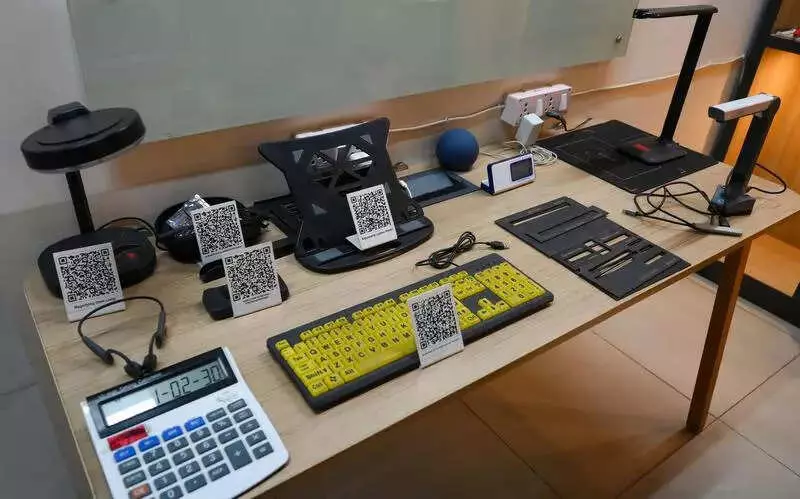
In the bustling urban landscape of Gurgaon, a unique institution is reshaping how society understands ability, independence, and daily life. The Ability Museum, Delhi-NCR's first-ever museum dedicated to accessibility, offers a profound, hands-on reality check. It moves beyond slogans on inclusion, using tangible assistive devices, tactile tools, and adaptive technologies to tell a powerful story of empowerment.
More Than Exhibits: Tools for Autonomy and Skill Development
Located on the institutional campus of the Sarthak Education Trust in Sector 45, Gurgaon, the museum adopts a human-centric approach rooted in lived experience. Its collection is vast, ranging from classic white canes and Braille slates to advanced screen-reading software, tactile learning kits, and terrain-specific mobility devices. A notable exhibit is a Braille-enabled electronic voting machine, showcasing how technology can bridge democratic participation gaps.
However, the museum is not merely a display space. It functions as a skill enhancement centre where individuals with disabilities receive training to use workplace-oriented assistive technologies. Dr. Jitender Aggarwal, founder of Sarthak Educational Trust and the Ability Museum, emphasizes their broader mission: "Assistive technologies empower people with disabilities to live independently. Our aim is to make assistive technology affordable in the future to support those in rural areas." The museum also actively supports startups in this domain through networking, mentoring, and financial backing.

"Vision in the Dark": An Immersive Empathy-Building Experience
The museum's most compelling feature isn't on a shelf—it's an experience in complete darkness. The 'Vision in the Dark' immersive tour deliberately plunges able-bodied visitors into a pitch-black environment. Guided by a facilitator, participants must rely solely on sound, texture, and instinct to perform simple tasks, which suddenly become challenging.
This tour is carefully framed not as a simulation of disability, but as an empathy-building exercise. Facilitators share insights into how visually impaired individuals navigate the world using non-visual cues and spatial memory. For visitors, it becomes a rare window into a world governed by touch and sound, starkly highlighting how poorly designed environments amplify everyday challenges.
Advocating for Universal Design on International Day of Persons with Disabilities
Conceptualized as both an educational and advocacy space, the museum underscores the urgent need for inclusive design in public infrastructure, workplaces, mobility systems, and digital services. As the world observes the International Day of Persons with Disabilities, the museum's role gains significant relevance. It stands as a potent reminder that accessibility is a universal right, not a specialized need.
Officials hope the museum will spark crucial conversations, positioning accessibility as a universal design principle that benefits everyone—from barrier-free buildings to inclusive digital services. Ultimately, the Ability Museum in Gurgaon champions a simple yet transformative idea: building accessible societies creates a more humane, efficient, and equitable world for all.






