

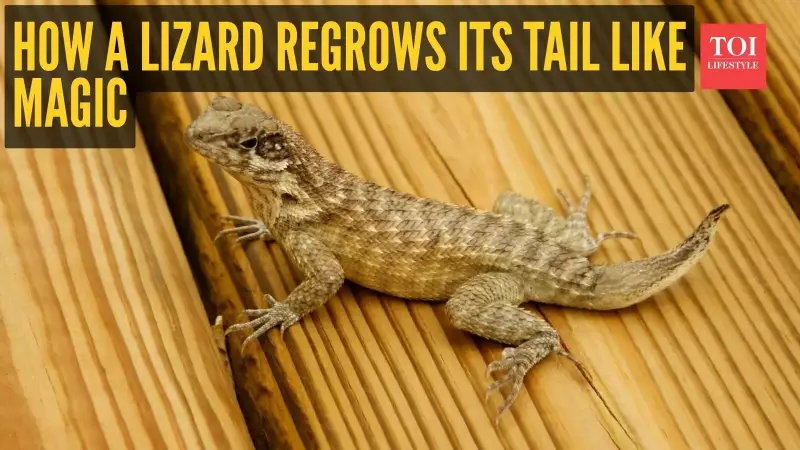
In the bustling urban landscapes and serene rural corners of India, a common sight unfolds on walls and trees: the swift, often colourful lizard. These remarkable reptiles possess a hidden survival superpower that has fascinated scientists and nature lovers alike—the ability to sacrifice and later regrow their tails. This is not a random act but a finely tuned evolutionary strategy for escaping predators.
The Clever Distraction: Why a Detached Tail Keeps Moving
Many of us have witnessed a bizarre scene: a lizard's tail, separated from its body, continues to wriggle vigorously on the ground. This unsettling sight is, in fact, a masterstroke of survival. When a predator, like a bird or a cat, attacks, it often targets the tail. The lizard's body is designed to detach it instantly.
The secret behind the tail's independent movement lies in its unique nerve structure. The tail contains its own bundle of nerves that can control movement for a short time after detachment, without any signal from the brain. This creates a perfect, self-operating decoy. As the predator gets distracted by the convulsing tail, the lizard seizes the crucial opportunity to flee to safety.

The Science of Shedding and Regrowing
Losing a tail is a serious decision for a lizard, and its body has a specialised system to manage it. The tail has pre-formed weak spots known as fracture planes in the vertebrae or cartilage rings. When grabbed, muscles around these points contract, pressure builds, and the tail breaks cleanly along these lines. Blood vessels seal almost instantly, minimising blood loss and risk of infection.
However, survival comes at a price. The tail is a vital storage unit for fat reserves, and losing it affects the lizard's balance and agility, making hunting and escaping future threats harder. Therefore, this drastic measure is reserved for genuine, immediate danger.
The Miracle of Regeneration: How Lizards Grow New Tails
The most extraordinary chapter in this saga is regeneration. After the tail drops, a blood clot forms over the wound. Stem cells then gather at the site and begin the complex process of rebuilding. Over weeks, they form new muscle, skin, nerves, and a cartilage structure.
The regrown tail, however, is not a perfect replica of the original. It develops a solid cartilage rod instead of individual bones. The new nerves and muscles have a different arrangement, which can limit flexibility. The scale patterns and colours often differ. Despite these differences, the new tail is fully functional, restoring balance, fat storage, and even future defensive capability.
Common Indian species like various geckos excel at this. Some house geckos can regenerate a tail in about a month. However, there are limits. Each regeneration cycle typically produces a tail that is shorter, stiffer, and less perfectly formed than the last. Furthermore, the new tail lacks the original fracture planes, making it harder to detach in the same way if attacked again.
Factors like age, climate, and nutrition heavily influence regrowth. Younger, well-nourished lizards in warm conditions regenerate faster. The process demands significant energy, temporarily leaving the animal more vulnerable.
This incredible ability, shared with creatures like salamanders, underscores a powerful evolutionary truth. For lizards, the tail is a multi-purpose tool—a sacrificial shield, a nutrient bank, and a balancing rod. Their capacity to lose it and grow it back is a stunning testament to nature's ingenuity, proving that in the wild, clever strategy often trumps brute force. Even the smallest creatures we share our homes with carry within them one of biology's most fascinating secrets.






