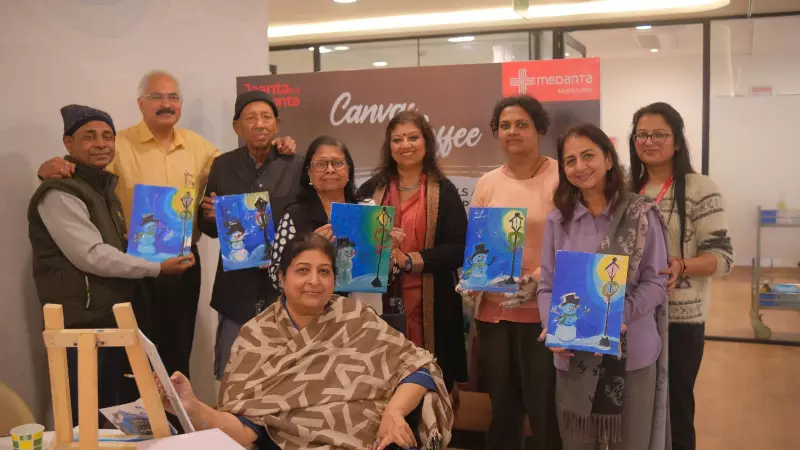
In the midst of daunting chemotherapy sessions, a unique form of healing is blossoming at a Delhi cancer clinic. Patients are discovering solace and strength not just from medicine, but from the vibrant strokes of a paintbrush. Art therapy workshops are becoming a crucial pillar of support, helping individuals regain a sense of control and find moments of joy during their arduous treatment journeys.
Finding Smiles Amidst the Drips
Eighty-two-year-old Kapil Bhasin, a lifelong connoisseur of colors, now faces lymphoma. Diagnosed in 2022, he has endured multiple rounds of chemotherapy and immunotherapy. His daughter-in-law, Bindiya Bhasin, notes that while his resilience has been key, it was the act of painting that recently brought a genuine smile to his face during treatment. At the Medanta Clinic in Defence Colony, Bhasin transforms his food tray into an artist's palette as the chemo drip begins. "I feel very happy. Relaxed. I didn't even realise that my chemo was done," he shared after a session, highlighting the powerful distraction and calm the activity provides.
He is part of a growing initiative where the clinic organizes day-long painting workshops for patients and their families. The goal is to engage them creatively, fostering a positive environment that directly counters the anxiety and uncertainty that cancer treatment often brings.
More Than Medicine: The Emotional Void in Cancer Care
For 42-year-old Shipra Kapoor, battling breast cancer, these workshops offer a vital escape. She arrives hours before her chemotherapy slot to paint with her husband. "Both of us feel relaxed when we paint and don't talk about the disease," she says. Kapoor voices a common lament among patients: the lack of structured psychological support. While medical teams explain conditions and treatments, the deep emotional and societal burdens often go unaddressed.
Kapoor keeps a journal documenting the silent struggles of patients, particularly women who face pressure to care for families even while sick. She advocates for more shared activities and patient support groups, emphasizing the need for spaces where fears can be forgotten and bonds with fellow survivors can be formed. During a recent holiday-themed session, she and her husband found momentary peace, engrossed in painting a snowman together.
The Therapist Who Lived the Journey
The guiding force behind these sessions is art therapist Juhi Shamshery, who understands the patients' turmoil from personal experience. She discovered painting's calming effect just months before her own breast cancer diagnosis in 2016. "My mind would stop raging. Otherwise, I would continuously think what would happen, would the treatment work," she recalls. Art became her anchor, offering hours of focused peace. After recovery, she trained formally to help others.
Shamshery explains the science and sentiment behind the practice. "Drawings and colours can tell a story," she says. They allow expression of complex feelings like fear or helplessness that are hard to verbalize. The act of creation restores a sense of agency and accomplishment, directly countering the loss of control induced by treatment. It serves as a mindful distraction from physical pain and can alleviate anxiety, depression, and fatigue.
Her methods are intuitive. When an elderly patient repeatedly chose black, reflecting a dark life phase, she gently guided him to incorporate blues and yellows first, to "rewire" his thinking. She recalls her own evolution from sketching a crying woman in charcoal during treatment to creating a vibrant, orange-and-pink painting after recovery—a visual metaphor for her shifting inner state.
Research backs this experiential evidence. A 2020 study published in BMC Cancer found art therapy improved mood and reduced anxiety and pain in adult chemotherapy patients, with benefits lasting up to 48–72 hours post-session. Another small study from Nagpur on 30 breast cancer patients showed reduced distress scores after just one week of mindfulness-based art therapy combining mandala coloring with deep breathing.
A Holistic Approach to Healing
Dr. Amit Bhargava, who treats both Bhasin and Kapoor, strongly endorses the program. He stresses that the pressure extends to caregivers as well. "Both cancer patients and those who are taking care of them are under a lot of pressure. There is a lot of worry, a lot of uncertainty. Something like this can take their mind off these worries for some time," he states. To build trust and camaraderie, Dr. Bhargava often joins his patients at the canvas.
The initiative at Medanta Clinic underscores a growing recognition in oncology: healing must address the mind and spirit alongside the body. For patients like Kapil Bhasin and Shipra Kapoor, these workshops are more than a pastime. They are a lifeline—a vibrant, colorful assertion of life and self amidst one of life's toughest battles, proving that sometimes, relief flows not just from an IV bag, but from a well of creativity and shared human connection.