

From Apps to Community: How India's Elderly Are Redefining Solo Living
The sudden rise of the Chinese safety app Demumu, previously known as Sileme or Are You Dead?, has highlighted the risks faced by those living alone. Designed for young urban residents, this app alerts emergency contacts if a user becomes unresponsive for an extended period. In Mira Road, a group of older adults who live independently have developed their own low-tech version of this safety measure.
Community Connections: The Sathi Initiative
Twice daily, Zarina Ramzan Vadsariya, 66, receives a WhatsApp message from 35-year-old Anjum Virani with greetings like 'Yaa Ali Madad, Good morning / evening, Kem cho?'. If Vadsariya does not reply, Virani follows up with a phone call. If there is still no response, she visits in person. These women are part of the Sathi outreach programme, launched last year by the Aga Khan Social Welfare Board for the Ismaili community. This initiative pairs seniors living alone with volunteers who assist them with daily tasks.
Volunteers receive training to help the elderly in various ways, such as accompanying them to banks or medical appointments, or shopping for groceries, explains Virani, who leads the effort at Nav Yuvan Jamatkhana in Mira Road. Vadsariya, whose husband passed away a decade ago and whose children live abroad, says she feels less lonely thanks to Virani's regular calls and visits.

The Growing Trend of Ageing Alone
Once reliant on the kindness of neighbours and family, older adults living solo are now discovering more reliable forms of support. From community-based programmes to digital platforms, they have access to a wider range of support systems than ever before and are eagerly adopting these networks. This growth aligns with the increasing prevalence of living alone among the elderly, driven by factors like personal choice, widowhood, separation, divorce, or children migrating for work.
According to the Longitudinal Ageing Study in India (LASI) 2020, approximately 6% of Indians aged 60 and above live alone, with women (9%) three times more likely than men (3%) to do so. A more recent survey by the Agewell Foundation in 2024, based on a smaller sample, estimates this figure at 14.3%, showing a slight urban skew (15%) compared to rural areas (13.4%).
Ageing alone offers independence but also increases the burden of self-care, from managing households to handling finances. It can also lead to social isolation, with one-third of respondents in Agewell's survey citing loneliness as the biggest disadvantage.
Digital Solutions: Ageing Online
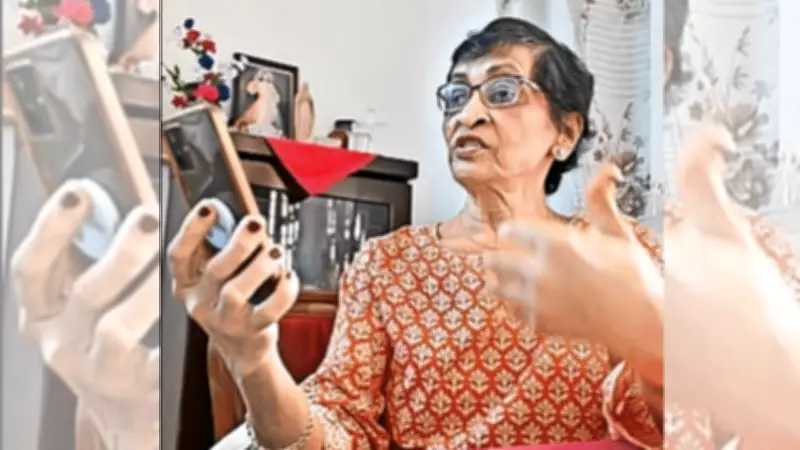
Apps have emerged as a new social hub for older adults, providing daily interactive sessions designed to keep them mentally sharp and emotionally connected. Fiona Pinto, 75, was introduced to the seniors' app Khyaal by her sister-in-law to help cope with the loneliness of widowhood. "I've come to depend on it," she says. Her daily routine includes yoga in the morning, an interactive hobby or life-skills session at midday, and bingo after lunch. Over four years, she has won digital gold prizes worth Rs 9,000.
"I live alone and take part in whatever I can to pass the time," says the IC Colony resident, who has even joined Khyaal on senior-friendly tours to Kashmir and Kerala. A similar app, GenS Life, was launched last year by Meenakshi Menon, 67, to address every aspect of senior life. With both free and paid plans, the platform offers yoga and Zumba classes, health and financial advice from vetted experts, live concerts and karaoke, interest-based communities, and discounts on third-party services like accident insurance and domestic worker verification. Like Demumu, it also features an SOS function.
Apps for seniors deliver services directly to their homes, addressing key challenges. "Roads and public infrastructure are not senior-friendly, and confidence in navigation declines with age," Menon notes, explaining why older people often prefer to stay home.

Community Engagement: Ageing in Place
Adhata Trust encourages seniors to venture out. Every evening, 20-25 older adults gather at each of the nonprofit's 18 free 'holistic well-being centres' in Mumbai and Navi Mumbai. Activities include art, senior Zumba, chair yoga, sudoku, scrabble, and casual conversations. Weekly lectures cover topics like digital literacy and environmental conservation, along with occasional outings or social campaigns on issues such as e-waste and elder rights, fostering a culture of learning and community involvement.
"As they get to know one another, the support they need comes from within the group itself," says Clara D'Souza, gerontologist and CEO of the 14-year-old organisation. Members have supported each other through cataract surgeries and even helped report online fraud at police stations.
Some seniors are gaining new independence. When her building underwent redevelopment, 79-year-old Hemangi More single-handedly found a rental flat, negotiated with movers, and set up her new home. She credits Adhata for this newfound autonomy. "Previously, my late husband handled everything. Now I do, and I'll continue to as I grow older." The organisation taught her to use computers and smartphones, navigate social media, and manage digital payments confidently.
Adhata also runs the Shared Assistance for Elders programme, which rents medical and mobility equipment at nominal rates and livestreams fitness sessions and webinars for house-bound elders, supporting its mission of enabling ageing in place rather than institutional care.
Emphasis on Staying Put
This focus on remaining in familiar environments is common across modern eldercare initiatives, contrasting with the senior housing sector that often promotes relocation. "Today's seniors place a high value on dignity, autonomy, and staying connected to familiar environments," says Hemanshu Jain, founder of Khyaal, which has over 5 million members. He acknowledges that ageing in place requires reliable healthcare, strong social networks, digital literacy, and responsive support systems, but adds that "technology-led, community-driven platforms have made strides in bridging these gaps."
Innovative Support in Parsi Communities
In Mumbai's Parsi baugs, a different technology is reducing isolation for ageing adults: the motorised wheelchair. Four years ago, the World Alliance of Parsi Irani Zarthoshtis (WAPIZ) donated 19 wheelchairs to baugs and independent Parsi buildings to address the challenge of elderly residents stranded on higher floors. "Lack of lifts is a major issue in our baugs," admits Anahita Desai, a trustee of WAPIZ and Bombay Parsi Punchayet.
The Parsi community has a high proportion of members over 60 years old—31% according to the 2011 census, likely around 60% today, Desai notes. They are supported by community-led welfare initiatives, including volunteers who assist with bathing, grooming, and home cleaning, as well as arranging daily meals. The Punchayet and some Parsi charitable trusts also provide monthly financial assistance ranging from Rs 1,500 to Rs 5,000 and help with medical expenses. Desai emphasises that the strongest safety net for ageing Parsis is the baug itself, offering low-rent apartments and vibrant community life.





