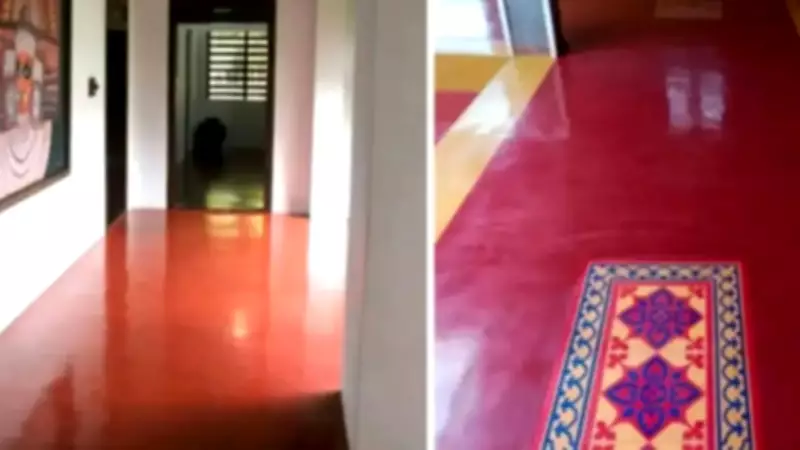
In an era dominated by air conditioning and energy-intensive cooling systems, an ancient flooring technique from Kerala, India, offers a refreshing alternative. Known as Kaavi flooring, this 300-year-old method relies solely on natural materials like lime, iron oxide, water, and coconut oil to maintain a cool surface even during peak summer heat. No electricity, imported stone, or chemical coatings are involved. This traditional practice not only surprises modern observers but also highlights a climate-responsive approach to home design that prioritizes harmony with nature over convenience.
The Science Behind Kaavi Flooring's Cooling Effect
Those who have experienced Kaavi flooring often describe it as ice-cool underfoot, especially on hot afternoons. Unlike modern flooring materials such as tiles or marble, which trap and slowly release heat, Kaavi surfaces remain stable throughout the day. Even under direct sunlight, the floor does not become aggressively hot. This consistent coolness stems from the natural behavior of the materials used. Lime-based surfaces do not absorb and hold heat like cement or stone; instead, they regulate temperature effectively. Additionally, the application of coconut oil forms a thin reflective layer that helps deflect solar radiation. While exact scientific explanations are still debated, the practical experience of generations confirms its efficacy.
How Kaavi Flooring Is Made
The creation of Kaavi flooring is a labor-intensive process that begins with a mixture of lime, iron oxide, and water. This paste is carefully spread by hand onto prepared surfaces, without any cement. The base layer is left to cure naturally over several days. Once hardened, the surface undergoes repeated polishing using coconut oil. This step can take hours of continuous rubbing to achieve a smooth, reflective finish. Over time, the floor becomes more polished with regular use, developing a soft shine. The combination of lime and oil treatment is believed to contribute to its cooling properties.

Why Kaavi Flooring Is Being Replaced
Despite its benefits, Kaavi flooring is slowly disappearing. Very few artisans still practice the traditional method, and modern constructions favor tiles, marble, or polished concrete for their speed, cost-effectiveness, and ease of maintenance. Traditional knowledge is not being passed down, and younger generations opt for contemporary building techniques. This shift means losing not just a flooring style but a climate-responsive way of building homes. Kaavi flooring was designed for Kerala's hot and humid conditions long before modern cooling existed. It also lasts for decades, sometimes up to 100 years, becoming more polished with age rather than wearing out quickly.
The decline of Kaavi flooring represents a loss of sustainable architectural wisdom. As the world grapples with climate change and energy consumption, revisiting such traditional methods could offer valuable lessons in living with heat rather than fighting it. For now, Kaavi flooring remains a quiet testament to the ingenuity of earlier generations who built homes in harmony with their environment.