

Kolkata Study Exposes Alarming Adolescent Obesity Rates
A recent study conducted in Kolkata schools has revealed a concerning health trend: approximately one in eight adolescents, specifically those aged between 12 and 16 years, are classified as obese. The research, carried out by a global obesity awareness organization, highlights a growing crisis attributed primarily to lifestyle factors and unhealthy dietary habits. Experts emphasize that this trend is accelerating at an alarming rate, posing significant long-term health risks for the city's youth.
World Obesity Day Revival in Kolkata
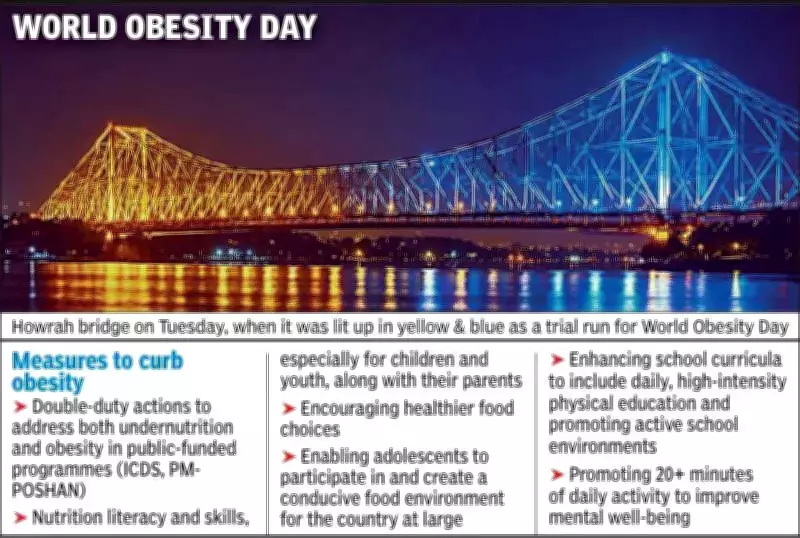
Marking the first observance of World Obesity Day in Kolkata since the COVID-19 pandemic, the iconic Howrah Bridge was illuminated with blue and yellow lights on Wednesday evening. These colors symbolize obesity awareness and served as a visual reminder of the urgent need to address this public health issue. The revival of the event was spearheaded by the METTA Dana Foundation, a global academic outreach organization, with a specific focus on combating childhood obesity.
Global and Local Insights from Experts
Doctors from around the world participated in an online discussion as part of the event. Debashis Basu, an endocrinologist and chairman of the METTA Dana Foundation, presented stark statistics: "Childhood obesity is rising rapidly, with the prevalence among school-aged children increasing from 4% in 1975 to almost 20% in 2022." This represents a five-fold increase over five decades, with the sharpest rises observed in low- and middle-income countries like India and Bangladesh.

Basu further explained that childhood obesity often persists into adulthood, elevating the risk of serious non-communicable diseases. "Early signs of chronic diseases are already appearing in children today," he warned, noting that 13% of these conditions are directly linked to obesity, including diabetes, heart disease, and certain cancers.
Kolkata's Specific Health Challenges
Periodic studies by the METTA Dana Foundation and other organizations in Kolkata have uncovered troubling local data. Basu stated, "Around a fourth of Kolkata's children are diabetic or are in a pre-diabetic stage." This vulnerability to diabetes is closely tied to the rising obesity rates among the city's young population, underscoring the immediate need for intervention and awareness campaigns.
Projections for India and the World
A study published in The Lancet projects a grim future: by 2050, more than half of all adults and a third of children and adolescents globally will be overweight or obese. For India, the numbers are particularly staggering:
- An estimated 44.9 crore Indians (nearly one-third of the projected population) will be overweight or obese by 2050.
- This includes approximately 21.8 crore men and 23.1 crore women.
- India is projected to have the world's second-highest number of obese children and adolescents aged 5 to 14 years, with around 16 million overweight boys and over 14 million overweight girls.
India's Triple Burden of Malnutrition
Basu highlighted that India is beginning to face a triple burden of malnutrition, which includes:
- Stunting and wasting
- Micronutrient deficiencies
- Obesity
These issues often coexist within the same family or even the same individual at different stages of life. Despite the global scale of World Obesity Day observances, India had seen minimal awareness events since 2020. "We took the initiative to revive it this year with support from the National Institute of Nutrition," Basu added, emphasizing the critical need for renewed focus on this escalating health crisis.






