The year 2025 marked a significant shift in how Indians approached their daily lives. What were once quiet, personal decisions about food, work, and well-being erupted into full-blown public debates, dominating dinner table conversations and social media feeds. People began rigorously questioning habits they had followed for decades, leading to a year defined by intense discussions over the 'right' way to live.
The Great Indian Plate Debate: Carbs vs Protein
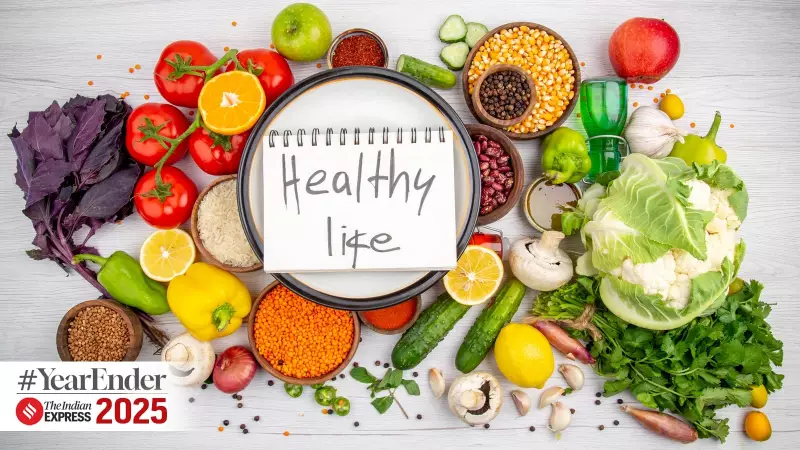
One of the most persistent arguments of the year centred on nutrition, directly challenging India's long-standing dietary identity built on carbohydrates like rice and wheat. The fundamental question many asked was whether this traditional carb-heavy approach still served modern, often sedentary, lifestyles.
Nutrition coach Justin Gichaba highlighted a common struggle, noting that most people tend to overeat either fats or carbohydrates, leading to weight management issues. He advocated for a balanced approach, suggesting a specific ratio. "Eat a ratio of carbs to protein at a 1.5:1 ratio. This means, for every 1.5 g of carbs you have, you must also have 1g of protein," Gichaba advised.
While protein became a major buzzword, experts cautioned against extreme diets. Dr. Samrat Shah, a consultant physician at Pune's Ruby Hall Clinic, explained the dual nature of high-protein regimens. He pointed out benefits like improved satiety but also warned of potential downsides, such as digestive discomfort, especially when fibre and carbohydrate intake is sharply reduced.
Beyond the Plate: Dinner Timing and Career Philosophy
The debate wasn't confined to what to eat, but also extended to when to eat. In 2025, the timing of the evening meal became a major point of discussion, with a noticeable trend towards finishing dinner earlier.
Ashlesha Joshi, a fitness dietician and nutritionist at Tone 30 Pilates, provided the science behind this shift. "When we eat late at night, our body's natural metabolic rhythm is disrupted. After sunset, our digestive efficiency gradually slows, and glucose tolerance decreases," she explained. Joshi further noted that consistently eating after 8 pm over several months could lead the body to store more energy from that meal as fat rather than burning it efficiently.
Conversations also moved decisively beyond food, critically examining workplace culture. A rising philosophy of 'career minimalism' gained traction, representing a conscious rejection of the relentless hustle. This approach favoured bounded ambition and prioritised psychological well-being over unchecked corporate climb.
Organisational psychologist Gurleen Baruah from That Culture Thing linked this shift to broader global changes. "Especially after the pandemic, many young people saw how quickly 'stable' jobs disappeared, how companies laid off thousands overnight, and how unpredictable the economy has become," she observed. This led younger professionals, particularly Gen Z, to choose defined workloads, diversify their creative energy, and separate their self-worth from corporate titles.
Gen Z Leads a Mental Health Revolution
Perhaps one of the most definitive shifts of 2025 was the destigmatisation of mental health conversations, spearheaded by India's youth. Mental well-being transitioned from a hushed topic to a mainstream subject, with Gen Z leading the charge through open dialogue.
This change was vividly illustrated by a viral moment where actor Ananya Panday publicly defended her generation's emotional awareness on a talk show, pushing back against jokes labelling Gen Z as "too sensitive." Psychologists noted that this generation has grown up with a vocabulary for emotions that their predecessors often lacked.
Counselling psychologist Manasvi Azad highlighted a generational communication gap. "When older generations dismiss these feelings, it shuts down meaningful conversation... reducing emotional literacy to exaggeration rather than recognising it as a genuine reflection," she stated. Experts reinforced that acknowledging emotions and stress is not a sign of weakness but a strength. Studies indicate that emotional expression can effectively lower stress, improve coping mechanisms, and help prevent burnout.
Ultimately, the lifestyle debates of 2025 revealed a population in active negotiation with tradition, science, and personal experience. Driven not just by experts but by individuals seeking to understand their own health, minds, and purpose, these discussions signalled a move towards more intentional and examined living for millions across India.