

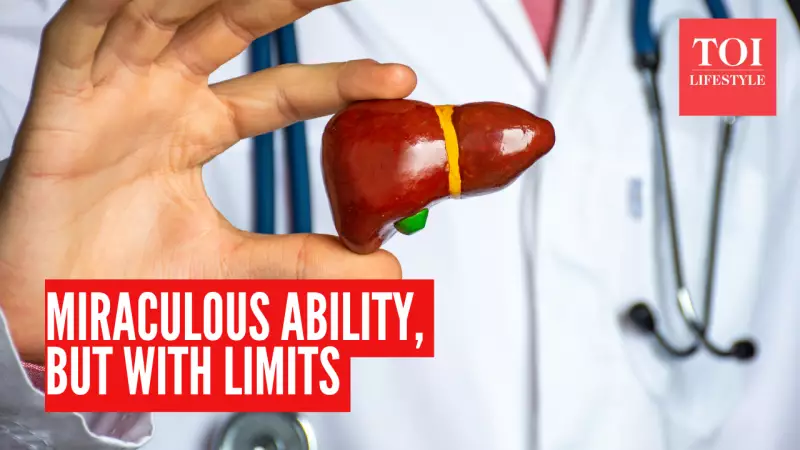
The human liver is a true marvel, a silent powerhouse that tirelessly filters toxins, processes nutrients, and keeps our body running. Yet, its most astounding feature seems plucked from a superhero comic: the liver can regenerate and heal itself. This isn't fiction, but a complex biological reality with strict boundaries. Understanding how this process works, and when it fails, is crucial for long-term health.
The Science Behind the Liver's Regeneration
Liver regeneration is not simple regrowth; it's a meticulously coordinated biological response. According to a comprehensive review published in the World Journal of Hepatology, this process activates when a substantial part of the liver is lost, such as during surgical removal (partial hepatectomy) or after a major acute injury.
The remaining healthy liver cells spring into action, triggering a cascade of cellular signals. This initiates a three-phase recovery mission:

The Priming Phase: Liver cells (hepatocytes) exit their usual dormant state and prepare to multiply, gearing up for the task ahead.
The Proliferation Phase: This is the active growth stage where the cells rapidly divide and replicate, working to restore the liver's lost mass and volume.
The Termination Phase: Once the liver reaches its original, functional size, the growth signals are switched off. The regeneration process halts precisely, preventing overgrowth.
When Can the Liver Successfully Heal Itself?
Research, including a study in MDPI, confirms that the liver's regenerative powers are strongest under specific, favourable conditions. Healing is possible when the damage is short-term, limited, or when the root cause is eliminated.
After Surgical Removal or Acute Injury: The liver can regenerate remarkably well following a planned partial removal or a single episode of acute damage, provided the remaining tissue structure is fundamentally healthy.
In Early-Stage Fatty Liver Disease: There is significant hope with early detection. A PLOS One study found that when fatty liver is identified before extensive scarring (fibrosis) develops, the organ can reduce fat accumulation and move back toward normal structure and function. This is especially achievable when key contributing factors like obesity, insulin resistance, and an unhealthy diet are effectively addressed.
The Limits: When Liver Regeneration Fails
Despite its extraordinary capacity, the liver's ability to heal is not infinite. When damage is severe, chronic, or continuous, the regenerative machinery breaks down. The evidence is clear that regeneration fails under these critical conditions:
Advanced Fibrosis and Cirrhosis: Widespread, long-term scarring creates a rigid structure that disrupts the liver's architecture, making effective regeneration impossible.
Damage from Chronic Alcohol Consumption: Persistent alcohol abuse causes relentless injury, overwhelming and ultimately exhausting the liver's repair systems.
Acute Liver Failure: In cases of massive, sudden damage, the scale of injury is so vast that the regeneration process cannot keep pace.
End-Stage Liver Disease: At this terminal stage, the liver's functional tissue is largely destroyed and replaced by scar tissue, halting any meaningful recovery.
The central takeaway is that timing is everything. The liver's self-healing works best when intervention is early, damage is limited, and the cause is reversible. Once scarring advances or the injury continues unchecked, the window for natural recovery slams shut, highlighting the life-saving importance of early diagnosis and proactive lifestyle changes.
Disclaimer: This article is intended for informational purposes only and is not a substitute for professional medical advice, diagnosis, or treatment. Liver disease progression varies individually. Always consult a healthcare provider for any health concerns.






