

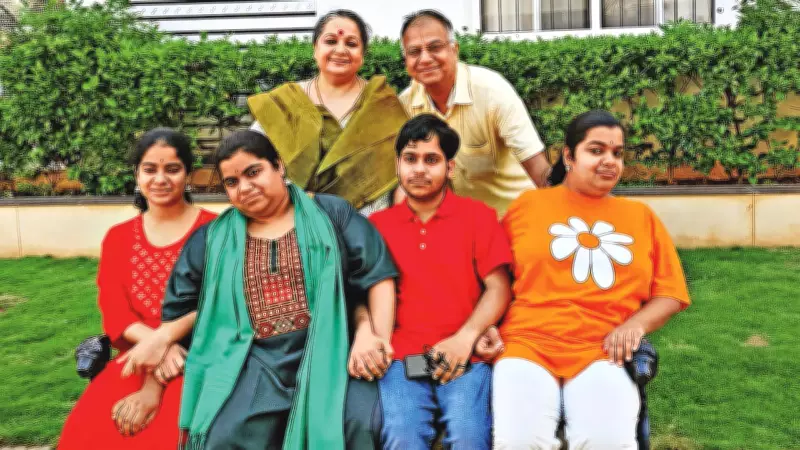
Mumbai Mother of Quadruplets Champions Autism Acceptance and Inclusive Futures
Sangeetha Chakrapani, a resilient Mumbai mother, has navigated the extraordinary challenge of raising quadruplets, two of whom are on the autism spectrum. Her journey, marked by unique hurdles and profound growth, has transformed her into a passionate advocate for neurodivergent children and their families. Recently, she released her memoir Whatever It Takes, sharing insights on how acceptance can lead families with autism to find their happily ever after.
A Journey of Surprises and Self-Discovery
When doctors discovered Sangeetha was expecting quadruplets, they advised fetal reduction to keep only the two healthier babies, but she refused. Now, with her children aged 22, she reflects on how this path has reshaped her life. I don't like surprises anymore, she admits, preferring predictable routines. However, life has consistently presented her with the unpredictable, most notably her children's autism diagnosis.
The quadruplets were not a surprise that I could not handle, as I have always wanted a big family, Sangeetha explains. That my children had autism was the surprise I could not accept, and I knew it would be a tough journey. Over time, she embraced this reality, discovering new vistas of hope and opportunity. Autism and living happily can go side by side, she asserts, highlighting her journey toward self-acceptance and respecting her children's unique identities.

Building Autism-Smart Work Environments
In 2015, Sangeetha founded the non-profit Together Foundation to provide skill training for young adults with autism. She emphasizes the urgent need for more employment avenues to tap into the potential of neurodivergent individuals. Recalling an early setback when a hypermarket rejected her foundation's cookies without even tasting them, she vowed to never let such dismissals happen again.
Within a year, the foundation's bakery earned FSSAI certification, marking a turning point. Sangeetha advocates for autism-smart work environments, urging businesses to create autism-friendly offices. Sheltered and supportive environments will also create manifold job opportunities for neurotypical people, she notes, pointing to a future where inclusivity benefits all.
Shifting Focus from Cure to Support
The Supreme Court's recent ban on stem cell therapy for autism, due to lack of scientific evidence, has sparked debate. Sangeetha addresses the painful hope many parents hold for a cure. Most of us have a tiny flickering hope that autism is treatable, she says, acknowledging that this hope often dims over time as parents explore various treatments.
She advises caution: First, do not try any treatment that has the potential to harm or negatively impact the child. With autism being an expensive disability, she urges parents to allocate resources wisely toward therapies and support systems. Slowly but surely, we see our children responding, learning and growing, she affirms, advocating for a shift from seeking cures to fostering supportive environments.
Addressing the 'After Us' Worry
A major concern for parents of special needs children is What happens after us? Sangeetha is involved in building private residential facilities, like The Together Community in Hosur, Tamil Nadu, which charges Rs 1 lakh per month. However, she recognizes the disparity for underprivileged families.
Disability is a luxury that many cannot afford, she states, highlighting limited opportunities for those in poverty. Her foundation's second goal is to develop a low-cost residential model supported by CSR initiatives, aiming to make such communities accessible to all economic strata.
Inclusive Education and Special Schools
While awareness of autism has grown, mainstream schools often remain reluctant to admit children with special needs. Sangeetha explains that schools lack necessary resources, such as trained teachers and tailored programmes. Inclusive education will need to be funded in govt schools and other schools in lower economic areas, she stresses.

Without these resources, many parents turn to special schools, which Sangeetha defends as not being a dirty word. She calls for greater inclusivity by integrating volunteers and collaborations with neurotypical schools to reduce segregation. Special schools provide the most critical services, she notes, urging society to value them more.
Support for Parents and the Many Faces of Autism
Sangeetha openly discusses her own struggles with weight gain due to stress and depression, emphasizing the need for support for parents of neurodivergent children. Parents of neurodivergent children need a lot of care, support and undiluted love, she says, from families, professionals, and communities.
She also elaborates on the many-splendoured and multiple frustrating aspects of autism, such as repetitive behaviors and communication challenges. By identifying triggers and adopting empathetic approaches, she believes individuals can learn to regulate themselves. Teaching or training individuals with autism is a beautiful experience, she shares, for those who appreciate structured, detail-oriented methods.
Redefining Success for Neurodivergent Individuals
Challenging the notion that every person with autism has a special talent, Sangeetha points out that many lead average lives of great determination. Many of them are average individuals leading average lives, she explains, lives of great determination and courage that require extra support for equality and dignity.
In conclusion, Sangeetha Chakrapani's story is a testament to resilience and advocacy. Through her foundation and memoir, she continues to inspire families and push for a more inclusive world where neurodivergent individuals can thrive with acceptance and support.





