

Mumbai Hospital's Specialized Pediatric Pulmonary Center Diagnoses Rare Respiratory Condition
In a significant development for pediatric healthcare in Mumbai, an eight-year-old boy with a persistent cough lasting over 45 days was brought to the state-run JJ Hospital's tuberculosis clinic last Saturday. During routine history-taking, doctors uncovered several unusual medical indicators that pointed beyond a simple infection.
The child had experienced three to four major respiratory infections requiring hospitalization every year since birth. Additional symptoms included discharge from his ears and clubbed fingers, where the tips were enlarged and nails curved downward into a spoon-like appearance. "We realized that even if he did have TB, he most possibly also had a rare respiratory disease called ciliary dyskinesia," explained pediatrician Dr. Sushant Mane.
Advanced Diagnostic Infrastructure Reduces Testing Delays
Fortunately for the young patient, JJ Hospital's pediatrics department had recently developed a specialized pediatric pulmonary center through government funding and corporate social responsibility donations. This facility is equipped with high-tech diagnostic equipment that eliminates the need to send patients to distant research laboratories or expensive private labs for advanced respiratory tests.

"Besides, our costs will be a fraction of those for advanced respiratory tests in the private sector," emphasized Dr. Mane. This development comes as pharmaceutical company Cipla Ltd. inaugurated a lung wellness center in Worli, offering specialized respiratory tests, some available for the first time in India.
India's Massive Burden of Chronic Respiratory Diseases
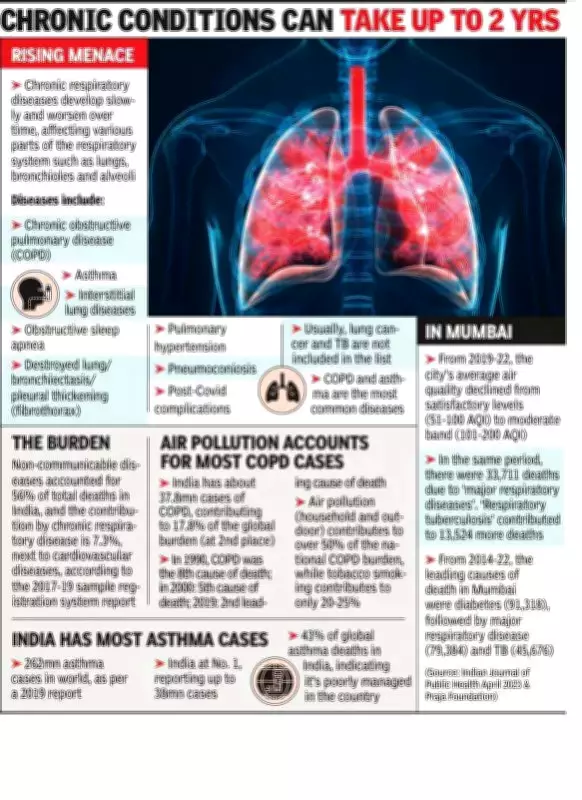
The need for improved respiratory diagnostics is particularly acute in India, which faces an enormous burden of chronic respiratory conditions. According to the Global Burden of Diseases 2023 report, over 6.89 crore people in India live with chronic respiratory diseases, primarily driven by high rates of chronic obstructive pulmonary disease and asthma.
The data reveals that 3.77 crore Indians live with COPD while 3.23 crore suffer from asthma, with air pollution and smoking identified as primary risk factors. "Around 40% of the patients, both pediatric and adult, who come to the daily OPD at JJ Hospital have respiratory illness," noted Dr. Mane, describing conditions ranging from cough and tonsillitis to lower respiratory tract infections and pneumonia.
"The disease burden is high, but chronic respiratory diseases never got the attention like, say, cardiac diseases," he added, highlighting a significant gap in healthcare focus despite the prevalence of respiratory conditions.
Specialized Pediatric Pulmonology Addresses Diagnostic Gaps
The diagnostic challenges in respiratory medicine are particularly pronounced for children. Due to limited access to specific lung function tests, some pediatric patients have lived with incorrect diagnoses for up to four years before arriving at JJ Hospital's pediatric department.
This reality prompted the hospital to establish a pediatric pulmonology sub-specialty. "We get cases from across Maharashtra and neighbouring states," said Dr. Chhaya Valvi, head of pediatrics at JJ Hospital. "We are in the process of developing other pediatric sub-specialties in pulmonology, nephrology and rheumatology."
The hospital plans to launch a fellowship program in pediatric pulmonology soon, further strengthening specialized care for young patients with respiratory conditions.
Growing Awareness and Infrastructure Needs
Pulmonologist Dr. Sujeet K. Rajan from Bhatia Hospital in Tardeo observed that increasing awareness about respiratory diseases has contributed to improved diagnostic infrastructure. "There is more awareness about lung problems now, with people downloading apps for air quality index," he noted.

However, Dr. Rajan emphasized that significant gaps remain, calling for greater awareness and expanded infrastructure to address India's substantial respiratory health challenges. The parallel developments at JJ Hospital and Cipla's new lung wellness center represent important steps toward reducing diagnostic delays that typically range from six months to two years for patients with chronic respiratory diseases.





